
NACHI Bearing Technical Guide Technical Resources
NACHI Bearing Designation Decoder: Wholesale Supplier Guide
Master the NACHI Designation Decoder to prevent costly procurement errors caused by misinterpreting bearing suffix codes. Correctly identifying 15-degree versus 40-degree contact angles and cage materials ensures your selected components match operational speed and load requirements, avoiding immediate equipment failure and protecting your supply chain reputation.
- Published
- By author
- nachioem · Specialized NACHI bearing supplier
The base number tells you the size, but the suffix letters determine whether the spindle survives.
A NACHI bearing designation decoder is a systematic method for translating alphanumeric part numbers into specific physical attributes, primarily focusing on internal geometry like contact angles and cage materials. Misinterpreting these suffixes leads to immediate equipment failure, as a 15-degree contact angle cannot substitute for a 40-degree load capacity in high-thrust applications. Accurate decoding prevents costly procurement errors by ensuring the selected bearing matches the operational speed and load requirements of the machinery.
Back when I was on the procurement side, I nearly cost my company a fortune at the Hannover Messe. We sourced a batch of NACHI angular contact bearings for a machine tool spindle, but I completely ignored the suffix codes. I mixed up the “C” (15° contact angle) with “B” (40°) and picked the wrong cage material for high-speed operations. The spindles overheated on day one, and the European client demanded a full refund. That painful lesson pushed me to switch to the supply side, diving deep into bearing designations. Now, I always check the suffixes first, then the application. A wrong letter in a NACHI code doesn’t just mean a returned pallet; it means a ruined reputation in the MRO market.
Understanding these codes is not merely an academic exercise for engineers; it is a critical commercial safeguard for distributors and OEMs. When you rely on a NACHI bearing designation decoder, you move beyond simple part number matching to functional verification. This ensures that the physical component aligns with the mechanical demands of the application, preventing premature wear and catastrophic downtime.
What is a NACHI Designation Decoder?
A NACHI bearing designation decoder translates the alphanumeric string stamped on the bearing or its packaging into tangible engineering specifications. While the base number defines the bore diameter, outer diameter, and width, the suffixes dictate the internal configuration that determines performance under load. Many buyers mistakenly assume that if the dimensions match, the bearing will work. This assumption ignores the critical role of internal geometry.
The decoder breaks down the part number into three primary segments: the series type, the boundary dimensions, and the internal modifications. For angular contact ball bearings, which are highly sensitive to installation and load direction, the suffixes are non-negotiable. They define the contact angle, which dictates the ratio of axial to radial load capacity, and the cage material, which limits the maximum operating speed.
Without a proper NACHI bearing designation decoder, procurement teams risk selecting bearings that look identical externally but behave drastically differently internally. A bearing designed for high-speed precision grinding will fail rapidly if used in a heavy-load crushing application due to differences in contact angle and cage strength. The decoder serves as the bridge between the commercial part number and the technical reality of the component.
How to Decode NACHI Suffix Codes Step-by-Step?
Decoding a NACHI part number requires a sequential approach, starting from the left and moving to the right, paying special attention to the suffix block at the end. The process begins with identifying the basic type and dimension series, followed by a detailed analysis of the suffix letters that modify the standard design.
First, identify the base number. This segment indicates the bearing type, such as deep groove or angular contact, and the size series. For example, a “72” prefix typically denotes an angular contact ball bearing with a specific dimensional series. Once the base is confirmed, shift focus to the suffixes. These are often separated by spaces or slashes in documentation but appear as a continuous string in catalogs.
Second, isolate the contact angle suffix. In NACHI angular contact bearings, this is usually a single letter like “C” or “B”. This letter is the most critical identifier for load handling. Third, identify the cage and preload suffixes. These may include letters indicating phenolic resin, brass, or polyamide cages, as well as preload classes like L, M, or H. Each character modifies the bearing’s thermal and mechanical behavior.
When verifying equivalents across brands, use a NACHI bearing designation decoder to ensure that the suffix mapping is accurate. A direct cross-reference might miss subtle differences in preload or cage design. Our team provides cross-brand equivalent consultation to ensure that the suffixes you select match the exact operational needs, avoiding the pitfalls of generic substitution. Traceability documentation further confirms that the decoded specifications match the physical stock provided.
Why Do Contact Angle Suffixes (C vs B) Matter?
The contact angle is the angle between the line connecting the contact points of the ball and raceway and the plane perpendicular to the bearing axis. In NACHI designations, this is explicitly defined by suffix letters. Confusing these suffixes is a frequent cause of premature bearing failure in high-performance applications. The two most common suffixes are “C” and “B”, representing significantly different operational profiles.
The “C” suffix typically denotes a 15-degree contact angle. This configuration is optimized for high-speed applications where radial loads are present but axial loads are moderate. It generates less heat due to lower sliding friction, making it ideal for machine tool spindles and high-RPM motors. Conversely, the “B” suffix indicates a 40-degree contact angle. This steeper angle provides superior axial load capacity, making it suitable for applications with heavy thrust loads, such as pumps and gearboxes, but it limits maximum speed due to increased friction.
Mixing these two can be disastrous. Installing a “C” series bearing in a position requiring a “B” series will lead to rapid fatigue failure because the contact ellipse cannot support the axial thrust. The balls will skid rather than roll, generating excessive heat and destroying the raceway. Using a NACHI bearing designation decoder ensures that the contact angle matches the load vector of the application.
| Feature | Suffix C | Suffix B |
|---|---|---|
| Contact Angle | 15 degrees | 40 degrees |
| Primary Load Capacity | Moderate Axial / High Radial | High Axial / Moderate Radial |
| Speed Limit | High | Medium |
| Typical Application | Machine Tool Spindles | Pumps, Gearboxes |
| Heat Generation | Low | Higher |
A Middle East steel mill once replaced a failed pump bearing with a visually similar unit but ignored the suffix change from B to C. The new bearing overheated within hours due to the inability to handle the axial thrust from the impeller. The resulting downtime cost far more than the price difference between the correct and incorrect parts. A proper NACHI bearing designation decoder would have flagged this mismatch immediately.
How to Select the Right Cage Material?
The cage, or retainer, holds the rolling elements in place and guides them through the load zone. Its material and design significantly influence the bearing’s speed limit and temperature resistance. NACHI uses specific suffixes to denote cage types, and selecting the wrong material can lead to cage fracture at high speeds.
Phenolic resin cages, often indicated by specific suffixes, are lightweight and offer good sliding properties. They are commonly used in high-speed angular contact bearings because they generate less centrifugal force. However, they have temperature limits and can degrade in certain chemical environments. Brass cages are stronger and more durable, suitable for medium speeds and higher temperatures, but they are heavier, which can limit maximum RPM due to centrifugal forces. Polyamide cages offer a balance of weight and strength but may have different thermal expansion characteristics.
Selecting the correct cage material requires understanding the operating environment. For high-speed spindles, a lightweight phenolic cage is often preferred to minimize heat generation. For heavy-duty industrial applications with variable speeds and higher temperatures, a brass cage may provide the necessary robustness. A NACHI bearing designation decoder helps identify these material specifications from the part number alone.
Ignoring cage material suffixes can lead to catastrophic failure. In one instance, a European wind farm operator experienced repeated generator bearing failures. The root cause was the use of a standard cage in a high-vibration, high-speed environment where a reinforced cage was specified. The cage fractured, causing the balls to cluster and seize the bearing. Using a NACHI bearing designation decoder would have revealed the required cage specification, preventing the extended downtime.
Conclusion
Correctly interpreting suffix codes is the difference between a reliable machine and a costly breakdown.
A NACHI bearing designation decoder is an essential tool for any procurement professional or engineer working with precision components. It reveals the critical internal details of contact angles and cage materials that define a bearing’s performance envelope. By mastering these codes, buyers can avoid mismatched replacements and ensure optimal equipment longevity. Always verify the suffixes against the application requirements before finalizing any order.
Applications covered in this article
Products in this article
NACHI bearings mentioned above
These are the NACHI bearing types discussed in this guide. Open a product page to check its designation and send the exact suffix with your quantity.
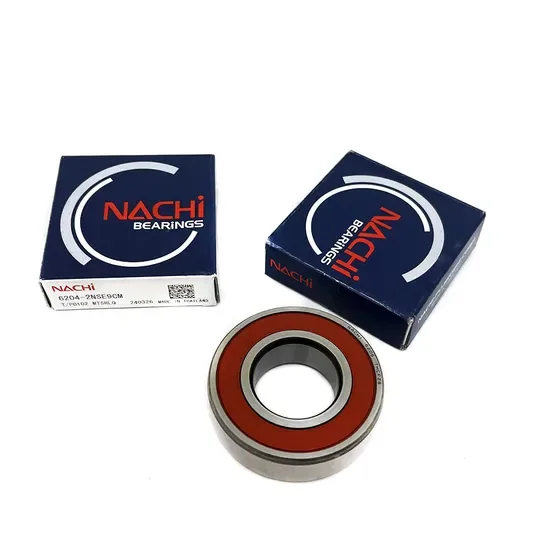
Deep Groove Ball Bearings
Genuine NACHI 608zz 6202 6201 Deep Groove Ball Bearing for Marine Equipment
View product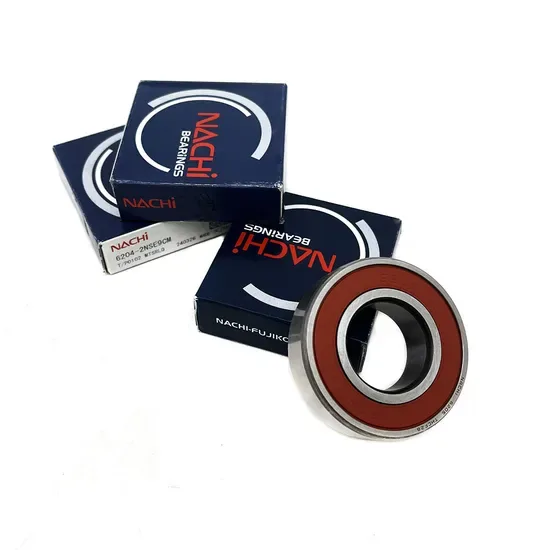
Deep Groove Ball Bearings
NACHI 608zz 16004 6201 Deep Groove Ball Bearing P6 P5 C3
View product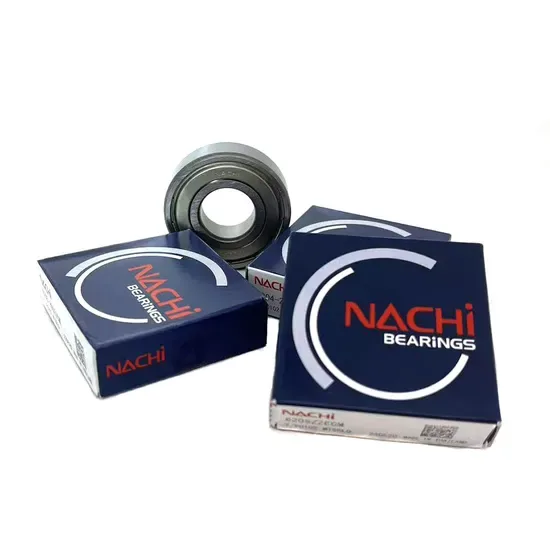
Deep Groove Ball Bearings
NACHI Deep Groove Ball Bearing 62301 608 6202 63008 63007 63006 6204 6301
View product Deep Groove Ball Bearings
Genuine NACHI P6 Deep Groove Ball Bearings 62208 62210 63002 63004 63006
View productModel check
Not sure which NACHI designation fits? We help with substitution, cross-reference and selection.
Send the old bearing number, the worn marking you can still read, or the application and shaft size. nachioem matches it to the correct NACHI model, including clearance, cage and seal options, before you order.
- Substitution for discontinued models
- Cross-reference to NACHI numbers
- Selection for spindles, pumps and reducers
Keep reading
Related NACHI bearing technical articles
More practical guides on NACHI suffixes, replacement and selection for machine tools, automotive, construction machinery, pumps and gear reducers.
Oct 8, 2026 · Technical Resources · 9 min read
NACHI Bearing Glossary: Wholesale Supplier for Bulk Orders
Master the NACHI Bearing Glossary to prevent costly spindle failures caused by misinterpreting suffix codes. Distinguish between standard DB pairing and custom Flush Ground…
Read the article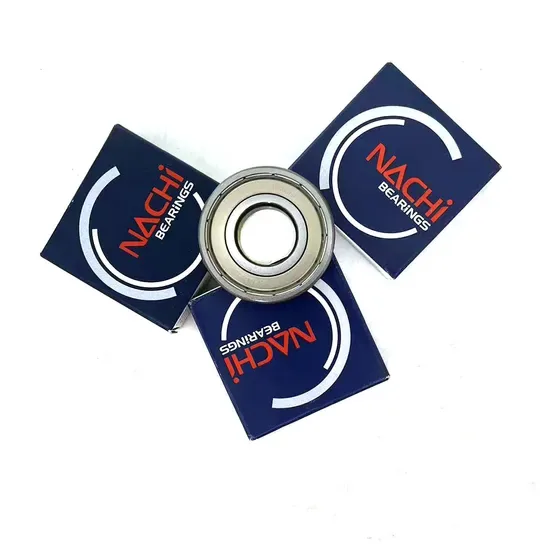
Oct 8, 2026 · Technical Resources · 7 min read
NACHI to Other Brands Interchange Table: Cross-Reference Supplier for Sale
Master the NACHI interchange table by verifying internal clearance and cage materials, not just dimensions. Matching C3 clearance and brass cages prevents thermal seizure…
Read the article Oct 8, 2026 · Technical Resources · 7 min read
NACHI Precision Bearing Wholesale Supplier & Bulk Stock
Prevent premature failure by matching NACHI precision bearing internal clearance and cage materials to heavy-load conditions. Learn to calculate thermal expansion effects, select vibration-resistant…
Read the article
Request a quote
Send your NACHI model list. We quote fast.
List the NACHI model numbers with full suffixes and the quantity for each. nachioem replies online as quickly as possible with pricing for distributors, repair shops and end users worldwide.
- info@nachioem.com
- WhatsApp +1 (702) 981-5880
- Online replies as quickly as possible
- Global delivery by DHL, FedEx, UPS, air or sea