
NACHI Bearing Technical Guide Procurement & Trade FAQs
NACHI Bearings by Country of Origin Wholesale Supplier
Verify the NACHI Bearings Country of Origin to prevent customs seizures and ensure genuine quality. Rely on mill certificates and batch traceability rather than packaging alone. Align documentation with manufacturing records to avoid costly delays and secure compliant imports for your supply chain.
- Published
- By author
- nachioem · Specialized NACHI bearing supplier
Packaging that looks authentic is not proof of origin.
The country of origin for genuine NACHI bearings is Japan, determined by the manufacturing facility and material certification rather than final packaging location. Verifying this origin requires a complete mill-to-port traceability chain, including original mill certificates and batch-specific origin declarations, to ensure customs compliance and prevent seizure.
I still remember the frustration on the face of a Mexican buyer I met at the Power Transmission Exhibition in Chicago. He held several boxes of NACHI tapered roller bearings, complaining that his previous shipment had been detained at port. The issue was not the quality of the steel or the precision of the rollers, but a missing original material traceability sheet from the Japanese factory. Customs officials flagged the goods because the declared origin did not match the supporting documentation. His production line was idle, waiting for replacement parts, while he dealt with the administrative nightmare of proving where the steel actually came from. This is a common pitfall in global bearing procurement. Many assume that if the box says NACHI, the origin is automatically clear. However, for brands like NACHI, the true origin is tied to specific manufacturing facilities in Japan, and without the proper paper trail, even genuine products can face severe delays.
Understanding the distinction between packaging location and manufacturing origin is critical for any serious distributor or OEM. The following sections detail how to verify the country of origin, secure the necessary documentation, and avoid the costly disruptions that come from non-compliant shipments.
Why Does the Country of Origin Matter for NACHI Bearings?
Origin dictates tariff rates, customs compliance, and the baseline for quality assurance.
For global distributors, the country of origin is not just a label on a box; it is a legal and financial determinant. NACHI bearings are primarily manufactured in Japan, where the company maintains strict control over steel production and heat treatment processes. When importing these components, the declared origin must align with the actual place of manufacture. Discrepancies here can lead to incorrect tariff applications, ranging from standard duties to punitive anti-dumping fees if the goods are misdeclared as originating from a different region.
Beyond tariffs, the origin serves as a proxy for quality consistency. NACHI’s reputation is built on its integrated production system in Japan, where raw steel is refined and processed in-house. This vertical integration ensures that the material properties meet specific industry standards. If a supplier claims the bearings are from a different country, it often indicates a lack of transparency or potential counterfeiting. For OEMs designing heavy machinery, knowing the exact origin allows for accurate lifecycle predictions and maintenance scheduling. A mismatch in origin documentation can void warranties and disrupt supply chain planning, leading to extended downtime during critical maintenance windows.
What Documents Prove the Genuine Origin of NACHI Bearings?
Mill certificates, origin declarations, and batch traceability reports are mandatory for verification.
Relying on the physical appearance of the bearing or its packaging is insufficient for proving origin. The real proof lies in the documentation that tracks the product from the mill to the port. A complete set of traceability documents typically includes the original mill certificate, which details the chemical composition and mechanical properties of the steel used. This document is issued by the manufacturer and links directly to the batch number stamped on the bearing.
Additionally, a formal certificate of origin is required for customs clearance. This document must explicitly state Japan as the country of manufacture and be aligned with the commercial invoice and packing list. Some suppliers may provide only a generic certificate, which is often inadequate for strict customs inspections. For high-value orders or sensitive industries like mining and wind power, buyers should request a full traceability audit report. This report connects the specific batch number of the bearings to the production records at the Japanese facility, providing an unbroken chain of custody. Without these documents, even genuine NACHI bearings by country of origin wholesale supplier transactions can face rejection at the border.
| Document Type | Purpose | Verification Level |
|---|---|---|
| Mill Certificate | Proves material composition and heat treatment | Full batch-level |
| Certificate of Origin | Confirms legal manufacturing country for customs | Verifiable |
| Batch Traceability Report | Links specific units to production records | Full batch-level |
| Commercial Invoice | Declares value and origin for tariff calculation | Self-reported |
How to Avoid Customs Seizures Due to Origin Discrepancies?
Aligning commercial invoices, packing lists, and certificates of origin before shipping is essential.
Customs seizures due to origin discrepancies are often preventable with careful pre-shipment preparation. A common scenario involves a mismatch between the country listed on the commercial invoice and the certificate of origin. For example, if a distributor buys from a intermediary in a third country, the invoice might reflect that country, while the certificate correctly states Japan. This inconsistency raises red flags for customs officers, who may suspect transshipment to evade duties or sanctions. To avoid this, all documents must consistently declare Japan as the country of origin for NACHI bearings.
Another risk factor is incomplete or vague descriptions in the packing list. Simply listing “bearings” without specifying the brand, model, and origin can lead to delays. Detailed descriptions that match the technical specifications on the mill certificate help streamline the inspection process. For bulk orders, it is advisable to conduct a pre-shipment inspection that includes a document review. This step ensures that every box in the container has the corresponding paperwork, reducing the likelihood of partial seizures. Engaging with a supplier who understands these nuances can save significant time and money, preventing the kind of mid-six-figure losses associated with detained cargo and production stoppages.
How to Verify NACHI Bearing Origin Upon Receipt?
Checking laser markings, packaging details, and requesting supplier traceability audits ensures authenticity.
Once the shipment arrives, physical verification complements the documentary checks. Genuine NACHI bearings feature precise laser markings on the outer ring, including the brand name, model number, and batch code. These markings are clean, deep, and uniformly spaced, unlike the often shallow or irregular etching found on counterfeit products. The packaging should also be inspected for security features, such as holographic labels and specific printing quality that matches NACHI’s global standards. However, packaging alone is not definitive, as high-quality fakes can replicate these elements.
The most reliable method for post-receipt verification is to cross-reference the batch code with the supplier’s traceability database. Reputable suppliers maintain records that link each batch code to the original mill certificate and production date. If a supplier cannot provide this link, it is a strong indicator that the origin may be misrepresented. For critical applications, such as in marine vessels or heavy construction equipment, conducting a random sample analysis for material composition can further confirm the origin. This scientific approach verifies that the steel meets the specific grades produced in Japanese facilities, providing an additional layer of security against counterfeit risks.
Conclusion
Verifying the country of origin is a critical step in securing genuine NACHI bearings.
Ensuring that NACHI bearings by country of origin wholesale supplier transactions are backed by complete traceability documentation prevents customs issues and guarantees quality. By focusing on mill certificates, consistent documentation, and physical verification, buyers can protect their supply chains from disruptions. This diligence is not just about compliance; it is about maintaining the reliability and performance of industrial machinery worldwide.
Applications covered in this article
Products in this article
NACHI bearings mentioned above
These are the NACHI bearing types discussed in this guide. Open a product page to check its designation and send the exact suffix with your quantity.
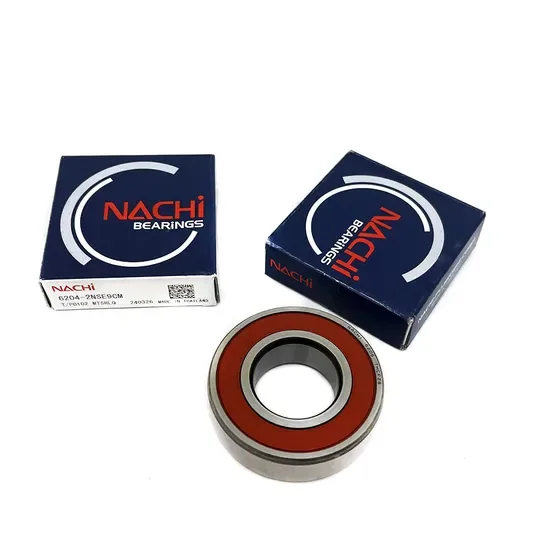
Deep Groove Ball Bearings
Genuine NACHI 608zz 6202 6201 Deep Groove Ball Bearing for Marine Equipment
View product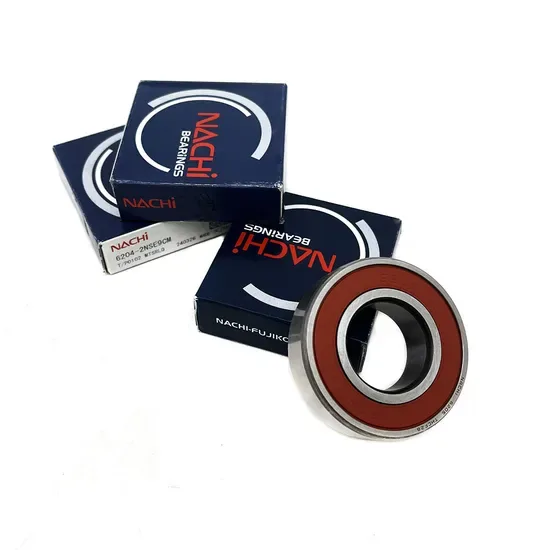
Deep Groove Ball Bearings
NACHI 608zz 16004 6201 Deep Groove Ball Bearing P6 P5 C3
View product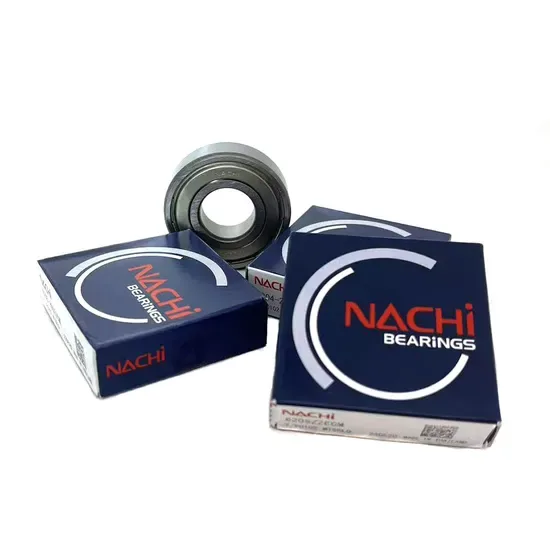
Deep Groove Ball Bearings
NACHI Deep Groove Ball Bearing 62301 608 6202 63008 63007 63006 6204 6301
View product Deep Groove Ball Bearings
Genuine NACHI P6 Deep Groove Ball Bearings 62208 62210 63002 63004 63006
View productModel check
Not sure which NACHI designation fits? We help with substitution, cross-reference and selection.
Send the old bearing number, the worn marking you can still read, or the application and shaft size. nachioem matches it to the correct NACHI model, including clearance, cage and seal options, before you order.
- Substitution for discontinued models
- Cross-reference to NACHI numbers
- Selection for spindles, pumps and reducers
Keep reading
Related NACHI bearing technical articles
More practical guides on NACHI suffixes, replacement and selection for machine tools, automotive, construction machinery, pumps and gear reducers.

Oct 7, 2026 · Procurement & Trade FAQs · 5 min read
Genuine NACHI Bearings Wholesale Supplier & Bulk Export
Stop relying on carrier portals to explain NACHI shipment delays. Mixed-batch customs holds stem from mismatched HS codes and inadequate moisture-proof packaging, not logistics…
Read the article
Oct 7, 2026 · Procurement & Trade FAQs · 8 min read
NACHI Bearing Supplier: Genuine Stock, Bulk & MRO for Global Tenders
Sourcing genuine NACHI bearings for tenders demands strict batch traceability to avoid 100% site rejection. Learn to verify mill certificates, manage mixed-container procurement with…
Read the article Oct 7, 2026 · Procurement & Trade FAQs · 6 min read
Genuine NACHI Bearings Wholesale Supplier | Bulk & Single Unit Orders
Master Annual Supply Agreements for NACHI Bearings by securing priority allocation and strict traceability protocols. Learn to consolidate emergency spares in bulk orders while…
Read the article
Request a quote
Send your NACHI model list. We quote fast.
List the NACHI model numbers with full suffixes and the quantity for each. nachioem replies online as quickly as possible with pricing for distributors, repair shops and end users worldwide.
- info@nachioem.com
- WhatsApp +1 (702) 981-5880
- Online replies as quickly as possible
- Global delivery by DHL, FedEx, UPS, air or sea