
NACHI Bearing Technical Guide Applications & Industries
NACHI Bearings for Car Alternators Wholesale Supplier
Selecting the right NACHI bearings for car alternators requires prioritizing high-temperature stability and cage durability over standard dimensional fit to prevent premature seizure. Learn from real-world failure cases how expanded internal clearances and synthetic greases mitigate thermal risks. Secure genuine inventory with full traceability to reduce warranty liabilities and protect your distribution reputation.
- Published
- By author
- nachioem · Specialized NACHI bearing supplier
Standard deep-groove ball bearings are not a universal fit for modern car alternators.
Selecting the correct NACHI bearings for car alternators requires prioritizing high-temperature stability and high-speed cage durability over generic dimensional compatibility. Failure to account for thermal expansion and rotational velocity limits leads to premature seizure, rotor damage, and significant warranty liabilities for distributors and repair groups.
I still remember the smell of burnt insulation and seized metal that filled the warehouse when a container from Latin America was opened. The client had ordered what they thought were standard replacements, but the units failed after only a few thousand kilometers. The rollers were blackened, fused to the races, and the cages had deformed into unrecognizable shapes. This was not a manufacturing defect in the traditional sense; it was a selection error. The bearings chosen were dimensionally correct but thermally inadequate for the specific heat profile of those alternator compartments. That incident shifted my entire approach to sourcing. I no longer look at part numbers in isolation. I look at the operating environment.
Understanding why these failures happen is the first step toward securing reliable inventory. The gap between a standard industrial bearing and an automotive-grade component is often invisible to the naked eye but catastrophic under the hood.
Why Do Standard NACHI Bearings Fail in Alternators?
The engine bay is a hostile environment that standard specifications often ignore.
Many distributors assume that if a bearing fits the shaft and housing, it will work. This assumption is dangerous. Modern alternators operate at significantly higher speeds and temperatures than older models. A standard deep-groove ball bearing, while robust for general industrial use, lacks the specific internal geometry required to handle the rapid thermal cycling found in automotive applications.
The primary culprit is heat. Alternators are mounted close to the engine block, exposing them to radiant heat that can exceed standard operating limits for common greases and steel treatments. When a bearing operates in this zone without adequate thermal protection, the lubricant breaks down. Once the grease loses its viscosity, metal-to-metal contact increases, generating more heat in a vicious cycle that ends in seizure.
Another critical factor is speed. High-output alternators spin at much higher RPMs to charge batteries efficiently at idle. Standard cages, often made from stamped steel or basic polyamide, can deform under centrifugal force at these speeds. This deformation alters the internal clearance, leading to uneven load distribution and early fatigue.
| Failure Mode | Standard Industrial Spec | Automotive Alternator Requirement |
|---|---|---|
| Thermal Stability | Basic | High-temperature resistant grease and seals |
| Cage Material | Stamped Steel/Standard Polyamide | Reinforced Polyamide or Machined Brass |
| Internal Clearance | Standard (CN) | Expanded (C3/C4) for thermal growth |
| Speed Rating | Moderate | High-speed optimized |
A European repair group once reported a spike in comebacks after switching to a cheaper, non-specialized supplier. The bearings looked identical to the OEM parts, but the internal clearance was too tight for the heat generated during highway driving. The result was a batch of alternators that locked up within months. This is why verifying the specific application data is crucial when sourcing NACHI bearings for car alternators.
How to Select the Right NACHI Bearing for High-Temp Zones?
Matching clearance, cage material, and grease to specific operating conditions is non-negotiable.
Selection is not just about picking the right series number. It involves a deeper analysis of the internal components. For alternators, the internal radial clearance is a critical parameter. As the bearing heats up, the inner ring expands faster than the outer ring due to direct contact with the rotating shaft. If the initial clearance is too tight, this thermal expansion eliminates the running space entirely, causing the bearing to bind.
Therefore, bearings with C3 or C4 internal clearances are often required for these applications. These expanded clearances accommodate thermal growth without compromising performance.
The cage design is equally important. At high rotational speeds, the cage must maintain its shape and guide the rolling elements smoothly. Reinforced polyamide cages offer a good balance of weight and strength, while machined brass cages provide superior durability for extreme conditions. The choice depends on the specific alternator model and its maximum RPM rating.
Grease selection is the final piece of the puzzle. Standard lithium-based greases may not withstand the prolonged high temperatures found in modern engine bays. Synthetic greases with high dropping points and excellent oxidation stability are preferred. They maintain their lubricating film even when the bearing housing reaches critical temperatures.
When evaluating suppliers, ask for technical datasheets that specify these internal features. A reputable NACHI bearings for car alternators wholesale supplier will provide this level of detail, allowing you to match the bearing to the specific thermal and speed requirements of the alternator model you are servicing.
What Are the Real Costs of Wrong Bearing Selection?
Initial savings are quickly erased by field failures, rotor damage, and reputational loss.
It is tempting to opt for the lowest-priced bearing that fits the physical dimensions. However, the true cost of a bearing is not its purchase price but its total cost of ownership. A failed bearing in an alternator does not just require a replacement bearing. It often damages the rotor, stator, and housing. In many cases, the entire alternator must be replaced, multiplying the cost significantly.
For distributors and repair shops, the hidden costs are even more severe. Warranty claims eat into margins. More importantly, repeated failures damage trust. A repair shop that installs a faulty alternator loses a customer for life. A distributor who supplies unreliable parts loses their retail network.
Consider the case of a Middle East distributor who switched to a lower-cost alternative for a bulk order. The initial savings were noticeable. However, within six months, the return rate skyrocketed. The cost of processing returns, shipping replacements, and compensating affected clients far exceeded the initial savings. The brand reputation took years to rebuild.
This is why investing in genuine, application-specific components is a strategic business decision. Genuine NACHI bearings for car alternators come with the assurance of quality control and material integrity. They are designed to withstand the rigors of automotive use, reducing the risk of catastrophic failure.
How to Source Genuine NACHI Alternator Bearings Efficiently?
Reliable wholesale partners provide traceability, mixed-batch flexibility, and technical cross-referencing.
Sourcing the right bearings requires more than just finding a low price. It requires a partner who understands the technical nuances of the automotive aftermarket. Distributors need suppliers who can provide genuine products with full traceability documentation. This ensures that every bearing can be verified as authentic, protecting both the supplier and the end-user from counterfeit risks.
Flexibility in ordering is also key. Repair shops and small distributors often need mixed batches of different sizes and types. A supplier who can consolidate various SKUs into a single shipment reduces logistics costs and simplifies inventory management. This is particularly important for businesses serving diverse markets with varying vehicle populations.
Technical support is another critical value add. When dealing with cross-brand equivalents, having access to experts who can verify compatibility and suggest alternatives is invaluable. This support helps prevent selection errors and ensures that the right bearing is chosen for each application.
Our approach focuses on providing this comprehensive support. We maintain a large inventory of genuine NACHI bearings for car alternators, along with other premium brands. Our team provides technical consultation to help you select the correct specifications for your specific needs. We offer flexible MOQs, from single-unit emergency spares to full container loads, ensuring that you can meet your customers’ demands efficiently.
By partnering with a supplier who prioritizes technical accuracy and supply chain reliability, you can reduce warranty claims, improve customer satisfaction, and build a sustainable business in the competitive automotive aftermarket.
Conclusion
Correct selection prevents costly failures and protects your business reputation.
Choosing the right NACHI bearings for car alternators is a technical decision with significant commercial implications. Prioritizing high-temperature performance, appropriate internal clearance, and durable cage materials ensures reliability in demanding automotive environments. Sourcing from a partner who offers genuine products, technical support, and flexible logistics enables distributors and repair groups to minimize risks and maximize customer trust.
Applications covered in this article
Products in this article
NACHI bearings mentioned above
These are the NACHI bearing types discussed in this guide. Open a product page to check its designation and send the exact suffix with your quantity.
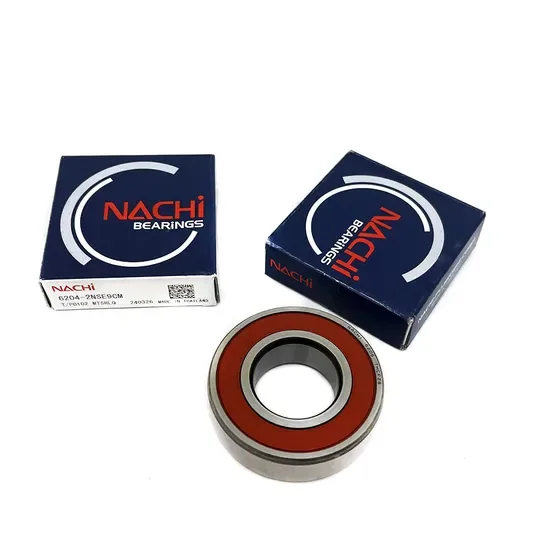
Deep Groove Ball Bearings
Genuine NACHI 608zz 6202 6201 Deep Groove Ball Bearing for Marine Equipment
View product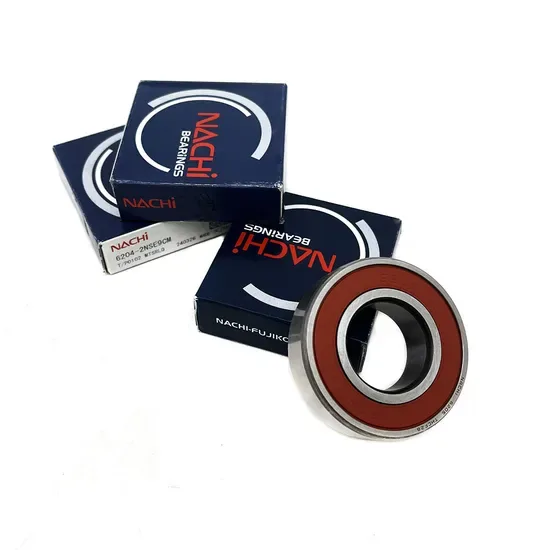
Deep Groove Ball Bearings
NACHI 608zz 16004 6201 Deep Groove Ball Bearing P6 P5 C3
View product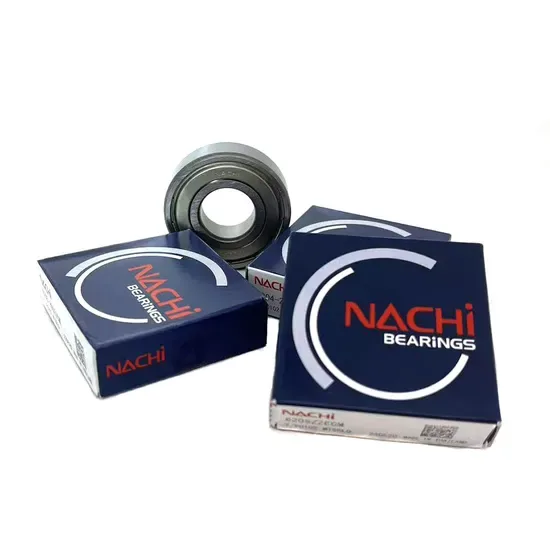
Deep Groove Ball Bearings
NACHI Deep Groove Ball Bearing 62301 608 6202 63008 63007 63006 6204 6301
View product Deep Groove Ball Bearings
Genuine NACHI P6 Deep Groove Ball Bearings 62208 62210 63002 63004 63006
View productModel check
Not sure which NACHI designation fits? We help with substitution, cross-reference and selection.
Send the old bearing number, the worn marking you can still read, or the application and shaft size. nachioem matches it to the correct NACHI model, including clearance, cage and seal options, before you order.
- Substitution for discontinued models
- Cross-reference to NACHI numbers
- Selection for spindles, pumps and reducers
Keep reading
Related NACHI bearing technical articles
More practical guides on NACHI suffixes, replacement and selection for machine tools, automotive, construction machinery, pumps and gear reducers.
Oct 7, 2026 · Applications & Industries · 8 min read
Genuine NACHI Bearings for Hydraulic Pumps – Wholesale Supplier
Prevent thermal seizure in hydraulic pumps by selecting genuine NACHI bearings with precise C3/C4 clearance classes. Learn from real-world failure cases and verify traceability…
Read the article Oct 7, 2026 · Applications & Industries · 7 min read
NACHI Bearings for Woodworking Machines Wholesale Supplier
Prevent costly spindle seizures in high-speed woodworking machines by selecting the correct NACHI bearings with C3 or C4 clearance. Learn how to match ZZ…
Read the article Oct 7, 2026 · Applications & Industries · 8 min read
Genuine NACHI Bearings for Plastic Machines – Wholesale Supplier
Genuine NACHI bearings for plastic machines prevent catastrophic downtime caused by improper clearance in high-temperature zones. Learn to select the right series for extruders…
Read the article
Request a quote
Send your NACHI model list. We quote fast.
List the NACHI model numbers with full suffixes and the quantity for each. nachioem replies online as quickly as possible with pricing for distributors, repair shops and end users worldwide.
- info@nachioem.com
- WhatsApp +1 (702) 981-5880
- Online replies as quickly as possible
- Global delivery by DHL, FedEx, UPS, air or sea