
NACHI Bearing Technical Guide Applications & Industries
NACHI Bearings for Forklifts: Wholesale Supplier
Stop premature failures by matching NACHI bearings for forklifts to specific seal and grease specs rather than just copying OEM part numbers. Learn to verify suffix codes for high-temperature or dusty environments and ensure authenticity with full traceability to prevent costly unplanned downtime in harsh warehouse operations.
- Published
- By author
- nachioem · Specialized NACHI bearing supplier
Matching the exact OEM part number does not guarantee bearing survival in harsh warehouse environments.
Selecting genuine NACHI bearings for forklifts requires matching specific seal and grease specifications to actual on-site operating conditions, rather than simply copying standard original equipment manufacturer part numbers. Premature failure in high-temperature or dusty applications is rarely a defect in manufacturing quality but a mismatch between standard internal components and extreme environmental stressors.
I still recall the humidity hitting my face as I stepped off the plane in Jeddah. A major logistics client had reported that their entire fleet of heavy-duty forklifts was experiencing catastrophic mast roller failures within just two months of installation. The local maintenance team insisted they were using the correct parts, pointing to boxes stamped with the familiar brand logo. However, walking into the warehouse, the air smelled thick with burnt oil. On the floor lay disassembled mast assemblies, the rollers caked in a black, viscous sludge. The standard lithium-based grease had completely melted, allowing abrasive dust from the open-yard operations to infiltrate the raceways. This was not a supply chain issue; it was a technical selection error. Standard seals cannot withstand such thermal and particulate assault.
This incident reshaped how I approach technical consultations. Selling bearings is not about moving boxes; it is about solving engineering problems before they cause unplanned downtime. For distributors and MRO operators sourcing NACHI bearings for forklifts, understanding the nuance of suffix codes and internal specifications is critical to ensuring reliability.
Why Do Standard NACHI Forklift Bearings Fail Prematurely?
Standard seals and greases are designed for general industrial use, not extreme site-specific heat and dust.
Many procurement managers assume that buying a bearing with the correct basic part number ensures longevity. This is a dangerous misconception. The basic number defines dimensions and load capacity, but it does not define the internal environment protection. In harsh environments like steel mills, cement plants, or hot-climate logistics hubs, standard bearings fail because their default components reach their physical limits.
The primary culprit is often the lubricant. Standard bearings typically come filled with general-purpose lithium soap grease. When exposed to sustained high temperatures, this grease can soften and bleed out, leaving the rolling elements dry. Once the lubricant film breaks down, metal-to-metal contact occurs, generating excessive heat and rapid wear.
Furthermore, standard rubber seals are designed to keep large contaminants out while retaining grease. They are not labyrinthine barriers against fine particulate matter. In dusty open-yard logistics, fine silica dust can bypass single-lip seals, acting as an abrasive paste inside the bearing. This leads to spalling and premature fatigue, regardless of the bearing’s dynamic load rating.
| Failure Mode | Standard Component Limitation | Environmental Trigger |
|---|---|---|
| Grease Melting | Low drop point standard grease | Sustained high ambient temperature |
| Abrasive Wear | Single-lip rubber seal | High concentration of fine dust |
| Raceway Spalling | Loss of lubricant film | Shock loads combined with dry running |
To prevent these issues, buyers must look beyond the basic number. As a supplier of NACHI bearings for forklifts, we often recommend variants with specialized suffixes that indicate upgraded seals or high-temperature grease fills. Ignoring these details turns a premium component into a disposable item.
How to Match NACHI Mast Bearings to Specific Operating Environments?
High-temperature sites need specialized grease, while dusty yards require upgraded labyrinth seals.
Selecting the right bearing involves analyzing the specific threats present in the operational environment. There is no one-size-fits-all solution for material handling equipment. The choice between a standard open bearing, a shielded version, or a fully sealed unit depends on the balance between contamination protection and heat dissipation.
In high-temperature warehouses, such as those found in the Middle East or near industrial furnaces, the focus must be on thermal stability. The grease must have a higher dropping point to remain viscous under heat. Additionally, the cage material may need to be stabilized to prevent dimensional changes due to thermal expansion.
Conversely, in dusty or wet environments, sealing is paramount. Labyrinth seals or double-lip contact seals provide superior protection against ingress. However, these seals generate friction, which can increase operating temperature. Therefore, the selection process requires a trade-off analysis. For slow-moving mast rollers, heavy sealing is acceptable. For high-speed chassis wheels, excessive seal friction can lead to overheating.
A European port operator once faced constant failures in their container handlers due to salt spray and sand. Switching to standard stainless steel bearings was too costly for the entire fleet. Instead, we recommended carbon steel bearings with enhanced corrosion-resistant coatings and double-sealed configurations. This approach provided the necessary protection without the prohibitive cost of full stainless steel units, extending service life significantly.
When sourcing NACHI bearings for forklifts, always request the detailed specification sheet for the specific suffix code. Verify whether the grease is suitable for the expected temperature range and whether the seal type matches the contamination level. This targeted approach minimizes the risk of mismatched components.
What Are the Key Parameters to Verify When Sourcing NACHI Forklift Bearings?
Always verify suffix codes for seals and grease, not just the basic part number.
The basic part number tells you the size, but the suffix code tells you the story. For MRO operators and distributors, understanding these codes is essential for accurate replacement and inventory management. A missing or misinterpreted suffix can result in receiving a bearing that looks identical but performs poorly in the intended application.
Key parameters to verify include:
- Seal Type: Identify whether the bearing uses shields (ZZ), rubber contacts (LLU), or labyrinth seals. Shields offer minimal protection but low friction. Rubber contacts provide better sealing but higher friction. Labyrinth seals offer the best protection for harsh environments.
- Grease Specification: Check the grease type code. Standard grease may not suffice for high-load or high-temperature applications. Look for codes indicating high-temperature or extreme-pressure formulations.
- Cage Material: Steel cages are robust for heavy loads, while polyamide cages offer lighter weight and better damping. Ensure the cage material is compatible with the operating temperature and chemical exposure.
- Internal Clearance: C3 or C4 clearances allow for thermal expansion. In high-temperature environments, standard clearance (CN) may lead to preload and overheating as the inner ring expands.
| Parameter | Standard Option | Harsh Environment Option | Verification Method |
|---|---|---|---|
| Seal | Shield (ZZ) | Double Lip Rubber (LLU) | Visual inspection & suffix code |
| Grease | General Purpose | High-Temp/EP | Technical datasheet review |
| Clearance | CN (Normal) | C3/C4 (Expanded) | Measurement or documentation |
Verifying these parameters requires access to accurate technical documentation. Reputable suppliers of NACHI bearings for forklifts should provide full traceability and detailed specification sheets for every batch. Do not accept vague descriptions; insist on precise suffix identification to ensure the bearing meets the application demands.
How to Ensure Authenticity and Quality of NACHI Bearings in Bulk Orders?
Require full traceability docs and conduct physical inspections to avoid counterfeit products.
The market for industrial bearings is flooded with counterfeits that mimic packaging and branding but lack the metallurgical quality of genuine products. For wholesalers and large-scale MRO projects, verifying authenticity is not just about brand loyalty; it is about risk management. A failed bearing in a critical lift can cause safety incidents and massive financial losses.
Authenticity verification starts with documentation. Genuine products come with certificates of origin and material test reports that trace back to the manufacturer’s production facilities. These documents should include batch numbers that match the markings on the bearing and its packaging.
Physical inspection is also crucial. Genuine bearings exhibit consistent machining quality, precise engraving, and uniform packaging. Counterfeits often show signs of poor finishing, inconsistent font usage, or substandard packaging materials. While some high-quality fakes are difficult to detect visually, discrepancies in weight or surface finish can be red flags.
We maintain strict quality control protocols, including random sampling and dimensional verification for bulk orders. This ensures that every NACHI bearings for forklifts unit shipped meets the original manufacturer’s specifications. By partnering with suppliers who prioritize transparency and technical support, buyers can mitigate the risk of receiving inferior products.
Building a reliable supply chain involves more than just price comparison. It requires a partner who understands the technical nuances and can provide verified, genuine components. This commitment to quality protects your reputation and ensures the operational continuity of your clients.
Conclusion
Selecting the right bearing is an engineering decision, not just a purchasing transaction.
Premature failure in forklift applications is often caused by mismatched seals and grease rather than manufacturing defects. By focusing on suffix codes, environmental conditions, and authentic sourcing, operators can significantly extend equipment life. Trust in technical expertise and verified supply chains to keep your material handling operations running smoothly.
Products in this article
NACHI bearings mentioned above
These are the NACHI bearing types discussed in this guide. Open a product page to check its designation and send the exact suffix with your quantity.
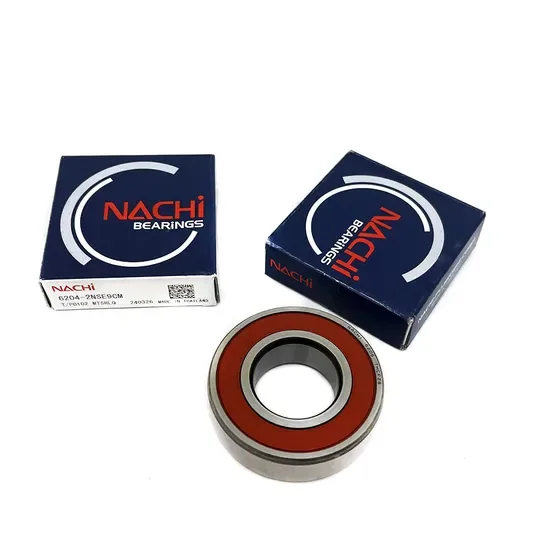
Deep Groove Ball Bearings
Genuine NACHI 608zz 6202 6201 Deep Groove Ball Bearing for Marine Equipment
View product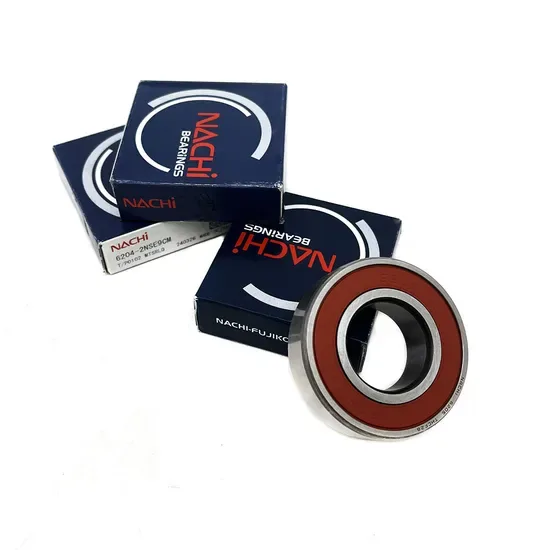
Deep Groove Ball Bearings
NACHI 608zz 16004 6201 Deep Groove Ball Bearing P6 P5 C3
View product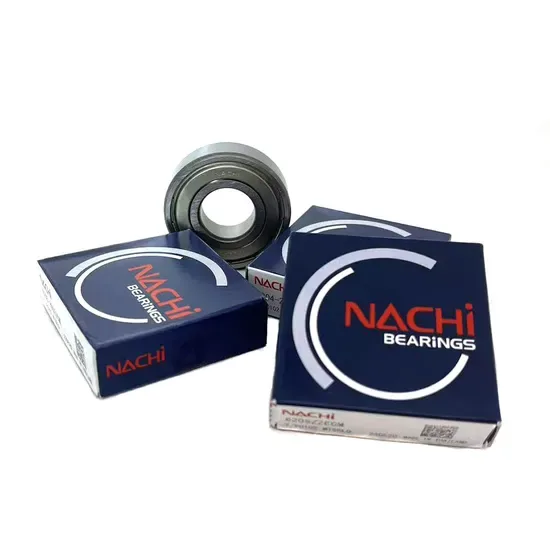
Deep Groove Ball Bearings
NACHI Deep Groove Ball Bearing 62301 608 6202 63008 63007 63006 6204 6301
View product Deep Groove Ball Bearings
Genuine NACHI P6 Deep Groove Ball Bearings 62208 62210 63002 63004 63006
View productModel check
Not sure which NACHI designation fits? We help with substitution, cross-reference and selection.
Send the old bearing number, the worn marking you can still read, or the application and shaft size. nachioem matches it to the correct NACHI model, including clearance, cage and seal options, before you order.
- Substitution for discontinued models
- Cross-reference to NACHI numbers
- Selection for spindles, pumps and reducers
Keep reading
Related NACHI bearing technical articles
More practical guides on NACHI suffixes, replacement and selection for machine tools, automotive, construction machinery, pumps and gear reducers.
Oct 7, 2026 · Applications & Industries · 8 min read
Genuine NACHI Bearings for Hydraulic Pumps – Wholesale Supplier
Prevent thermal seizure in hydraulic pumps by selecting genuine NACHI bearings with precise C3/C4 clearance classes. Learn from real-world failure cases and verify traceability…
Read the article Oct 7, 2026 · Applications & Industries · 7 min read
NACHI Bearings for Woodworking Machines Wholesale Supplier
Prevent costly spindle seizures in high-speed woodworking machines by selecting the correct NACHI bearings with C3 or C4 clearance. Learn how to match ZZ…
Read the article Oct 7, 2026 · Applications & Industries · 8 min read
Genuine NACHI Bearings for Plastic Machines – Wholesale Supplier
Genuine NACHI bearings for plastic machines prevent catastrophic downtime caused by improper clearance in high-temperature zones. Learn to select the right series for extruders…
Read the article
Request a quote
Send your NACHI model list. We quote fast.
List the NACHI model numbers with full suffixes and the quantity for each. nachioem replies online as quickly as possible with pricing for distributors, repair shops and end users worldwide.
- info@nachioem.com
- WhatsApp +1 (702) 981-5880
- Online replies as quickly as possible
- Global delivery by DHL, FedEx, UPS, air or sea