
NACHI Bearing Technical Guide Applications & Industries
NACHI Bearings for Helical Reducers – Wholesale Supplier
Prevent thermal seizure in helical reducers by selecting NACHI Bearings with correct C3 or C4 internal clearance for high-load operations. Avoid costly downtime caused by counterfeit parts through verified traceability and proper sourcing strategies. Ensure gearbox reliability with genuine components designed for elevated temperatures and heavy radial forces.
- Published
- By author
- nachioem · Specialized NACHI bearing supplier
Tighter fits do not always mean better stability in high-load gearboxes.
For helical reducers operating under heavy radial loads and elevated temperatures, the correct selection of NACHI cylindrical roller bearings with C3 or C4 internal clearance is non-negotiable. Standard clearance bearings will inevitably suffer from thermal expansion seizure, leading to catastrophic gearbox failure. Authenticity verification through full traceability documentation is equally critical to prevent premature wear caused by counterfeit components.
I still remember the smell of burnt oil in a workshop in Dongguan years ago. We were assembling a batch of helical gearboxes destined for a desert environment. The procurement team had swapped out specified NACHI bearings for a cheaper, non-genuine alternative to cut costs. They also ignored the recommendation for C3 clearance, assuming standard fit would suffice. Within months, the client in Riyadh reported total seizure. The bearings had expanded due to heat, locked into the housing, and destroyed the gear mesh. That incident cost us far more in emergency air freight and on-site repairs than the initial savings ever amounted to. It taught me that in power transmission, the bearing is not just a component; it is the heartbeat of the system.
Understanding why these specific components fail requires looking beyond the catalog numbers. It demands a grasp of thermal dynamics, load distribution, and supply chain integrity. This guide breaks down the technical selection criteria and sourcing realities for engineers and procurement specialists managing heavy-duty machinery.
Why are NACHI cylindrical roller bearings preferred in helical reducers?
Helical gears generate significant axial and radial forces that demand superior rigidity and load capacity.
Unlike spur gears, helical gears engage with a sliding action that creates complex load vectors. The bearings supporting these shafts must handle high radial loads while maintaining precise alignment. NACHI cylindrical roller bearings are engineered with optimized roller end profiles and cage designs that distribute stress evenly across the contact area. This structural integrity prevents edge loading, a common precursor to spalling and early fatigue failure.
The material quality plays a pivotal role here. Genuine NACHI bearings use high-purity bearing steel processed through controlled heat treatment. This results in a microstructure that resists deformation under shock loads typical in mining crushers or conveyor drives. When I inspect returned cores from failed units, the difference between genuine and counterfeit parts is often visible in the raceway surface finish. Counterfeits show irregular grinding marks and inconsistent hardness, leading to rapid wear even under normal operating conditions.
For OEMs designing new gearbox platforms, selecting NACHI bearings provides a balance of performance and availability. The dimensional stability ensures that preload settings remain consistent over time, reducing the need for frequent adjustments. This reliability translates directly into lower total cost of ownership for end-users, who prioritize uptime over initial purchase price.
How to select the correct internal clearance for high-temperature operations?
Standard clearance is insufficient for environments where operational heat exceeds ambient baseline significantly.
Internal clearance determines how much room the rolling elements have to expand as temperature rises. In a helical reducer, friction from gear meshing and churning oil generates heat. If the bearing is fitted with standard clearance (C0), thermal expansion can eliminate this gap entirely. The rollers then press against the races with excessive force, causing friction spikes, further heating, and eventual seizure.
Selecting the right clearance involves analyzing the operating temperature delta. For applications in hot climates like the Middle East or inside enclosed industrial housings, C3 clearance is typically the minimum requirement. In extreme cases involving heavy shock loads or very high rotational speeds, C4 clearance may be necessary. The decision matrix depends on the housing material’s expansion rate relative to the shaft. Steel housings expand differently than cast iron, altering the effective clearance during operation.
| Operating Condition | Recommended Clearance | Risk of Standard Clearance |
|---|---|---|
| Ambient Temperature, Light Load | C0 (Standard) | Low |
| Elevated Temperature, Moderate Load | C3 | High (Seizure likely) |
| High Temperature, Heavy Shock Load | C4 | Critical (Immediate failure) |
| Precision Machine Tool Spindle | C2 | N/A (Different application) |
I recall a project involving a cement mill drive in Southeast Asia. The ambient temperature was high, and the gearbox operated continuously. The initial specification called for standard clearance bearings. After repeated failures, we switched to NACHI bearings with C3 clearance. The change eliminated the thermal binding issues. The key was verifying the actual running temperature with thermal cameras and adjusting the fit accordingly.
Procurement teams must ensure that the clearance designation is explicitly stated in the purchase order. Ambiguity here leads suppliers to default to standard stock, which is rarely suitable for heavy industrial reducers. Always confirm the suffix code on the bearing box matches the engineering specification.
What are the hidden costs of using non-genuine alternative bearings?
Initial savings on counterfeit or lower-tier bearings are quickly erased by unplanned downtime and secondary damage.
The market is flooded with bearings that mimic the packaging and branding of premium manufacturers like NACHI. These parts often look identical to the untrained eye but lack the metallurgical quality and precision grinding of the original. In a helical reducer, a substandard bearing may run for a few weeks before failing. When it does, it rarely fails alone. The resulting debris contaminates the lubrication system, damaging gears, seals, and other bearings.
Consider the cost structure. A genuine NACHI cylindrical roller bearing might cost a certain amount. A counterfeit version might be half that price. However, if the fake bearing fails after three months, the cost includes not just the replacement part, but the labor to disassemble the gearbox, clean the contaminated oil, replace damaged gears, and ship emergency spares. In remote locations, such as offshore platforms or mines, the logistics cost alone can exceed the value of the entire gearbox.
I have seen MRO operators try to consolidate purchases by mixing brands without verifying authenticity. One client bought a batch of “NACHI” bearings from an unauthorized trader. Upon inspection, the laser etching on the inner ring was shallow and uneven. The cage material was also lighter than specification. We rejected the shipment. Had those been installed, the risk of catastrophic failure would have been extreme. The “savings” would have resulted in a mid-six-figure loss when the main drive shut down.
Authenticity is not just about brand loyalty; it is about risk management. Genuine NACHI bearings come with batch-specific traceability. This allows engineers to track manufacturing dates and material lots, which is crucial for failure analysis if issues arise. Counterfeit parts offer no such data trail, leaving operators blind to potential batch defects.
How to ensure traceability and quality when sourcing NACHI bearings globally?
Verification requires demanding full origin documentation and buying from consolidated suppliers with strict anti-counterfeit protocols.
Sourcing genuine NACHI bearings for helical reducers involves more than finding the lowest price. It requires a supply chain partner who understands the technical nuances and maintains rigorous quality control. Global distributors often hold stock from various regions, making consistency a challenge. Buyers must insist on certificates of origin and material test reports for critical applications.
A reliable supplier will provide mixed-brand consolidation services without compromising on authenticity. This is vital for MRO projects where a single order might include SKF seals, FAG spacers, and NACHI bearings. Managing multiple vendors increases administrative burden and shipping complexity. A one-stop solution simplifies logistics but demands higher trust in the supplier’s vetting process.
When evaluating a supplier, ask about their inventory management. Do they rotate stock to prevent aging? How do they handle returns? A professional distributor will have a clear policy for verifying returned goods and isolating suspect batches. They should also offer technical support for selection, helping engineers choose the right clearance and seal type for their specific environment.
For large OEMs, batch-to-batch consistency is key. Variations in dimensional tolerances can affect assembly line efficiency. Suppliers who work directly with authorized channels can guarantee this consistency. For smaller workshops, flexible MOQs allow them to access genuine parts without tying up capital in large volumes. The goal is to create a resilient supply chain that supports both planned maintenance and emergency breakdowns.
Conclusion
Reliability in helical reducers hinges on precise bearing selection and uncompromising authenticity.
Choosing NACHI cylindrical roller bearings with appropriate C3 or C4 clearance prevents thermal seizure in high-temperature environments. Avoiding counterfeit parts protects against costly secondary damage and unplanned downtime. Sourcing from verified suppliers ensures traceability and technical support for long-term operational success.
Applications covered in this article
Products in this article
NACHI bearings mentioned above
These are the NACHI bearing types discussed in this guide. Open a product page to check its designation and send the exact suffix with your quantity.
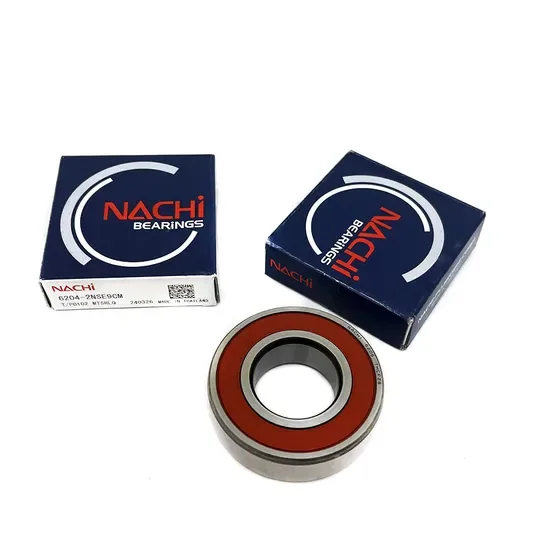
Deep Groove Ball Bearings
Genuine NACHI 608zz 6202 6201 Deep Groove Ball Bearing for Marine Equipment
View product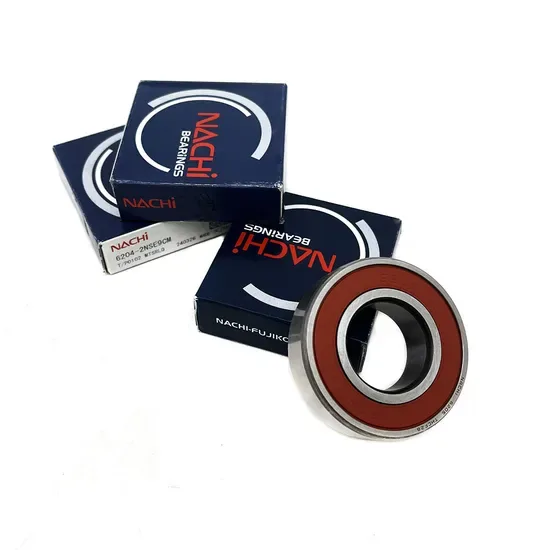
Deep Groove Ball Bearings
NACHI 608zz 16004 6201 Deep Groove Ball Bearing P6 P5 C3
View product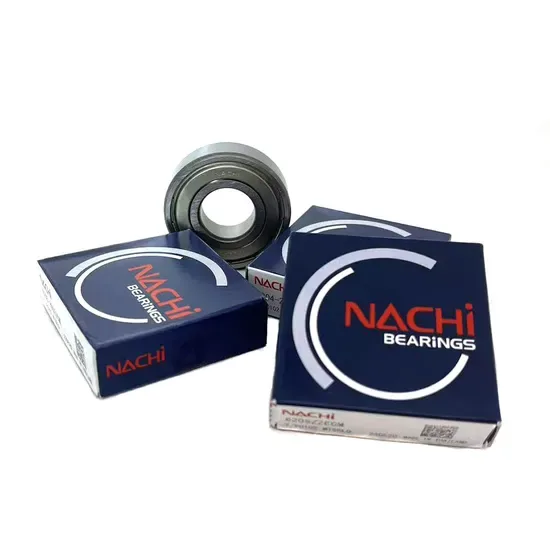
Deep Groove Ball Bearings
NACHI Deep Groove Ball Bearing 62301 608 6202 63008 63007 63006 6204 6301
View product Deep Groove Ball Bearings
Genuine NACHI P6 Deep Groove Ball Bearings 62208 62210 63002 63004 63006
View productModel check
Not sure which NACHI designation fits? We help with substitution, cross-reference and selection.
Send the old bearing number, the worn marking you can still read, or the application and shaft size. nachioem matches it to the correct NACHI model, including clearance, cage and seal options, before you order.
- Substitution for discontinued models
- Cross-reference to NACHI numbers
- Selection for spindles, pumps and reducers
Keep reading
Related NACHI bearing technical articles
More practical guides on NACHI suffixes, replacement and selection for machine tools, automotive, construction machinery, pumps and gear reducers.
Oct 7, 2026 · Applications & Industries · 8 min read
Genuine NACHI Bearings for Hydraulic Pumps – Wholesale Supplier
Prevent thermal seizure in hydraulic pumps by selecting genuine NACHI bearings with precise C3/C4 clearance classes. Learn from real-world failure cases and verify traceability…
Read the article Oct 7, 2026 · Applications & Industries · 7 min read
NACHI Bearings for Woodworking Machines Wholesale Supplier
Prevent costly spindle seizures in high-speed woodworking machines by selecting the correct NACHI bearings with C3 or C4 clearance. Learn how to match ZZ…
Read the article Oct 7, 2026 · Applications & Industries · 8 min read
Genuine NACHI Bearings for Plastic Machines – Wholesale Supplier
Genuine NACHI bearings for plastic machines prevent catastrophic downtime caused by improper clearance in high-temperature zones. Learn to select the right series for extruders…
Read the article
Request a quote
Send your NACHI model list. We quote fast.
List the NACHI model numbers with full suffixes and the quantity for each. nachioem replies online as quickly as possible with pricing for distributors, repair shops and end users worldwide.
- info@nachioem.com
- WhatsApp +1 (702) 981-5880
- Online replies as quickly as possible
- Global delivery by DHL, FedEx, UPS, air or sea