
NACHI Bearing Technical Guide Procurement & Trade FAQs
NACHI Bearings Import Duties: Wholesale Supplier Guide
Minimize Import Duties on NACHI Bearings by mastering HS code classification and leveraging Free Trade Agreement certificates. Avoid costly customs delays in mixed-brand containers through precise documentation and origin verification. Ensure smooth clearance and optimal landed costs with accurate regulatory compliance strategies for global sourcing.
- Published
- By author
- nachioem · Specialized NACHI bearing supplier
Origin is determined by the factory location, not the brand logo.
Correct classification of NACHI bearings under HS Chapter 8482 and the submission of valid Free Trade Agreement certificates are the primary mechanisms to minimize import duties. Mixed-brand container shipments require individual HS code declaration for each bearing type to prevent customs delays and penalty tariffs.
Sourcing industrial components across borders involves more than just negotiating unit prices. The landed cost often hinges on how customs authorities interpret the product’s origin and classification. I recall a shipment of tapered roller bearings destined for Valparaiso. The documentation listed the brand clearly, but the Harmonized System code did not align with the specific sub-category required by local customs. Furthermore, the Certificate of Origin failed to reference the active free trade agreement between the exporting and importing nations. The result was not a simple administrative query. The client faced a tariff rate significantly higher than the preferential rate available, leading to a financial hit that nearly caused them to reject the cargo. This incident underscored that accurate paperwork is as critical as the physical integrity of the steel rings inside the box.
Understanding these regulatory nuances prevents unexpected costs. The following sections detail how to navigate classification, leverage trade agreements, and manage complex logistics for mixed containers.
What is the Correct HS Code for NACHI Bearings?
Ball and roller bearings fall under Chapter 8482, but precise sub-codes depend on the specific bearing geometry and application.
The World Customs Organization uses the Harmonized System to categorize goods globally. For NACHI bearings, the primary heading is 8482. However, stopping at the six-digit level is insufficient for many national customs regimes. Duty rates can vary based on whether the item is a deep-groove ball bearing, a spherical roller bearing, or a tapered roller bearing.
A common error occurs when importers apply a generic code to an entire container. If a shipment contains both angular contact ball bearings and cylindrical roller bearings, they must be declared separately. Customs officers inspect the physical characteristics, not just the commercial invoice description. Misclassification can lead to retroactive duty assessments and penalties.
| Bearing Type | General HS Heading | Specific Sub-Category Consideration |
|---|---|---|
| Deep Groove Ball Bearings | 8482.10 | Standard radial load applications |
| Spherical Roller Bearings | 8482.20 | Heavy-duty misalignment compensation |
| Tapered Roller Bearings | 8482.30 | Combined radial and axial loads |
| Cylindrical Roller Bearings | 8482.40 | High radial load capacity |
| Thrust Ball Bearings | 8482.50 | Axial load only applications |
In my experience, a distributor in Southeast Asia once attempted to clear a mixed pallet using a single code for “ball bearings.” The inspection revealed thrust bearings and needle rollers in the same batch. The clearance process stalled for days while authorities re-evaluated each line item. Providing a detailed packing list that maps each part number to its specific HS sub-code from the outset avoids this bottleneck. Our consolidation services ensure that every SKU in a mixed container is documented with its precise classification, reducing the risk of such mismatches.
How Can FTA Forms Reduce Import Duties?
Certificates of Origin under active Free Trade Agreements can slash tariffs to zero or near-zero levels.
Many importers assume that the brand nationality determines the origin. This is incorrect. Origin is defined by where the manufacturing process took place. NACHI produces bearings in multiple locations, including Japan, Thailand, and other facilities. If a bearing is manufactured in a country that has a free trade agreement with the destination nation, it may qualify for preferential tariff treatment.
For example, shipments from Japan to certain Asian countries may benefit from reduced duties if the correct Form is presented. Similarly, products manufactured in Thailand might qualify under different regional trade pacts. The key is verifying the actual place of manufacture for each batch and securing the corresponding Certificate of Origin.
A South American distributor once omitted the specific FTA certificate for a shipment of Japanese-manufactured units. Instead of paying the preferential rate, they were charged the standard Most Favored Nation tariff. The difference amounted to a significant percentage of the total invoice value. This cost could have been avoided with proper documentation.
To utilize these benefits:
- Identify the manufacturing country for each NACHI bearing series.
- Check if an active FTA exists between that country and the destination.
- Request the specific Certificate of Origin format required by the importing customs authority.
- Ensure the certificate details match the commercial invoice and bill of lading exactly.
We maintain traceability documentation for all genuine products, allowing buyers to verify the origin and request the appropriate forms before shipment. This proactive approach ensures that the landed cost reflects the lowest possible duty rate.
How to Handle Customs for Mixed-Brand Containers?
Detailed packing lists with individual HS codes per item prevent port delays and demurrage charges.
Consolidating different brands and types of bearings into a single container is a cost-effective strategy for distributors. However, it complicates customs clearance. Each brand and type may have different documentation requirements and HS code interpretations. A single error in one line item can hold up the entire container.
A wholesaler in the Middle East experienced this when a mixed container arrived with inconsistent labeling. Some boxes lacked clear origin markings, while others had mismatched HS codes on the outer packaging compared to the internal documents. The customs audit took several days, resulting in substantial port demurrage fees. The delay disrupted their supply chain to local repair workshops.
To mitigate these risks:
- Segregate Documentation: Keep commercial invoices and packing lists organized by brand and type within the master document.
- Verify Markings: Ensure every box carries the correct country of origin label as per the manufacturing site.
- Pre-Clearance Review: Submit draft documents to a customs broker in the destination country before shipping.
Our one-stop mixed-container consolidation service includes a rigorous pre-shipment check. We verify that every NACHI bearing, along with other brands like SKF or NSK, is correctly labeled and documented. This attention to detail ensures smooth clearance even for complex, multi-SKU shipments.
What Documents Are Required for Smooth Clearance?
Commercial invoice, packing list, Bill of Lading, and exact Origin Certificates are mandatory for hassle-free import.
Missing or inconsistent paperwork is the most frequent cause of customs holds. Authorities require a clear paper trail that links the physical goods to their declared value and origin. For NACHI bearings, this means ensuring that the part numbers on the invoice match those on the packing list and the physical boxes.
An MRO buyer in Africa faced a lengthy customs audit because the origin declaration on the certificate did not match the factory address listed on the manufacturer’s documentation. The discrepancy triggered a deeper investigation into the authenticity and valuation of the goods. The clearance delay lasted weeks, halting maintenance operations at a mining site.
Essential documents include:
- Commercial Invoice: Must state the transaction value, currency, and Incoterms clearly.
- Packing List: Detailed breakdown of weight, dimensions, and quantity per SKU.
- Bill of Lading: Proof of shipment and contract of carriage.
- Certificate of Origin: Specific to the manufacturing country and any applicable FTAs.
- Technical Data Sheets: Sometimes requested to verify specifications and justify HS classification.
We provide complete traceability documentation for all orders. This includes verified certificates of origin and detailed packing lists that align perfectly with the commercial invoice. This consistency minimizes the chance of queries from customs officials, ensuring faster release of goods.
Conclusion
Accurate classification and proper documentation are the keys to controlling import costs.
Navigating import duties for NACHI bearings requires attention to HS codes, origin rules, and document consistency. Leveraging free trade agreements and managing mixed containers with precision prevents financial losses and operational delays. By prioritizing compliance and traceability, buyers can optimize their landed costs and maintain a reliable supply chain.
Products in this article
NACHI bearings mentioned above
These are the NACHI bearing types discussed in this guide. Open a product page to check its designation and send the exact suffix with your quantity.
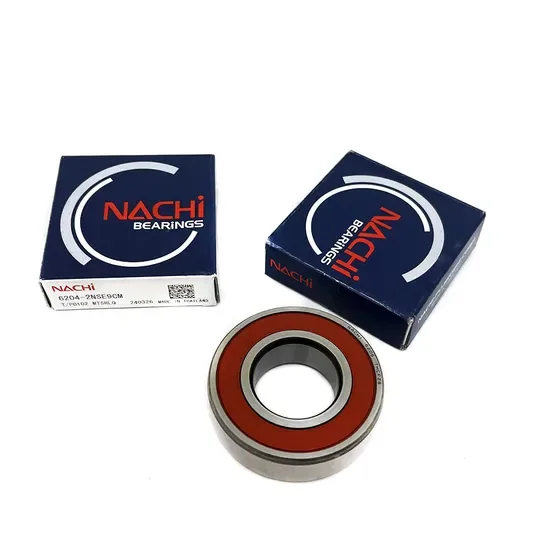
Deep Groove Ball Bearings
Genuine NACHI 608zz 6202 6201 Deep Groove Ball Bearing for Marine Equipment
View product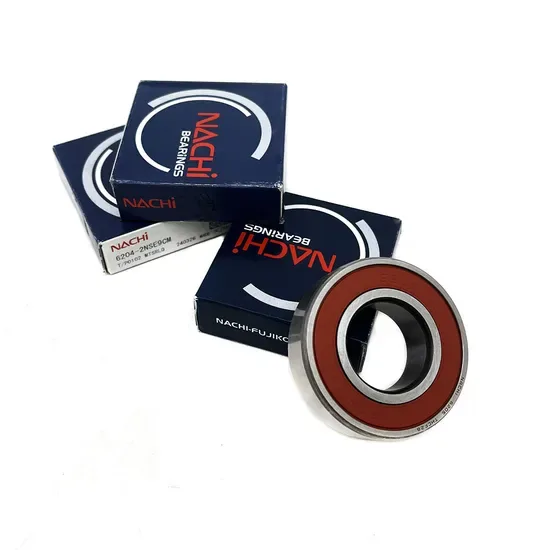
Deep Groove Ball Bearings
NACHI 608zz 16004 6201 Deep Groove Ball Bearing P6 P5 C3
View product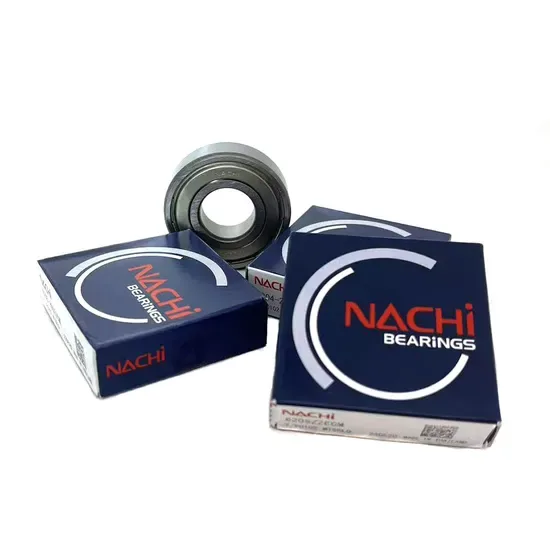
Deep Groove Ball Bearings
NACHI Deep Groove Ball Bearing 62301 608 6202 63008 63007 63006 6204 6301
View product Deep Groove Ball Bearings
Genuine NACHI P6 Deep Groove Ball Bearings 62208 62210 63002 63004 63006
View productModel check
Not sure which NACHI designation fits? We help with substitution, cross-reference and selection.
Send the old bearing number, the worn marking you can still read, or the application and shaft size. nachioem matches it to the correct NACHI model, including clearance, cage and seal options, before you order.
- Substitution for discontinued models
- Cross-reference to NACHI numbers
- Selection for spindles, pumps and reducers
Keep reading
Related NACHI bearing technical articles
More practical guides on NACHI suffixes, replacement and selection for machine tools, automotive, construction machinery, pumps and gear reducers.

Oct 7, 2026 · Procurement & Trade FAQs · 5 min read
Genuine NACHI Bearings Wholesale Supplier & Bulk Export
Stop relying on carrier portals to explain NACHI shipment delays. Mixed-batch customs holds stem from mismatched HS codes and inadequate moisture-proof packaging, not logistics…
Read the article
Oct 7, 2026 · Procurement & Trade FAQs · 8 min read
NACHI Bearing Supplier: Genuine Stock, Bulk & MRO for Global Tenders
Sourcing genuine NACHI bearings for tenders demands strict batch traceability to avoid 100% site rejection. Learn to verify mill certificates, manage mixed-container procurement with…
Read the article Oct 7, 2026 · Procurement & Trade FAQs · 6 min read
Genuine NACHI Bearings Wholesale Supplier | Bulk & Single Unit Orders
Master Annual Supply Agreements for NACHI Bearings by securing priority allocation and strict traceability protocols. Learn to consolidate emergency spares in bulk orders while…
Read the article
Request a quote
Send your NACHI model list. We quote fast.
List the NACHI model numbers with full suffixes and the quantity for each. nachioem replies online as quickly as possible with pricing for distributors, repair shops and end users worldwide.
- info@nachioem.com
- WhatsApp +1 (702) 981-5880
- Online replies as quickly as possible
- Global delivery by DHL, FedEx, UPS, air or sea