
NACHI Bearing Technical Guide Procurement & Trade FAQs
NACHI Bearings MOQ: Wholesale Supplier for Bulk Orders
Navigate the MOQ for NACHI bearings by leveraging mixed-brand consolidation to bypass rigid official volume thresholds. Eliminate hidden LCL surcharges and expedited air freight costs while securing genuine products through flexible wholesale strategies. Optimize total landed cost efficiency for global distributors and MRO buyers without compromising authenticity or profit margins.
- Published
- By author
- nachioem · Specialized NACHI bearing supplier
The belief that low minimum order quantities inevitably lead to higher unit costs is a procurement myth.
For global distributors and MRO buyers, the effective MOQ for NACHI bearings is highly flexible when leveraging mixed-brand consolidation strategies. This approach eliminates the hidden logistics surcharges associated with Less-than-Container Load shipments, allowing buyers to source genuine NACHI products in small batches or urgent single-unit replacements without sacrificing profit margins or compromising on authenticity.
Standing on the humid docks of Surabaya port years ago, I watched a critical shipment of spherical roller bearings sit idle while my phone buzzed with angry calls from a power plant manager. The issue was not availability, but arithmetic. The original equipment manufacturer required a full container load to release the stock, yet the emergency repair needed only a specific subset of NACHI bearing models. The freight forwarder’s quote for the remaining space via LCL was staggering, with surcharges that nearly doubled the value of the bearings themselves. We eventually opted for air freight, a decision that erased the project’s profit margin entirely. That experience reshaped my understanding of supply chain dynamics. It revealed that the rigid official MOQ for NACHI bearings is often less about manufacturing constraints and more about logistical efficiency for the brand. By shifting focus from single-brand volume to mixed-container consolidation, buyers can bypass these artificial barriers.
This structural insight forms the basis of modern flexible sourcing. Instead of viewing MOQ as a fixed wall, experienced buyers treat it as a variable that can be managed through strategic inventory pooling and cross-brand matching.
What is the standard MOQ for NACHI bearings?
Official channels typically enforce strict volume thresholds, but these limits are frequently circumvented through consolidated wholesale networks.
Most industrial buyers assume that purchasing directly from the brand’s regional office guarantees the best price and lowest MOQ. In reality, official distributors often prioritize large-scale OEM contracts, leaving smaller distributors and MRO operators with unfavorable terms. The standard MOQ for NACHI bearings in direct channels is designed to ensure batch consistency and minimize administrative overhead for the manufacturer. However, this rigidity creates a gap in the market for buyers who need genuine products but cannot commit to full pallet or container volumes of a single SKU.
When a buyer approaches a traditional distributor for a small batch of deep-groove ball bearings or tapered roller bearings, they are often quoted a premium price or told that the item is backordered until a larger production run occurs. This is where the concept of flexible MOQ comes into play. By working with suppliers who maintain massive spot inventories across multiple brands, buyers can access NACHI products without meeting the official volume requirements. The supplier absorbs the bulk purchasing risk, breaking down large shipments into manageable lots for end-users.
Consider a regional distributor in Southeast Asia who needs to stock a variety of NACHI insert bearings for agricultural machinery clients. Ordering each model individually would result in dozens of small shipments, each incurring its own handling fees and customs clearance costs. By consolidating these orders with other brands like NSK or FAG into a single mixed container, the distributor effectively reduces the per-unit logistics cost to near zero. This strategy transforms the MOQ from a barrier into a manageable planning parameter.
The key is recognizing that the MOQ for NACHI bearings is not a physical limitation of production but a commercial policy that can be navigated through smart sourcing partnerships. Buyers who understand this dynamic can secure genuine products with greater frequency and lower total landed costs.
How to bypass high MOQ for urgent spare parts?
Mixed-brand consolidation solves single-model shortages by pooling demand across diverse industrial sectors.
Emergency maintenance scenarios rarely align with standard procurement cycles. When a critical piece of mining equipment fails, the need for a specific NACHI spherical roller bearing is immediate. Waiting for a new production batch to meet the official MOQ is not an option. The solution lies in accessing suppliers who operate on a mixed-batch model. These suppliers maintain extensive inventories of various bearing types, including cylindrical roller bearings and angular contact ball bearings, allowing them to fulfill urgent single-unit requests without disrupting their broader logistics operations.
A European wind farm operator once faced a turbine gearbox failure during peak season. The required NACHI precision bearing was not available in local stock, and the official lead time exceeded three weeks. By sourcing through a global supplier specializing in mixed-brand consolidation, the operator received the genuine part within days. The supplier combined this urgent order with other pending shipments destined for the same region, effectively hiding the small volume within a larger consolidated flow. This approach bypasses the high MOQ for NACHI bearings that would have otherwise delayed the repair.
The process involves identifying suppliers who offer cross-brand equivalent model matching. If a specific NACHI model is temporarily unavailable in small quantities, a technical expert can recommend a functionally equivalent alternative from another premium brand in the inventory, such as SKF or TIMKEN, while maintaining the overall order balance. This flexibility ensures that downtime is minimized without forcing the buyer to purchase excess inventory just to meet a quota.
Risk management is crucial here. Buyers must ensure that the supplier provides full traceability documentation for every item, regardless of order size. Genuine NACHI bearings come with specific packaging and marking features that verify authenticity. A reputable supplier will provide these details proactively, ensuring that even a single bearing purchased to bypass MOQ constraints meets the same quality standards as a full container load.
What are the hidden costs of failing to meet MOQ?
LCL surcharges and expedited air freight destroy profit margins more effectively than slight unit price increases.
Many procurement managers focus exclusively on the unit price of the bearing, overlooking the logistical penalties associated with small orders. When a buyer fails to meet the standard MOQ for NACHI bearings, they are often forced into Less-than-Container Load shipping arrangements. LCL shipments involve additional handling fees, warehousing charges at transshipment hubs, and complex customs documentation processes. These hidden costs can accumulate rapidly, often exceeding the savings achieved by negotiating a lower unit price.
Furthermore, the pressure to meet urgent deadlines when MOQs are not met frequently leads to air freight decisions. As seen in the Surabaya case, air freight rates for heavy industrial components like thrust bearings or needle bearings are prohibitively expensive. The cost per kilogram for air cargo can be several times higher than sea freight, turning a routine replacement into a significant financial loss. By contrast, consolidating orders to meet full container quotas, even through mixed-brand strategies, allows buyers to leverage significantly lower sea freight rates.
A Middle East steel mill analyzed its annual bearing procurement data and found that nearly a quarter of its budget was spent on expedited shipping and LCL surcharges due to fragmented ordering practices. By switching to a consolidated sourcing model that respected the effective MOQ for NACHI bearings through batch pooling, the mill reduced its total logistics spend noticeably. The unit price of the bearings remained competitive, but the elimination of hidden freight costs resulted in substantial overall savings.
Buyers must calculate the total landed cost, not just the ex-works price. Understanding the true economic impact of MOQ compliance helps in making informed decisions about order timing and volume. Leveraging suppliers who facilitate mixed-container loads allows buyers to enjoy the benefits of full container pricing without the burden of holding excessive inventory of a single brand.
How to ensure authenticity with flexible MOQ?
Full traceability and ISO compliance remain non-negotiable, regardless of order size or consolidation method.
A common misconception is that flexible MOQ or mixed-brand sourcing compromises product authenticity. Buyers worry that small batches might be sourced from unauthorized channels or gray markets. However, reputable global suppliers adhere to strict ISO-compliant quality assurance protocols that apply equally to single-unit orders and bulk shipments. The key is verifying the supply chain’s transparency.
Genuine NACHI bearings feature specific anti-counterfeit measures, including unique batch codes, holographic labels, and precise machining tolerances. A professional supplier will provide complete traceability documentation, linking each bearing back to the manufacturer’s production facilities. This documentation is essential for MRO clients and OEMs who require proof of origin for warranty and safety compliance.
When sourcing through mixed-brand channels, buyers should request sample verification for critical applications. For instance, a precision machine-tool builder requiring high-speed angular contact ball bearings can test a small batch to confirm performance metrics before placing a larger consolidated order. This step ensures that the flexible MOQ arrangement does not introduce variability in quality. The supplier’s ability to provide technical datasheets and application guidance further reinforces their commitment to authenticity and professionalism.
Trust is built through consistent delivery of genuine products and transparent communication. By partnering with suppliers who prioritize traceability over quick sales, buyers can confidently navigate the flexible MOQ for NACHI bearings. This approach ensures that cost optimization does not come at the expense of reliability or safety, maintaining the integrity of industrial operations across diverse sectors.
Conclusion
Flexible sourcing transforms MOQ from a barrier into a strategic advantage.
By leveraging mixed-brand consolidation, buyers can access genuine NACHI bearings without the burden of excessive inventory or hidden logistics costs. This approach prioritizes total landed cost efficiency and operational continuity over rigid adherence to official volume thresholds.
Applications covered in this article
Products in this article
NACHI bearings mentioned above
These are the NACHI bearing types discussed in this guide. Open a product page to check its designation and send the exact suffix with your quantity.
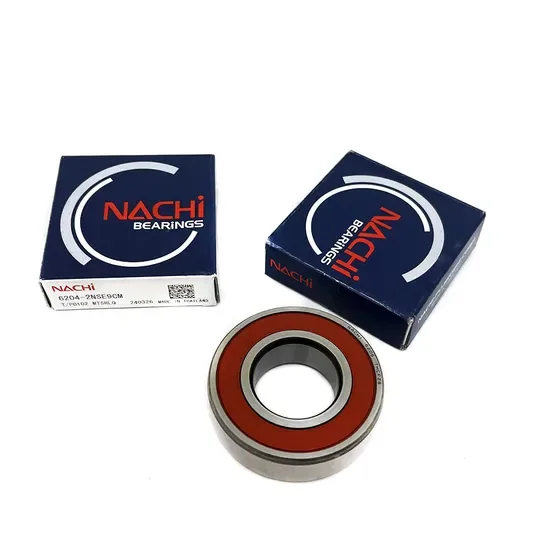
Deep Groove Ball Bearings
Genuine NACHI 608zz 6202 6201 Deep Groove Ball Bearing for Marine Equipment
View product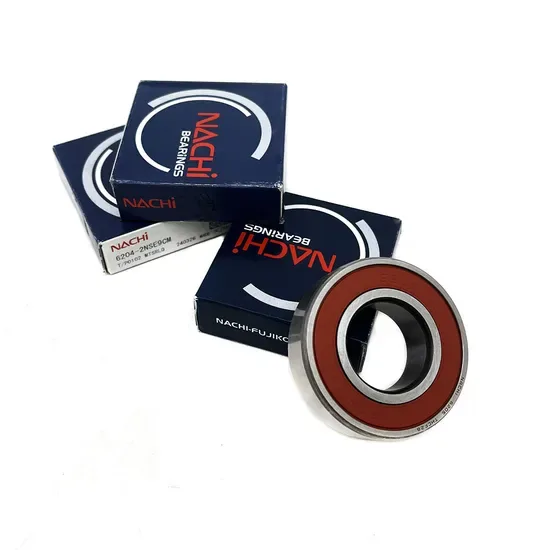
Deep Groove Ball Bearings
NACHI 608zz 16004 6201 Deep Groove Ball Bearing P6 P5 C3
View product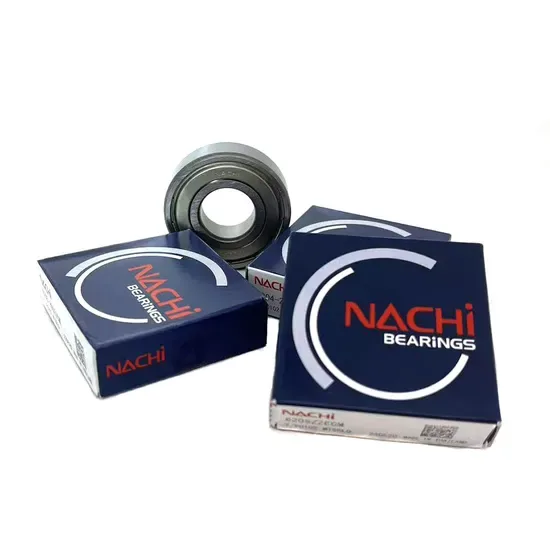
Deep Groove Ball Bearings
NACHI Deep Groove Ball Bearing 62301 608 6202 63008 63007 63006 6204 6301
View product Deep Groove Ball Bearings
Genuine NACHI P6 Deep Groove Ball Bearings 62208 62210 63002 63004 63006
View productModel check
Not sure which NACHI designation fits? We help with substitution, cross-reference and selection.
Send the old bearing number, the worn marking you can still read, or the application and shaft size. nachioem matches it to the correct NACHI model, including clearance, cage and seal options, before you order.
- Substitution for discontinued models
- Cross-reference to NACHI numbers
- Selection for spindles, pumps and reducers
Keep reading
Related NACHI bearing technical articles
More practical guides on NACHI suffixes, replacement and selection for machine tools, automotive, construction machinery, pumps and gear reducers.

Oct 7, 2026 · Procurement & Trade FAQs · 5 min read
Genuine NACHI Bearings Wholesale Supplier & Bulk Export
Stop relying on carrier portals to explain NACHI shipment delays. Mixed-batch customs holds stem from mismatched HS codes and inadequate moisture-proof packaging, not logistics…
Read the article
Oct 7, 2026 · Procurement & Trade FAQs · 8 min read
NACHI Bearing Supplier: Genuine Stock, Bulk & MRO for Global Tenders
Sourcing genuine NACHI bearings for tenders demands strict batch traceability to avoid 100% site rejection. Learn to verify mill certificates, manage mixed-container procurement with…
Read the article Oct 7, 2026 · Procurement & Trade FAQs · 6 min read
Genuine NACHI Bearings Wholesale Supplier | Bulk & Single Unit Orders
Master Annual Supply Agreements for NACHI Bearings by securing priority allocation and strict traceability protocols. Learn to consolidate emergency spares in bulk orders while…
Read the article
Request a quote
Send your NACHI model list. We quote fast.
List the NACHI model numbers with full suffixes and the quantity for each. nachioem replies online as quickly as possible with pricing for distributors, repair shops and end users worldwide.
- info@nachioem.com
- WhatsApp +1 (702) 981-5880
- Online replies as quickly as possible
- Global delivery by DHL, FedEx, UPS, air or sea