
NACHI Bearing Technical Guide Procurement & Trade FAQs
NACHI Data Sheets and CAD for Wholesale Bearing Supplier
Secure genuine NACHI Data Sheets and CAD to prevent costly assembly interference from unofficial redraws. Verify official documentation through metadata checks and cross-referencing with 2D PDFs for dimensional accuracy. Demand original files with quotes to ensure design confidence and streamline your procurement process effectively.
- Published
- By author
- nachioem · Specialized NACHI bearing supplier
Unofficial CAD models are a silent killer in assembly lines.
Securing genuine NACHI data sheets and 3D CAD models is critical to avoid installation interference; buyers must verify official documentation over third-party redraws. Most procurement teams assume any digital model will suffice for preliminary design checks, but this assumption often leads to costly physical clashes during final assembly. The only way to ensure dimensional accuracy is to source files directly from verified channels that provide original manufacturer specifications.
I learned this lesson the hard way early in my career. I was managing equipment procurement for a production line and selected NACHI angular contact ball bearings based on a generic catalog download. The 2D dimensions looked correct, but the 3D geometry in the unofficial CAD file missed a subtle chamfer detail on the outer ring. When the maintenance team attempted installation, the bearing cage interfered with the housing shoulder. The line halted for days while we sourced replacements and re-machined components. That downtime cost far more than the bearings themselves. Later, when I shifted to supplying bearings globally, I noticed a pattern. At trade shows in Hanover, serious OEM engineers and MRO managers did not just ask for price lists. They asked for NACHI bearing 3D CAD models and official drawings before discussing volume. They needed to verify fitment digitally before committing to physical stock. This shift in buyer behavior highlights a crucial truth: technical confidence drives procurement decisions more than marginal price differences.
Why Do You Need Official NACHI Data Sheets and CAD?
Unofficial redraws often miss precise tolerances, causing assembly failures.
Many distributors generate their own CAD files by reverse-engineering physical samples or copying from outdated public databases. These files may look visually similar to the original but lack the micron-level precision required for high-speed or heavy-load applications. When you use these unofficial models, you risk designing housings and shafts that do not align with the actual product.
Consider a case involving a Middle East steel mill. Their engineering team used a third-party 3D model for a spherical roller bearing replacement project. The model indicated a standard width, but the actual NACHI unit had a slight variation due to its specific internal clearance class. During installation, the locking nut could not thread properly because the modeled shoulder position was off by a fraction of a millimeter. This small error forced them to halt production to modify the shaft. If they had used genuine NACHI data sheets and CAD models, this clash would have been detected in the virtual assembly phase.
Official files include critical details such as exact fillet radii, grease groove positions, and seal interference zones. These features are often omitted in generic redraws to simplify the geometry. For OEMs designing new machinery, these omissions can lead to catastrophic failures under load. For MRO managers, they cause frustrating delays during emergency repairs. By insisting on authentic documentation, you protect your project timeline and budget.
How to Verify the Authenticity of NACHI CAD Models?
Check file origins and cross-reference with official 2D PDFs.
Not all files labeled as “NACHI” are created equal. To ensure you are working with authentic data, you must adopt a verification protocol. Start by examining the metadata of the CAD file. Genuine files often contain manufacturer-specific attributes, part numbers, and revision dates that match the official catalog. If the file lacks metadata or contains generic descriptions, treat it with suspicion.
Next, perform a cross-reference check. Open the NACHI technical data sheets PDF and compare key dimensions against the 3D model. Focus on mounting dimensions, such as bore diameter, outside diameter, and width. Also, check the abutment dimensions, which define how the bearing seats against shoulders. If the 3D model deviates from the 2D table even slightly, it is likely a redraw.
A European wind farm operator once shared their verification process with me. They require suppliers to provide both the STEP file and the corresponding dimension table. Their quality team runs a script to extract critical dimensions from the CAD model and compares them automatically against the PDF values. Any discrepancy triggers a request for clarification. This rigorous approach prevents errors before they reach the site. As a supplier, I now attach these verified pairs directly to quotes. This practice eliminates back-and-forth emails and builds trust. Buyers know they are getting traceable, accurate data.
What Parameters Must Be Checked in NACHI Data Sheets?
Focus on tolerances, internal clearances, and mounting dimensions.
When reviewing NACHI data sheets, do not just glance at the basic size. The devil is in the details. You must scrutinize the tolerance classes. NACHI bearings adhere to ISO standards, but different series have different precision levels. For high-speed spindles, you need P4 or P5 precision. For general industrial use, P0 or P6 may suffice. Using the wrong tolerance class can lead to excessive vibration or premature wear.
Internal clearance is another critical parameter. Bearings are available with C2, C3, C4, or CN clearances. The choice depends on the operating temperature and load conditions. A mismatch here can cause the bearing to seize if it expands too much under heat, or rattle if the clearance is too large. The data sheet specifies the radial internal clearance range for each class. Ensure your design accounts for thermal expansion.
Mounting dimensions include the minimum and maximum shaft and housing shoulder diameters. These values ensure the bearing is supported correctly without interfering with the rolling elements. Ignoring these can lead to edge loading and early fatigue failure. In one instance, an automotive aftermarket supplier sent us a drawing where the housing shoulder was too high. It rubbed against the bearing seal, causing overheating. We pointed out the error using the official NACHI technical guidelines, and they adjusted the design. This simple check saved them from a potential recall.
How to Request Complete NACHI Documentation from Suppliers?
Demand original files directly with quotation packages.
Many buyers hesitate to ask for detailed documentation, fearing it will slow down the quoting process. However, reputable suppliers expect this request. When you inquire about NACHI bearings, specify that you need the genuine NACHI bearing drawings and parameter tables. Do not accept generic brochures. Ask for the specific PDF data sheet for the exact part number and suffix.
For CAD needs, request the native format or universal STEP/IGES files. Clarify if you need single-part models or full assembly kits. Some suppliers offer libraries of NACHI bearing 3D CAD models for common series. Access to these libraries can significantly speed up your design workflow.
A distributor in Southeast Asia recently streamlined their pre-sales process by adopting this approach. Instead of answering repeated technical questions from end-users, they started including official NACHI 3D models and data sheets in their initial proposals. This reduced their technical inquiry volume by a noticeable margin. Customers appreciated the transparency and ease of integration. It positioned the distributor as a technical partner rather than just a box mover.
In our operations, we attach these official documents to every quote for NACHI products. This ensures that every buyer, whether an OEM engineer or an MRO manager, has immediate access to verified information. It removes ambiguity and accelerates the decision-making process. You do not have to chase down files after the order is placed. Everything is ready for your design team to use immediately.
Conclusion
Verified documentation prevents costly assembly errors.
Relying on unofficial CAD models and incomplete data sheets introduces unnecessary risk into your supply chain. By demanding genuine NACHI data sheets and CAD models, you ensure dimensional accuracy and design confidence. This practice protects your production timeline and reduces technical support burdens. Always verify file authenticity through metadata and cross-referencing. Prioritize suppliers who provide transparent, traceable documentation as part of their standard service. This approach transforms procurement from a transactional task into a strategic advantage.
Applications covered in this article
Products in this article
NACHI bearings mentioned above
These are the NACHI bearing types discussed in this guide. Open a product page to check its designation and send the exact suffix with your quantity.
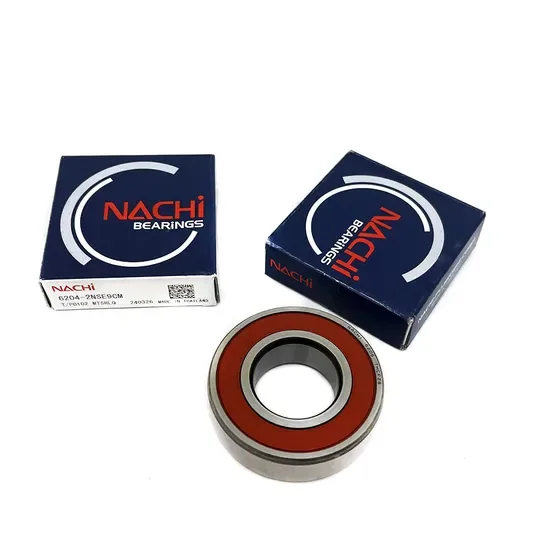
Deep Groove Ball Bearings
Genuine NACHI 608zz 6202 6201 Deep Groove Ball Bearing for Marine Equipment
View product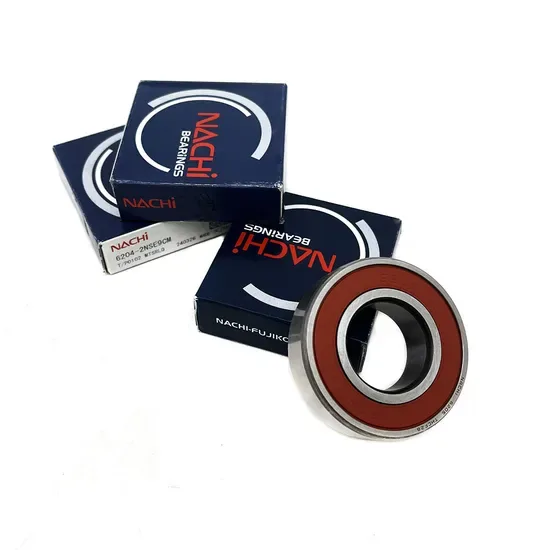
Deep Groove Ball Bearings
NACHI 608zz 16004 6201 Deep Groove Ball Bearing P6 P5 C3
View product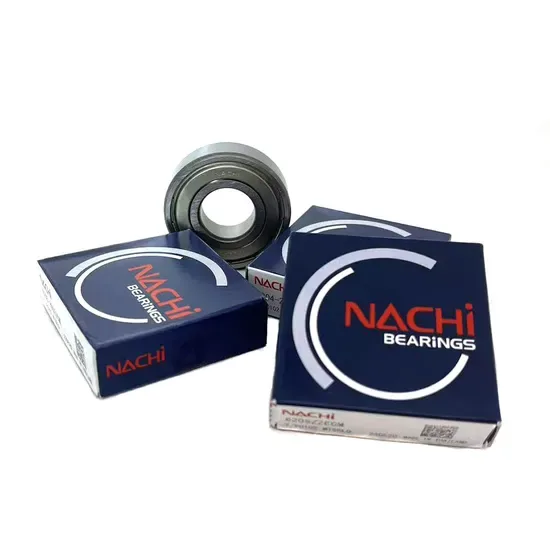
Deep Groove Ball Bearings
NACHI Deep Groove Ball Bearing 62301 608 6202 63008 63007 63006 6204 6301
View product Deep Groove Ball Bearings
Genuine NACHI P6 Deep Groove Ball Bearings 62208 62210 63002 63004 63006
View productModel check
Not sure which NACHI designation fits? We help with substitution, cross-reference and selection.
Send the old bearing number, the worn marking you can still read, or the application and shaft size. nachioem matches it to the correct NACHI model, including clearance, cage and seal options, before you order.
- Substitution for discontinued models
- Cross-reference to NACHI numbers
- Selection for spindles, pumps and reducers
Keep reading
Related NACHI bearing technical articles
More practical guides on NACHI suffixes, replacement and selection for machine tools, automotive, construction machinery, pumps and gear reducers.

Oct 7, 2026 · Procurement & Trade FAQs · 5 min read
Genuine NACHI Bearings Wholesale Supplier & Bulk Export
Stop relying on carrier portals to explain NACHI shipment delays. Mixed-batch customs holds stem from mismatched HS codes and inadequate moisture-proof packaging, not logistics…
Read the article
Oct 7, 2026 · Procurement & Trade FAQs · 8 min read
NACHI Bearing Supplier: Genuine Stock, Bulk & MRO for Global Tenders
Sourcing genuine NACHI bearings for tenders demands strict batch traceability to avoid 100% site rejection. Learn to verify mill certificates, manage mixed-container procurement with…
Read the article Oct 7, 2026 · Procurement & Trade FAQs · 6 min read
Genuine NACHI Bearings Wholesale Supplier | Bulk & Single Unit Orders
Master Annual Supply Agreements for NACHI Bearings by securing priority allocation and strict traceability protocols. Learn to consolidate emergency spares in bulk orders while…
Read the article
Request a quote
Send your NACHI model list. We quote fast.
List the NACHI model numbers with full suffixes and the quantity for each. nachioem replies online as quickly as possible with pricing for distributors, repair shops and end users worldwide.
- info@nachioem.com
- WhatsApp +1 (702) 981-5880
- Online replies as quickly as possible
- Global delivery by DHL, FedEx, UPS, air or sea