
NACHI Bearing Technical Guide Buying Guide
NACHI Self-Aligning Ball Bearings Wholesale Supplier for Sale
Selecting the right NACHI self-aligning ball bearings requires matching suffix codes to misalignment conditions and verifying export documentation. Learn to distinguish 1200 and 1300 series, interpret clearance suffixes, and ensure correct HS codes to prevent costly customs delays and premature machinery failure.
- Published
- By author
- nachioem · Specialized NACHI bearing supplier
The suffix, not the base model number, dictates whether your machinery survives misalignment or fails prematurely.
Selecting the correct NACHI self-aligning ball bearing requires matching specific suffix codes to operational misalignment conditions and environmental exposure, while strict verification of export documentation prevents costly customs delays. Most procurement errors stem from overlooking these two critical layers: technical specification alignment and regulatory compliance for international shipping.
I learned this distinction the hard way in Ningbo, early in my career handling freight documentation before moving into bearing sales. I once managed a shipment of NACHI self-aligning ball bearings to a Southeast Asian client. In a rush to consolidate a mixed-brand container, I lumped sealed and open types under a single HS code and overlooked the fumigation certificate for the wooden pallets. The cargo sat detained at the destination port for weeks. The client’s assembly line halted, forcing them to pay for emergency air freight to replace the stuck parts. That mistake cost far more than the savings from consolidated shipping. Now, I verify every suffix and packaging detail twice. For buyers, confirming model numbers and export documents upfront is the only way to prevent such expensive downtime.
How to Choose the Right NACHI Self-Aligning Ball Bearing Series?
Base model selection must align with load capacity and allowable misalignment angles, not just shaft diameter.
NACHI self-aligning ball bearings are designed to accommodate angular misalignment between the shaft and housing. Choosing the wrong series leads to premature fatigue, regardless of brand authenticity. The 1200 and 1300 series are the most common, but their structural differences matter significantly in heavy industrial applications.
| Feature | 1200 Series | 1300 Series |
|---|---|---|
| Bore Diameter Range | Small to Medium | Medium to Large |
| Load Capacity | Moderate | Higher due to wider cross-section |
| Misalignment Tolerance | Standard | Enhanced for heavier loads |
| Typical Application | Light machinery, fans | Heavy-duty crushers, conveyors |
A mining operator in Central Asia once replaced failed bearings on a conveyor drive with the same bore size but ignored the series width. The narrower 1200 series could not handle the radial load spikes, leading to repeated failures within months. Switching to the wider 1300 series resolved the issue. This highlights why dimensional tolerance matrices and dynamic load rating calculations are essential during the selection phase.
When sourcing as a NACHI self-aligning ball bearing supplier, ensure you request the full technical datasheet. Do not rely solely on the base number. Cross-referencing with ISO standards ensures the selected bearing matches the thermal expansion and load requirements of your specific machinery.
What Do the Suffixes Mean and Why Do They Matter?
Suffixes define the bearing’s internal clearance and sealing, directly impacting survival in harsh environments.
Most buyers think selection ends at the base model. Actually, the suffix dictates performance. A common error is confusing sealed types with open types, leading to lubrication failure. NACHI uses specific suffixes to denote these features.
- C3/C4: Indicates internal clearance. C3 is standard for general use, while C4 is required for high-temperature applications where thermal expansion reduces clearance. Using a C3 bearing in a hot steel mill environment can cause seizing.
- 2RS: Double rubber seals. Ideal for contaminated environments like agriculture or construction, preventing dust ingress.
- ZZ: Metal shields. Suitable for cleaner environments where low friction is prioritized over heavy contamination protection.
A European wind farm operator once ordered open bearings for a gearbox exposed to salt spray, assuming regular greasing would suffice. The lack of proper sealing led to rapid corrosion. Had they specified the correct suffix for sealed units, the maintenance interval would have extended noticeably.
Understanding the NACHI bearing suffix guide is crucial. When you buy NACHI 1200/1300 series units, always confirm the suffix matches your operating condition. A mismatch here is a leading cause of premature failure, often mistaken for a quality defect when it is actually a specification error. As a NACHI self-aligning ball bearing supplier, we see this confusion frequently in mixed-brand orders.
How to Verify Authenticity and Avoid Counterfeits?
Traceability documentation and packaging details are the primary defenses against counterfeit products.
The market for NACHI self-aligning ball bearings is flooded with counterfeits that look identical to genuine products. Visual inspection alone is insufficient. Genuine NACHI bearings come with specific packaging markers and traceability codes that link back to the manufacturer’s production facilities.
Check the following before accepting shipment:
- Packaging Quality: Genuine boxes have high-resolution printing and specific batch labels. Blurry logos or flimsy cardboard are red flags.
- Traceability Docs: Request the certificate of origin and material test reports. These documents must match the batch numbers on the bearing rings.
- Surface Finish: Genuine bearings have a uniform, smooth finish. Counterfeits often show machining marks or inconsistent polishing.
A distributor in the Middle East once received a large order of what appeared to be genuine NACHI units. The price was too good to be true. Upon testing, the steel hardness varied significantly across the batch, indicating substandard material. The lack of proper traceability documentation made it impossible to claim warranty. Verifying these details upfront protects your reputation and your clients’ operations.
What Export Documents Prevent Customs Nightmares?
Correct HS codes and fumigation certificates are non-negotiable for smooth global delivery.
Freight forwarders often handle logistics, but they do not guarantee technical accuracy of your product classification. Missing a simple pallet certificate can halt an entire assembly line. This is where a NACHI self-aligning ball bearing supplier adds value beyond just selling parts.
Key documents to verify:
- HS Code Alignment: Ensure the HS code matches the specific bearing type. Misclassification leads to duty penalties and delays.
- Fumigation Certificate: Wooden pallets require official fumigation proof. Without it, customs in many countries will detain or destroy the cargo.
- Commercial Invoice & Packing List: Must detail each SKU, including suffixes, to avoid ambiguity during inspection.
In our consolidation service, we double-check these documents for every mixed-brand container. We once helped a client avoid a three-week delay by catching a missing fumigation certificate before the ship departed. This proactive check saved them from emergency air freight costs and production stoppages. When you source from a reliable NACHI self-aligning ball bearing supplier, expect this level of documentation rigor.
Conclusion
Precision in specification and documentation prevents costly operational failures.
Selecting the right NACHI self-aligning ball bearing involves more than picking a model number. It requires understanding suffix implications for sealing and clearance, verifying authenticity through traceability, and ensuring export compliance. These steps protect your supply chain from delays and your machinery from premature wear. Always prioritize detailed verification over speed when importing critical industrial components.
Applications covered in this article
Products in this article
NACHI bearings mentioned above
These are the NACHI bearing types discussed in this guide. Open a product page to check its designation and send the exact suffix with your quantity.

Spherical Roller Bearings
NACHI 22222 Self-Aligning Roller Bearing Japan Origin Spherical
View product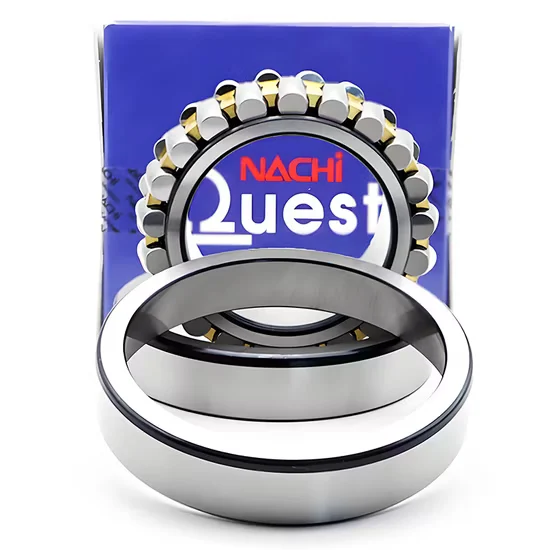
Spherical Roller Bearings
NACHI 24072cdke4 24076cdke4 24080cdke4 Spherical Roller Bearing Self-Aligning
View product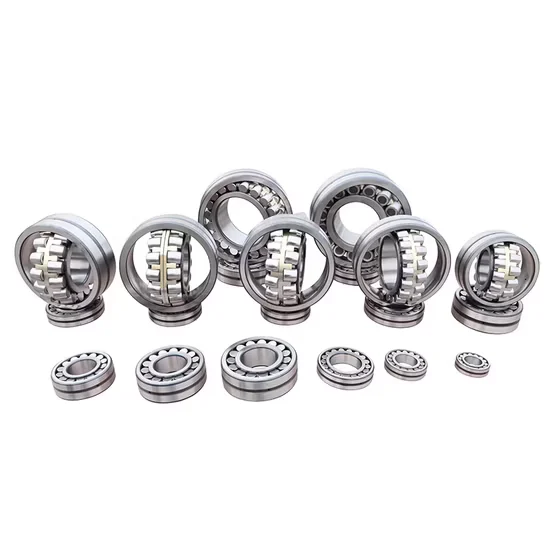
Spherical Roller Bearings
NACHI NSK 24038camke4 Self-Aligning Roller Bearing Genuine Supply
View product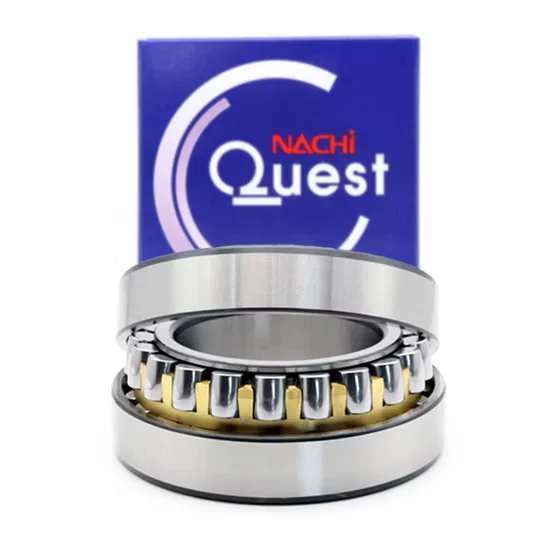
Spherical Roller Bearings
Genuine NACHI NSK 24018camke4 Self-Aligning Roller Bearing Wholesale
View productModel check
Not sure which NACHI designation fits? We help with substitution, cross-reference and selection.
Send the old bearing number, the worn marking you can still read, or the application and shaft size. nachioem matches it to the correct NACHI model, including clearance, cage and seal options, before you order.
- Substitution for discontinued models
- Cross-reference to NACHI numbers
- Selection for spindles, pumps and reducers
Keep reading
Related NACHI bearing technical articles
More practical guides on NACHI suffixes, replacement and selection for machine tools, automotive, construction machinery, pumps and gear reducers.
Oct 7, 2026 · Buying Guide · 7 min read
NACHI Bearings Quote: Genuine Wholesale Supplier for Bulk & MRO Orders
Request a NACHI bearings quote with full suffix accuracy to prevent costly customs delays and ensure genuine product traceability. Secure competitive wholesale pricing through…
Read the article
Oct 7, 2026 · Buying Guide · 7 min read
Discontinued NACHI Numbers: Replacements from Wholesale Supplier
Replacing discontinued NACHI bearings requires more than matching dimensions to prevent premature field failures. Recalculate internal clearance and verify cage material compatibility to ensure…
Read the article Oct 7, 2026 · Buying Guide · 8 min read
Buy Genuine NACHI Bearings: Wholesale Supplier for Bulk Orders
Secure genuine NACHI bearings by mastering neutral checks and traceability verification to avoid catastrophic equipment failures. Learn to identify counterfeit units through hardness testing,…
Read the article
Request a quote
Send your NACHI model list. We quote fast.
List the NACHI model numbers with full suffixes and the quantity for each. nachioem replies online as quickly as possible with pricing for distributors, repair shops and end users worldwide.
- info@nachioem.com
- WhatsApp +1 (702) 981-5880
- Online replies as quickly as possible
- Global delivery by DHL, FedEx, UPS, air or sea