
NACHI Bearing Technical Guide Technical Resources
NACHI Suffix Code Reference: Wholesale Supplier Guide
Master NACHI suffix code reference to prevent thermal seizure and cage fragmentation in heavy industry. Select correct C3 clearance, machined brass cages, and DU seals for harsh environments. Verify specifications with genuine inventory to avoid costly mismatches and extend equipment service life significantly.
- Published
- By author
- nachioem · Specialized NACHI bearing supplier
Tighter clearance does not always mean better precision. In high-temperature industrial environments, selecting a standard clearance bearing instead of one with expanded internal space guarantees thermal seizure.
Correctly decoding NACHI suffix codes for clearance, cage material, and seals is the single most critical step in preventing catastrophic equipment failure. A mismatched suffix leads to premature breakdowns, while the right specification extends service life significantly in harsh operating conditions.
I still remember the heat radiating off the continuous caster line at a steel mill in Suzhou. The maintenance team had just replaced a failed spherical roller bearing. I watched them unpack a new unit, check the outer diameter, and slide it into the housing. They missed the small laser-etched code on the side ring. It was a standard clearance unit with a pressed steel cage. The application required C3 clearance and a machined brass cage to handle the extreme thermal expansion and vibration. Within weeks, the bearing locked up. The cage fragmented, sending metal shards through the lubrication system. The resulting downtime cost far more than the price difference between the two bearing variants. That incident changed how I approach technical selection. I no longer look at just the basic part number. I dissect the suffixes first.
Understanding these codes is not just about reading a catalog. It is about matching the component to the physical reality of the machine. For distributors and MRO operators, this knowledge separates a reliable partner from a simple box mover. This guide breaks down the essential NACHI suffix codes to help you select the right variant for your specific application.
Why Do NACHI Suffix Codes Matter in Heavy Industry?
Suffixes are not optional extras; they are engineering specifications that define how a bearing behaves under stress. Ignoring them is akin to installing a summer tire on a vehicle in winter. The basic part number tells you the size and type, but the suffix tells you if it will survive your specific environment.
In heavy industries like mining, steel production, and power generation, operating conditions deviate sharply from standard laboratory tests. Bearings face high temperatures, heavy shock loads, and contaminated environments. A standard deep-groove ball bearing might work perfectly in an electric motor, but it will fail rapidly in a vibrating crusher if the cage material is incorrect.
Consider the case of a mining operation in South America. They experienced repeated failures in their primary gyratory crushers. The bearings were genuine, and the sizes were correct. However, the suffix indicated a standard pressed steel cage. The intense vibration caused the steel cage to fatigue and crack. Switching to a variant with a machined brass cage, identified by the specific suffix, eliminated the fragmentation issue. The brass cage is more robust and better suited for high-vibration applications.
For wholesale suppliers and distributors, understanding these nuances allows you to offer value-added technical support. Instead of just quoting a price, you can verify if the requested suffix matches the client’s application. This reduces return rates and builds long-term trust with OEMs and end-users who rely on your expertise to keep their plants running.
How to Decode Common NACHI Suffixes?
Decoding suffixes requires a systematic approach, focusing on three primary categories: internal clearance, cage material, and sealing. These elements dictate the bearing’s thermal behavior, mechanical strength, and contamination resistance.
Internal clearance is often the most misunderstood parameter. Many assume that tighter clearance yields higher precision. While true for static precision, dynamic operations generate heat. As temperatures rise, metal expands. If the internal clearance is too tight, this expansion eliminates the running space, leading to excessive friction and eventual seizure.
| Feature | Standard Suffix | Enhanced/Specific Suffix | Application Context |
|---|---|---|---|
| Internal Clearance | None (Normal) | C3, C4 | C3/C4 for high-temp or high-speed applications |
| Cage Material | None (Steel) | M, T | M for machined brass in high-vibration; T for molded polymer in low-friction needs |
| Sealing | None (Open) | DU, ZZ | DU for contact rubber seals in dirty environments; ZZ for non-contact metal shields |
The suffix “C3” indicates greater than normal radial internal clearance. This is essential for applications where the inner ring operates at a significantly higher temperature than the outer ring, such as in paper machines or steel mills. “C4” offers even greater clearance for extreme thermal conditions. Selecting the wrong clearance is a common error. A bearing with C3 clearance used in a cool, precise instrument will feel loose and noisy. Conversely, a standard clearance bearing in a hot furnace fan will seize.
Cage material is denoted by letters like “M” for machined brass and “T” for molded polyamide. Pressed steel cages are cost-effective and suitable for general use. However, in applications with heavy shock loads or high acceleration, machined brass cages provide superior strength and durability. The “M” suffix is a critical indicator for heavy-duty machinery.
Seals and shields protect the rolling elements from contaminants. The suffix “ZZ” indicates metal shields on both sides, offering good protection against larger particles while allowing high speeds. “DU” signifies rubber contact seals, which provide excellent protection against dust and moisture but generate more friction and heat. Choosing between ZZ and DU depends on the trade-off between sealing effectiveness and operating temperature.
What Happens When You Ignore Suffix Specifications?
Ignoring suffix specifications leads to predictable and costly failure modes. The machine does not care about the brand name; it only responds to the physical match between the component and the operating conditions.
Thermal seizure is the most common result of incorrect clearance selection. In a recent case involving an industrial gearbox in Southeast Asia, the operator replaced a failed bearing with a standard clearance unit. The original specification called for C3 clearance due to the high-speed operation and heat generation. The new bearing ran smoothly for a short period. As the gearbox reached operating temperature, the inner ring expanded more than the outer ring. The internal clearance vanished. Friction spiked, temperatures soared, and the bearing welded itself to the shaft. The damage extended beyond the bearing, requiring a complete shaft replacement.
Cage fragmentation is another severe consequence of ignoring material suffixes. In vibrating screens and crushers, the cyclic loads place immense stress on the cage. A pressed steel cage may not withstand these forces over time. A case from a cement plant in Africa highlighted this issue. The maintenance team used standard bearings in a high-vibration screen. The steel cages cracked after a few months, releasing debris into the rolling element path. This caused secondary damage to the races and rollers. Switching to bearings with the “M” suffix for machined brass cages resolved the issue, extending the service life significantly.
Contamination ingress occurs when seal suffixes are mismatched. In dusty environments like coal handling facilities, open bearings or those with light shields (ZZ) may allow fine particulate matter to enter. This abrasive material acts like grinding paste, accelerating wear. Using bearings with “DU” rubber seals in such environments creates a barrier that keeps contaminants out, preserving the lubricant and the rolling surfaces.
How to Source Genuine NACHI Bearings with Correct Suffixes?
Sourcing genuine bearings with the exact required suffixes demands a supply chain with deep inventory and rigorous traceability. Counterfeit or mislabeled products often lack the specific internal modifications indicated by the suffixes, leading to premature failure.
Verifying authenticity starts with documentation. Genuine NACHI bearings come with traceability records that link the product to its manufacturing batch. For critical applications, requesting these documents ensures that the bearing meets the specified tolerances and material standards. A reliable supplier will provide this transparency without hesitation.
Inventory depth is crucial. Many distributors stock only the most common variants, such as standard clearance and steel cages. When a client needs a C3 clearance or a brass cage, these suppliers may substitute a standard unit or claim equivalence. This practice is dangerous. A true specialist maintains a broad range of suffix variants, ensuring that the exact specification is available. This capability is vital for MRO clients who cannot afford to wait for custom orders during a breakdown.
Technical consultation is another key factor. A knowledgeable supplier can help reverse-engineer the correct suffix from site parameters. If a client reports high operating temperatures, the supplier should recommend C3 or C4 clearance. If vibration is a concern, they should suggest a machined brass cage. This proactive approach prevents mismatches before they occur.
Our approach involves maintaining a massive spot inventory of genuine NACHI bearings with complete suffix variants. We serve clients across multiple regions, providing mixed-brand sourcing solutions that include full traceability documentation. This ensures that whether you need a single emergency spare or a container load for a project, the specifications match the application exactly.
Conclusion
Matching the suffix to the application is non-negotiable for reliability. The letters and numbers at the end of a NACHI part number are not arbitrary; they are the key to surviving harsh industrial conditions.
Focus on internal clearance for thermal management, cage material for mechanical strength, and seals for contamination control. Verify these specifications against your operating environment before installation. Sourcing from a supplier with deep inventory and technical expertise ensures you get the exact variant needed, protecting your equipment from preventable failures.
Applications covered in this article
Products in this article
NACHI bearings mentioned above
These are the NACHI bearing types discussed in this guide. Open a product page to check its designation and send the exact suffix with your quantity.
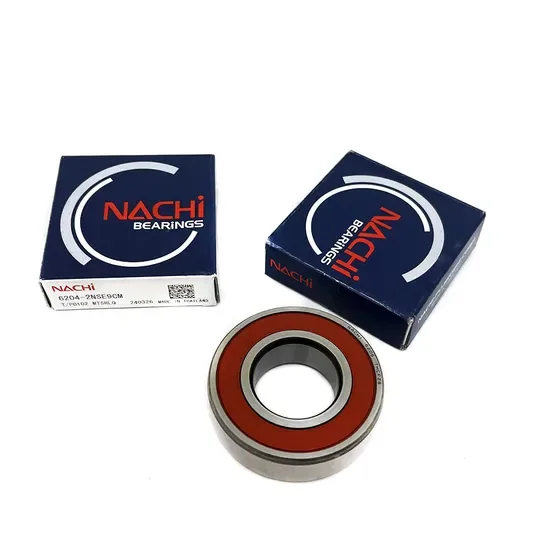
Deep Groove Ball Bearings
Genuine NACHI 608zz 6202 6201 Deep Groove Ball Bearing for Marine Equipment
View product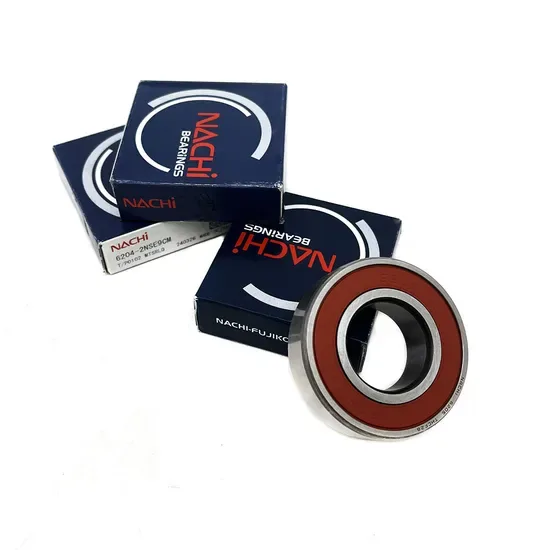
Deep Groove Ball Bearings
NACHI 608zz 16004 6201 Deep Groove Ball Bearing P6 P5 C3
View product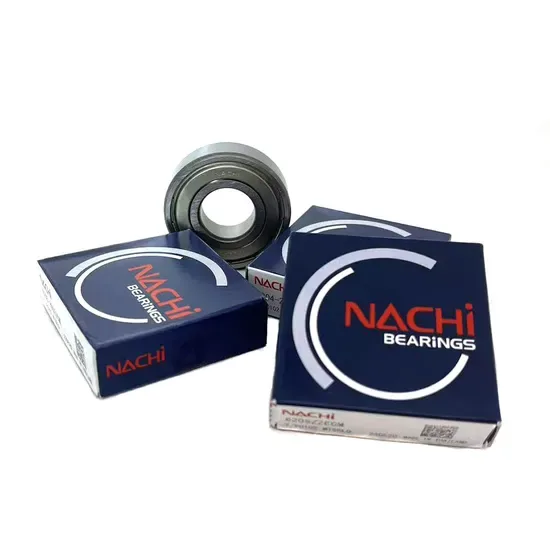
Deep Groove Ball Bearings
NACHI Deep Groove Ball Bearing 62301 608 6202 63008 63007 63006 6204 6301
View product Deep Groove Ball Bearings
Genuine NACHI P6 Deep Groove Ball Bearings 62208 62210 63002 63004 63006
View productModel check
Not sure which NACHI designation fits? We help with substitution, cross-reference and selection.
Send the old bearing number, the worn marking you can still read, or the application and shaft size. nachioem matches it to the correct NACHI model, including clearance, cage and seal options, before you order.
- Substitution for discontinued models
- Cross-reference to NACHI numbers
- Selection for spindles, pumps and reducers
Keep reading
Related NACHI bearing technical articles
More practical guides on NACHI suffixes, replacement and selection for machine tools, automotive, construction machinery, pumps and gear reducers.
Oct 8, 2026 · Technical Resources · 9 min read
NACHI Bearing Glossary: Wholesale Supplier for Bulk Orders
Master the NACHI Bearing Glossary to prevent costly spindle failures caused by misinterpreting suffix codes. Distinguish between standard DB pairing and custom Flush Ground…
Read the article
Oct 8, 2026 · Technical Resources · 7 min read
NACHI to Other Brands Interchange Table: Cross-Reference Supplier for Sale
Master the NACHI interchange table by verifying internal clearance and cage materials, not just dimensions. Matching C3 clearance and brass cages prevents thermal seizure…
Read the article Oct 8, 2026 · Technical Resources · 7 min read
NACHI Precision Bearing Wholesale Supplier & Bulk Stock
Prevent premature failure by matching NACHI precision bearing internal clearance and cage materials to heavy-load conditions. Learn to calculate thermal expansion effects, select vibration-resistant…
Read the article
Request a quote
Send your NACHI model list. We quote fast.
List the NACHI model numbers with full suffixes and the quantity for each. nachioem replies online as quickly as possible with pricing for distributors, repair shops and end users worldwide.
- info@nachioem.com
- WhatsApp +1 (702) 981-5880
- Online replies as quickly as possible
- Global delivery by DHL, FedEx, UPS, air or sea