
NACHI Bearing Technical Guide Procurement & Trade FAQs
Order NACHI Precision Pairs from Wholesale Supplier
Ordering NACHI precision pairs requires strict verification of matching tolerances and preload data to prevent equipment failure. Demand specific matching certificates detailing actual clearance rather than generic conformity documents. This disciplined approach ensures traceability and avoids costly spindle thermal locking.
- Published
- By author
- nachioem · Specialized NACHI bearing supplier
The lowest price on a matched bearing set is often the most expensive mistake you will make this year.
Ordering NACHI precision pairs requires strict verification of matching tolerances and preload data, not just part numbers, to prevent equipment failure. A generic certificate of conformity is insufficient for high-speed spindle applications. You must demand specific matching certificates that detail the actual measured clearance and preload class for each individual pair. Without this data, thermal locking and premature fatigue are not risks; they are certainties.
I learned this lesson the hard way in Dubai, standing next to a silent oilfield compressor line. The client had sourced what appeared to be genuine NACHI angular contact ball bearings through a low-cost intermediary. The packaging looked correct, and the part numbers matched the bill of materials. However, no one had verified the preload specification against the application requirements. When the machinery started, the spindles heated up rapidly due to excessive internal friction. The result was a complete seizure. The downtime lasted half a month, and the financial loss far exceeded any savings achieved on the initial purchase order. That experience shifted my focus entirely to source verification and technical data integrity. Now, every shipment I handle includes traceable documentation that proves the precision of the components inside.
Why do NACHI precision pairs fail during installation?
Unverified preload and mismatched tolerances cause thermal locking during operation.
Most procurement teams assume that if the part number is correct, the bearing will perform as specified. This is a dangerous assumption when dealing with precision matched sets. A standard single-row angular contact bearing can be installed with various preload settings depending on the spacer or nut configuration. However, NACHI precision pairs are manufactured and matched at the factory to achieve a specific preload class—Light, Medium, or Heavy. If the supplier ships a pair with a different preload class than requested, or worse, mixes bearings from different batches without proper matching, the internal clearance will be inconsistent.
When two bearings with mismatched tolerances are mounted back-to-back or face-to-face, the load distribution becomes uneven. One bearing may carry the majority of the axial load while the other remains unloaded or experiences excessive stress. This imbalance leads to rapid heat generation. In high-speed machine tool spindles or critical pump applications, this heat causes the inner ring to expand relative to the outer ring, further increasing the preload in a positive feedback loop known as thermal runaway. The result is catastrophic failure within hours or even minutes of startup.
To avoid this, you must treat the preload specification as a critical dimension, not an optional feature. During procurement, explicitly state the required preload class in your purchase order. Do not accept substitutions unless the supplier provides detailed measurement data proving the alternative meets your thermal and stiffness requirements.
What preload and tolerance data must accompany the shipment?
Demand specific matching certificates, not just generic certificates of conformity.
A generic certificate of conformity (COC) only confirms that the product matches the brand and part number. It does not provide the granular data needed for precision applications. For NACHI precision pairs, you require a matching certificate that lists the actual measured values for each set. This document should include the specific bore diameter, outer diameter, width, and most importantly, the preload force or displacement measured during the matching process.
Without this data, your maintenance team is flying blind. They cannot verify if the bearing received is suitable for the application until it is installed and tested, which is too late. Professional suppliers understand this requirement and integrate it into their quality control process. When I consolidate orders for clients who need multiple brands and sizes, I ensure that the documentation for each precision set is kept separate and accurate. Mixing up paperwork is as damaging as mixing up the physical parts.
| Data Point | Generic COC | Precision Matching Certificate |
|---|---|---|
| Part Number Verification | Yes | Yes |
| Batch/Lot Number | Yes | Yes |
| Individual Bore Diameter | No | Yes |
| Individual Outer Diameter | No | Yes |
| Preload Class/Value | No | Yes |
| Matching Pair ID | No | Yes |
This level of documentation is essential for traceability. If a failure occurs, you can trace it back to the specific measurement data provided at the time of shipment. This allows for root cause analysis rather than guesswork.
How to verify genuine NACHI pairs from global suppliers?
Check traceability, original packaging, and supplier technical support capabilities.
Counterfeit bearings are a significant issue in the global market. High-quality fakes can look identical to genuine products from the outside. However, they lack the metallurgical quality and precision grinding that define NACHI products. To verify authenticity, start with the packaging. Genuine NACHI bearings come in sealed, branded packaging with holographic security labels and clear batch coding. The box should match the bearing size and type exactly.
Next, inspect the bearing itself. Look for the laser-etched or stamped markings on the side faces. These should be crisp, clear, and consistent with NACHI’s branding standards. Check the surface finish of the raceways and rolling elements. Genuine precision bearings have a mirror-like finish with no visible tool marks or irregularities.
Finally, evaluate the supplier’s technical knowledge. A legitimate distributor of NACHI precision bearing matched pairs will be able to answer specific questions about preload classes, tolerance grades, and application suitability. If the supplier hesitates or provides vague answers, proceed with caution. Technical competence is a strong indicator of legitimacy.
Can mixed-brand orders compromise precision pair quality?
Professional consolidation maintains strict quality control for each precision set.
Many buyers believe that ordering from a single brand source is the only way to ensure quality. While this simplifies logistics, it is not always practical or cost-effective. Professional global suppliers offer mixed-container consolidation services that allow you to source NACHI, SKF, FAG, and other premium brands in a single shipment. The key is whether the supplier applies the same rigorous quality control standards to all brands.
In a professional consolidation setup, each brand’s products are handled according to their specific storage and handling requirements. Precision pairs are never stored in bulk bins where they can be damaged or mixed up. Instead, they are kept in their original packaging until the final inspection stage. During consolidation, the supplier verifies the documentation for each item against the physical goods. This ensures that the NACHI precision pairs you ordered are the ones you receive, with the correct matching certificates attached.
I have managed countless mixed-container shipments for clients in the Middle East and Africa. The complexity lies in the documentation, not the physical handling. By maintaining separate digital and physical records for each precision set, we ensure that the integrity of the NACHI angular contact ball bearing matched pairs is preserved throughout the supply chain. This approach provides the flexibility of multi-brand sourcing without compromising on precision or reliability.
Conclusion
Precision procurement is defined by data, not just delivery.
Ordering NACHI precision pairs demands a shift from price-focused buying to value-focused verification. Ensure every shipment includes specific matching certificates detailing preload and tolerance data. Verify authenticity through packaging, markings, and supplier technical expertise. Use professional consolidation services to maintain quality across mixed-brand orders. This disciplined approach prevents costly downtime and ensures the long-term reliability of your critical machinery.
Applications covered in this article
Products in this article
NACHI bearings mentioned above
These are the NACHI bearing types discussed in this guide. Open a product page to check its designation and send the exact suffix with your quantity.
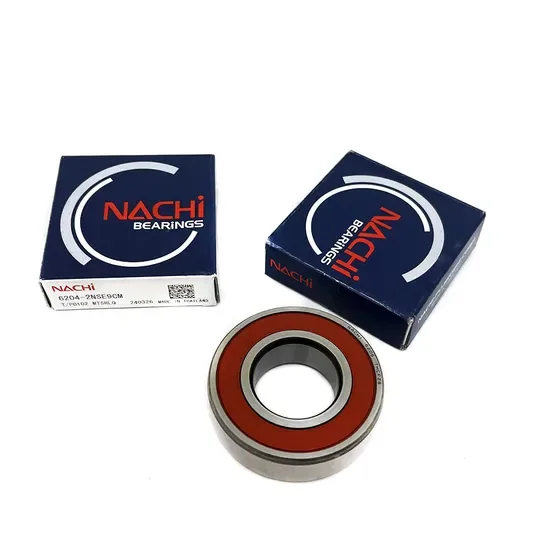
Deep Groove Ball Bearings
Genuine NACHI 608zz 6202 6201 Deep Groove Ball Bearing for Marine Equipment
View product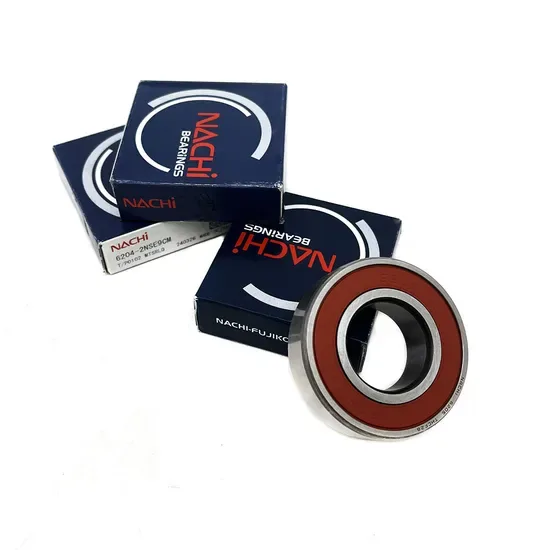
Deep Groove Ball Bearings
NACHI 608zz 16004 6201 Deep Groove Ball Bearing P6 P5 C3
View product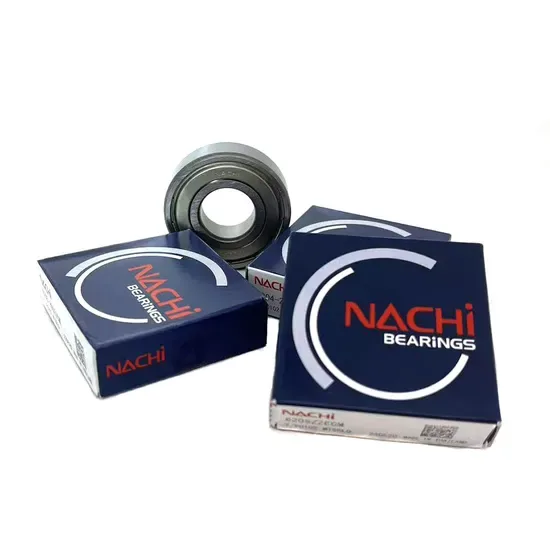
Deep Groove Ball Bearings
NACHI Deep Groove Ball Bearing 62301 608 6202 63008 63007 63006 6204 6301
View product Deep Groove Ball Bearings
Genuine NACHI P6 Deep Groove Ball Bearings 62208 62210 63002 63004 63006
View productModel check
Not sure which NACHI designation fits? We help with substitution, cross-reference and selection.
Send the old bearing number, the worn marking you can still read, or the application and shaft size. nachioem matches it to the correct NACHI model, including clearance, cage and seal options, before you order.
- Substitution for discontinued models
- Cross-reference to NACHI numbers
- Selection for spindles, pumps and reducers
Keep reading
Related NACHI bearing technical articles
More practical guides on NACHI suffixes, replacement and selection for machine tools, automotive, construction machinery, pumps and gear reducers.

Oct 7, 2026 · Procurement & Trade FAQs · 5 min read
Genuine NACHI Bearings Wholesale Supplier & Bulk Export
Stop relying on carrier portals to explain NACHI shipment delays. Mixed-batch customs holds stem from mismatched HS codes and inadequate moisture-proof packaging, not logistics…
Read the article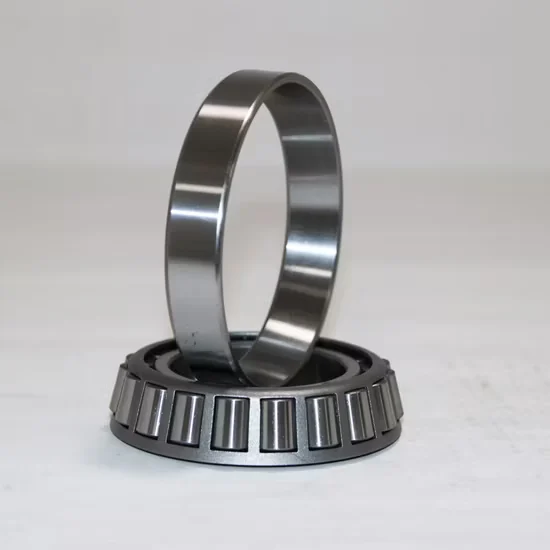
Oct 7, 2026 · Procurement & Trade FAQs · 8 min read
NACHI Bearing Supplier: Genuine Stock, Bulk & MRO for Global Tenders
Sourcing genuine NACHI bearings for tenders demands strict batch traceability to avoid 100% site rejection. Learn to verify mill certificates, manage mixed-container procurement with…
Read the article Oct 7, 2026 · Procurement & Trade FAQs · 6 min read
Genuine NACHI Bearings Wholesale Supplier | Bulk & Single Unit Orders
Master Annual Supply Agreements for NACHI Bearings by securing priority allocation and strict traceability protocols. Learn to consolidate emergency spares in bulk orders while…
Read the article
Request a quote
Send your NACHI model list. We quote fast.
List the NACHI model numbers with full suffixes and the quantity for each. nachioem replies online as quickly as possible with pricing for distributors, repair shops and end users worldwide.
- info@nachioem.com
- WhatsApp +1 (702) 981-5880
- Online replies as quickly as possible
- Global delivery by DHL, FedEx, UPS, air or sea