
NACHI Bearing Technical Guide Procurement & Trade FAQs
Genuine NACHI Bearings Wholesale Supplier for Bulk & MRO Orders
Master NACHI bearing returns and claims by prioritizing traceability over price negotiation. Verify authenticity through strict documentation to avoid counterfeit disputes and ensure valid warranty support. Protect your operations with proper failure analysis and clear channel records for seamless MRO procurement.
- Published
- By author
- nachioem · Specialized NACHI bearing supplier
Most buyers think a warranty claim is about price negotiation. It is not. It is about traceability.
Successful NACHI bearing returns and claims rely on strict authenticity verification, proper failure analysis, and clear channel traceability. Without original packaging codes, batch consistency records, and documented storage conditions, even a genuine manufacturing defect will be rejected as improper handling. In the high-stakes world of heavy industry, the ability to prove provenance is more valuable than the initial purchase discount.
I still remember the smell of burnt grease and crushed concrete at a cement plant in Lagos. The line had stopped because a tapered roller bearing cage shattered after only two weeks of operation. The maintenance manager was furious, holding up the fragmented metal like evidence in a court case. He had bought what he thought were premium components from a local trader who offered a price too good to refuse. When we inspected the remnants, the issue was not just the failure itself, but the lack of any verifiable history. There were no heat treatment logs, no original box markings, and no way to trace the steel source. That incident cost the plant far more in downtime than the savings they made on the parts. It taught me that in harsh MRO environments, the paper trail is as critical as the steel.
This reality drives how we approach every order. Whether you are stocking up for a mining site in West Africa or managing emergency replacements for a steel mill in Southeast Asia, understanding the mechanics of a valid claim is essential. Let us break down how to protect your operations and ensure that when things go wrong, you have the leverage to make them right.
What triggers a valid NACHI bearing claim?
A valid claim requires proof that the failure resulted from a manufacturing defect, not operational abuse.
Many buyers assume that any premature failure qualifies for a return. This is a dangerous misconception. Bearing manufacturers distinguish clearly between normal wear, installation errors, and genuine material or processing defects. To trigger a successful NACHI bearing returns and claims process, you must demonstrate that the component failed despite correct installation, appropriate lubrication, and suitable operating loads.
The most common reason for rejection is the inability to rule out external factors. For instance, if a spherical roller bearing shows signs of overheating, the manufacturer will first look for evidence of insufficient lubrication or misalignment. If the housing shows scoring marks or the shaft has visible damage, the claim will likely be denied regardless of the bearing’s internal condition.
Consider a case involving a mining operator in Central Asia. They experienced a series of cylindrical roller bearing failures in a crusher application. Initially, they blamed the brand. However, upon detailed inspection, we found that the seals had been damaged during installation, allowing abrasive dust to enter the raceway. This was an installation error, not a product defect. Because the buyer could not provide installation records or training logs, the claim was voided. Had they documented the installation procedure and used proper tools, they might have identified the seal damage earlier and avoided the blame game.
To avoid this pitfall, always preserve the failed unit in its as-removed state. Do not clean it aggressively or disassemble it further unless instructed by a technical expert. Take high-resolution photos of the mounting surfaces, the housing, and the bearing exterior before removal. These visual records are often the first thing reviewers ask for.
How to verify authenticity before filing?
Traceability documents and physical inspection prevent counterfeit disputes before they start.
The market is flooded with high-quality fakes that look identical to genuine products at a glance. A fake NACHI bearing dispute usually arises when a buyer realizes too late that the part lacks the microscopic markers of authenticity. Verification must happen before installation, not after failure. If you install a counterfeit part, you have no claim, no matter how quickly it fails.
Authenticity verification involves three layers: packaging, marking, and documentation. Genuine products come in specific packaging with holographic seals, batch numbers, and barcodes that link to the manufacturer’s database. The bearing itself should have laser-etched or deeply stamped markings that are crisp and uniform. Counterfeits often have shallow, uneven, or poorly aligned logos.
I once dealt with a distributor in the Middle East who received a mixed batch of deep groove ball bearings. Half the boxes looked perfect, but the bearings inside had slightly different cage materials. By cross-referencing the batch numbers on the boxes with the supplier’s shipping manifest, we discovered that the second half came from a different production run that had not been properly vetted. Because we caught this before installation, we avoided a potential mass failure event. This highlights why buying from a supplier who maintains full chain-of-custody records is non-negotiable.
When sourcing from a Genuine NACHI Bearings Wholesale Supplier for Bulk & MRO Orders, insist on seeing the certificate of origin and the material test reports. These documents should match the batch numbers on the physical products. If a supplier cannot provide these links, walk away. The risk of receiving counterfeit goods is too high, and the subsequent headache of proving fraud is rarely worth the effort.
What documents ensure a smooth return?
Complete failure analysis and purchase proofs accelerate approval significantly.
Once a failure occurs and you suspect a defect, the speed of your resolution depends entirely on the quality of your documentation. A haphazard email with a few blurry photos will sit in a queue for weeks. A structured dossier with clear data gets attention. The core of a successful NACHI bearing warranty claim is a comprehensive failure analysis report.
This report should include the bearing part number, serial or batch number, date of installation, hours of operation, and a detailed description of the failure mode. Include photos of the bearing in situ, the housing, the shaft, and the surrounding components. If possible, provide lubrication records and load data.
Let us look at a scenario from a wind farm operator in Europe. They experienced an unexpected failure in a main shaft bearing. Instead of just sending the broken part back, they compiled a folder containing the installation torque logs, the lubrication schedule, and vibration analysis data from the months leading up to the failure. This level of detail allowed the technical team to quickly isolate a subtle material inconsistency in the raceway. The claim was approved in days, not months, because the buyer had done the preliminary work.
Do not underestimate the power of purchase proofs. Keep your invoices, packing lists, and import declarations organized. These documents prove that you bought the product through an authorized channel. Without them, even a genuine defect may be dismissed as a gray-market purchase with no warranty support. As a trusted partner, we ensure that every shipment comes with this full suite of paperwork, so you are never left scrambling when issues arise.
How to prevent claims in harsh environments?
Proper selection and storage minimize unplanned downtime and reduce claim frequency.
The best claim is the one you never have to file. In harsh environments like mines, cement plants, and marine applications, prevention is about more than just buying high-quality parts. It is about matching the right specification to the specific operating conditions and maintaining those conditions throughout the bearing’s life.
Storage is a critical but often overlooked factor. Bearings stored in humid or dusty environments can develop corrosion before they are even installed. This “shelf rust” is often mistaken for a manufacturing defect when the bearing fails early. Always store bearings in their original packaging in a climate-controlled area.
Selection also plays a huge role. For example, in a high-vibration crushing application, standard deep groove ball bearings may not suffice. You might need spherical roller bearings with reinforced cages or special coatings to resist contamination. Choosing the wrong type guarantees premature failure, which is not a warranty issue but a selection error. Working with a supplier who offers technical consultation can help you avoid these mismatches.
We have seen clients reduce their emergency replacement orders noticeably by simply improving their storage protocols and consulting on application-specific upgrades. One steel mill in South America switched to sealed units with higher-grade grease for their conveyor rollers. The result was a substantial extension in service life and a dramatic drop in unplanned stops. This proactive approach turns bearing management from a reactive cost center into a reliability asset.
Conclusion
Authenticity and documentation are your strongest tools in industrial procurement.
Navigating NACHI bearing returns and claims is not about arguing over price; it is about proving provenance and performance. By verifying authenticity before installation, maintaining rigorous records, and selecting the right components for your environment, you protect your operations from costly downtime. Partnering with a supplier who prioritizes traceability and technical support ensures that you are never alone when challenges arise.
Products in this article
NACHI bearings mentioned above
These are the NACHI bearing types discussed in this guide. Open a product page to check its designation and send the exact suffix with your quantity.

Deep Groove Ball Bearings
NACHI Deep Groove Ball Bearing 6210-6215 for Blender Genuine Wholesale
View product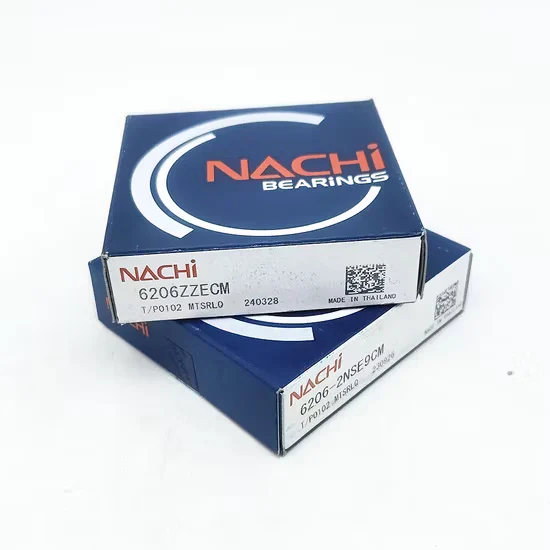
Deep Groove Ball Bearings
Genuine NACHI 602-609 Deep Groove Ball Bearings for Auto Parts Wholesale
View product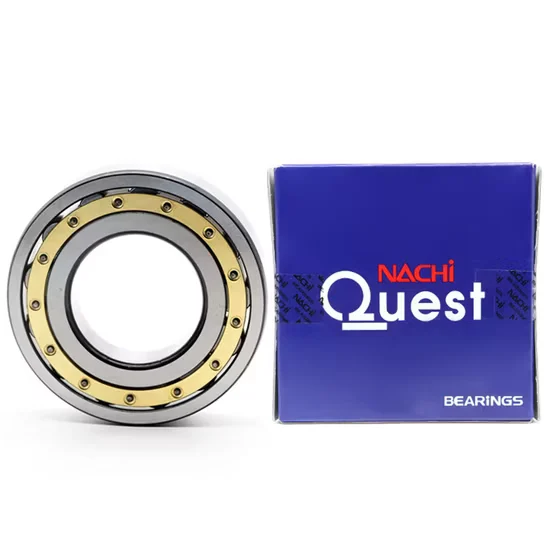
Cylindrical Roller Bearings
Genuine NACHI NU312EM NU313EM NU314EM Cylindrical Roller Bearing Wholesale
View product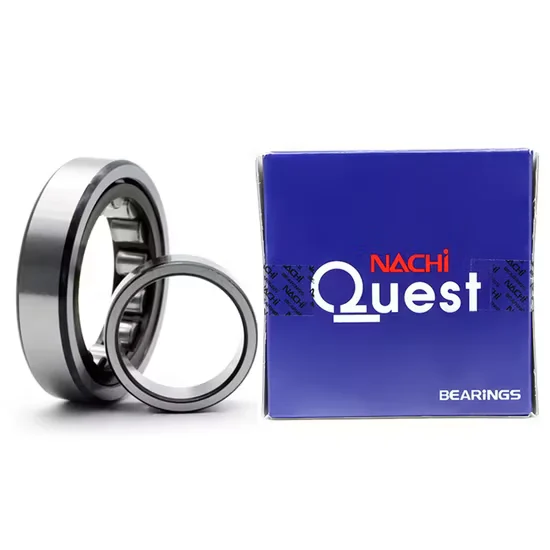
Cylindrical Roller Bearings
NACHI N410e Cylindrical Roller Bearing Genuine Wholesale Supplier
View productModel check
Not sure which NACHI designation fits? We help with substitution, cross-reference and selection.
Send the old bearing number, the worn marking you can still read, or the application and shaft size. nachioem matches it to the correct NACHI model, including clearance, cage and seal options, before you order.
- Substitution for discontinued models
- Cross-reference to NACHI numbers
- Selection for spindles, pumps and reducers
Keep reading
Related NACHI bearing technical articles
More practical guides on NACHI suffixes, replacement and selection for machine tools, automotive, construction machinery, pumps and gear reducers.
Oct 7, 2026 · Procurement & Trade FAQs · 5 min read
Genuine NACHI Bearings Wholesale Supplier & Bulk Export
Stop relying on carrier portals to explain NACHI shipment delays. Mixed-batch customs holds stem from mismatched HS codes and inadequate moisture-proof packaging, not logistics…
Read the article
Oct 7, 2026 · Procurement & Trade FAQs · 8 min read
NACHI Bearing Supplier: Genuine Stock, Bulk & MRO for Global Tenders
Sourcing genuine NACHI bearings for tenders demands strict batch traceability to avoid 100% site rejection. Learn to verify mill certificates, manage mixed-container procurement with…
Read the article Oct 7, 2026 · Procurement & Trade FAQs · 6 min read
Genuine NACHI Bearings Wholesale Supplier | Bulk & Single Unit Orders
Master Annual Supply Agreements for NACHI Bearings by securing priority allocation and strict traceability protocols. Learn to consolidate emergency spares in bulk orders while…
Read the article
Request a quote
Send your NACHI model list. We quote fast.
List the NACHI model numbers with full suffixes and the quantity for each. nachioem replies online as quickly as possible with pricing for distributors, repair shops and end users worldwide.
- info@nachioem.com
- WhatsApp +1 (702) 981-5880
- Online replies as quickly as possible
- Global delivery by DHL, FedEx, UPS, air or sea