
NACHI Bearing Technical Guide Procurement & Trade FAQs
Genuine NACHI Bearings Wholesale Supplier for Industrial & MRO
Verify genuine NACHI bearing packaging to prevent counterfeit risks and ensure technical suitability for MRO applications. Learn to inspect holographic labels, validate QR codes, and confirm traceability documentation for secure industrial procurement and optimal equipment performance.
- Published
- By author
- nachioem · Specialized NACHI bearing supplier
A pristine box does not guarantee a genuine bearing. Counterfeiters frequently recycle original packaging to disguise inferior components, making visual inspection of the exterior alone insufficient for verification.
To identify genuine NACHI bearing packaging, buyers must verify the consistency of holographic security labels, cross-reference QR codes with official traceability databases, and ensure that accompanying documentation such as Certificates of Conformity matches the specific batch numbers printed on the box. Physical integrity of the carton is less important than the verifiability of the internal anti-counterfeiting features and the technical accuracy of the part number relative to the operating environment.
My first major lesson in procurement did not come from a textbook, but from a sweltering maintenance shed at a mining site. A client had ordered what they believed were standard deep-groove ball bearings. The boxes arrived looking perfect—crisp edges, clear printing, and the familiar logo. Yet, within days of installation, the equipment seized due to excessive heat. Upon inspection, the bearings were not fake in the sense of being completely unrelated products; they were genuine NACHI units, but ordered with standard clearance instead of the required C3 clearance for high-temperature operations. The packaging was real, but the specification was wrong. This incident highlighted that verifying genuine NACHI bearing packaging is not just about spotting fakes, but about ensuring the physical product inside matches the technical demands of the application. In MRO procurement, the box is merely the first layer of a much deeper verification process involving traceability and technical suitability.
What are the standard packaging features of genuine NACHI bearings?
Genuine NACHI bearing packaging adheres to strict international standards regarding material quality, labeling precision, and structural integrity, distinct from the inconsistent printing often found in counterfeit reproductions.
Original boxes typically feature high-grade corrugated cardboard with specific weight ratings to protect precision components during global transit. The printing on genuine packaging is sharp, with consistent font weights and accurate color reproduction of the brand logo. Counterfeit boxes often exhibit blurred text, misaligned logos, or variations in ink saturation.
However, relying solely on the box’s appearance is risky. Sophisticated counterfeiters now use recycled original boxes, inserting non-genuine bearings inside. Therefore, the focus must shift to internal security features. Genuine packages include specific anti-counterfeiting labels that change color or reveal hidden patterns when viewed from different angles. These labels are difficult to replicate without access to proprietary printing technologies.
| Feature | Genuine Packaging Characteristics | Common Counterfeit Indicators |
|---|---|---|
| Material Quality | High-density corrugated board, rigid structure | Thin, flimsy cardboard, prone to crushing |
| Printing Quality | Sharp edges, consistent color, no smudging | Blurred text, uneven ink, color deviation |
| Security Labels | Holographic, color-shifting, unique serials | Static stickers, easy to peel, no serials |
| Internal Protection | Precision-fit plastic or paper wraps | Loose fitting, generic plastic bags |
For distributors handling bulk orders, inconsistencies in batch printing can signal mixed containers where genuine and non-genuine products have been combined. A recent case involved a distributor receiving a container where half the boxes had slightly different shade variations in the blue logo ink. While subtle, this discrepancy traced back to unauthorized repackaging at a transshipment point. Verifying NACHI bearing box identification requires attention to these minute details, especially when dealing with large volumes where spot checks might miss isolated irregularities.
How to verify the authenticity of NACHI bearing packaging?
Verification requires a multi-step process involving digital traceability checks, physical inspection of anti-counterfeiting elements, and cross-referencing part numbers with technical datasheets.
The most reliable method is using the QR codes or barcodes printed on the packaging. Scanning these codes should direct the user to an official verification portal or display detailed product information that matches the physical item. If the code is unreadable, leads to a generic homepage, or displays mismatched batch information, the product should be quarantined immediately.
Holographic labels serve as a second line of defense. These labels are embedded with micro-text and optical variables that cannot be reproduced by standard printers. Buyers should inspect these labels under good lighting, tilting the package to observe color shifts. Absence of these labels, or labels that appear flat and static, indicates a high probability of counterfeiting.
Furthermore, the part number on the box must match the engraving on the bearing itself. Discrepancies here are common in fake products where generic bearings are placed in boxes labeled for high-precision variants. For example, a standard P0 precision bearing might be packaged in a box labeled for P5 precision. This mismatch can lead to catastrophic failure in high-speed applications.
A European wind farm operator once reported a batch of bearings that failed prematurely. Investigation revealed that while the boxes looked authentic, the QR codes led to dead links. Upon closer inspection, the holographic labels lacked the expected micro-text. The supplier had sourced these from an unauthorized intermediary who had mixed refurbished units with new ones. By implementing strict QR code verification for all incoming stock, the operator reduced their defect rate significantly. Understanding how to check NACHI bearing original packaging involves more than just looking; it requires active digital validation.
What documents must accompany the packaging for customs and traceability?
Complete traceability documentation, including original Certificates of Conformity (COC), packing lists, and mill traceability records, is essential for customs clearance and verifying the provenance of genuine bearings.
Customs authorities in many regions require proof of origin to prevent the import of counterfeit goods. Missing or forged documents can lead to shipment delays, storage fees, and even confiscation. The COC should explicitly state the manufacturer, production date, batch number, and technical specifications. These details must align perfectly with the information printed on the packaging.
Mill traceability records provide a deeper level of verification, linking the finished bearing back to the raw material source. This is crucial for industries with strict quality requirements, such as aerospace or heavy mining. Without these documents, buyers cannot prove that the bearings meet specific material standards, leaving them vulnerable to liability in case of failure.
A shipment held at customs due to missing traceability documents can incur substantial costs. In one instance, a batch of spherical roller bearings was detained for weeks because the packing list did not match the COC batch numbers. The resulting storage fees and project delays far exceeded the cost of the bearings themselves. Ensuring that all documentation is complete and accurate before shipment is a critical step in secure procurement.
For MRO buyers, maintaining an archive of these documents is equally important for warranty claims and failure analysis. When a bearing fails, having the original COC allows for precise tracking of the production batch, helping manufacturers identify potential quality issues. As a Genuine NACHI Bearings Wholesale Supplier for Industrial & MRO, providing these documents is not just a formality but a core part of ensuring long-term reliability and compliance.
How to handle packaging discrepancies in bulk MRO procurement?
When discrepancies arise in bulk orders, buyers should immediately request supplementary certificates, conduct rigorous spot inspections, and isolate suspect batches until verification is complete.
Discrepancies can range from minor printing errors to missing security labels. In any case, the default action should be caution. Do not install bearings from packages that show any signs of tampering or inconsistency. Instead, quarantine the affected units and contact the supplier for clarification.
Requesting supplementary certificates, such as independent test reports or additional COCs, can help resolve uncertainties. Suppliers with robust quality control systems will be able to provide these documents quickly. Hesitation or inability to provide such documentation is a red flag.
Spot inspections should be random and thorough. Check multiple boxes from different parts of the shipment to ensure consistency. Look for variations in box quality, label placement, and internal packaging materials. If discrepancies are found in a significant portion of the shipment, consider rejecting the entire batch.
A distributor in Southeast Asia once received a mixed container where some boxes lacked the standard inner plastic wraps. While the bearings themselves appeared genuine, the inconsistency suggested improper handling or repackaging. By isolating these units and requesting clarification, the distributor avoided potential contamination issues that could have affected their end customers. Handling such situations requires a disciplined approach to quality assurance, prioritizing verification over speed.
Conclusion
Verifying packaging is only the first step in ensuring bearing reliability. True security comes from combining physical inspection with digital traceability and complete documentation.
Buyers must look beyond the box to confirm that the product inside matches both the brand’s standards and their specific operational needs. By focusing on holographic labels, QR code validation, and accurate paperwork, procurement teams can avoid counterfeits and ensure optimal performance. Trust is built on verification, not just appearance.
Products in this article
NACHI bearings mentioned above
These are the NACHI bearing types discussed in this guide. Open a product page to check its designation and send the exact suffix with your quantity.

Deep Groove Ball Bearings
NACHI Deep Groove Ball Bearing 6210-6215 for Blender Genuine Wholesale
View product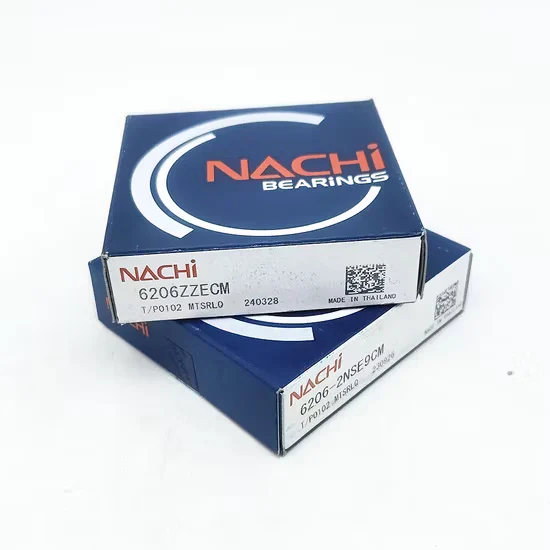
Deep Groove Ball Bearings
Genuine NACHI 602-609 Deep Groove Ball Bearings for Auto Parts Wholesale
View product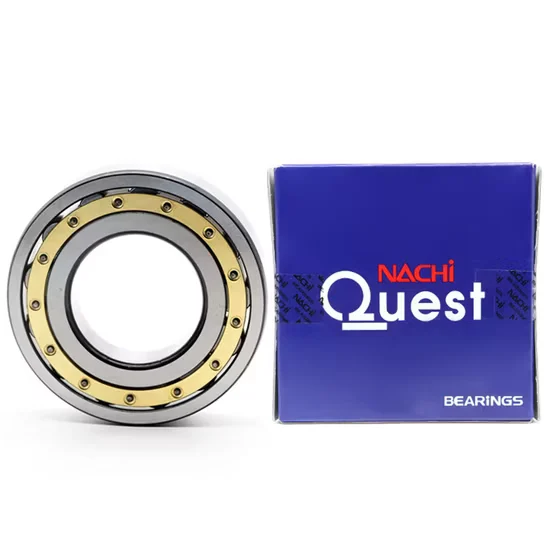
Cylindrical Roller Bearings
Genuine NACHI NU312EM NU313EM NU314EM Cylindrical Roller Bearing Wholesale
View product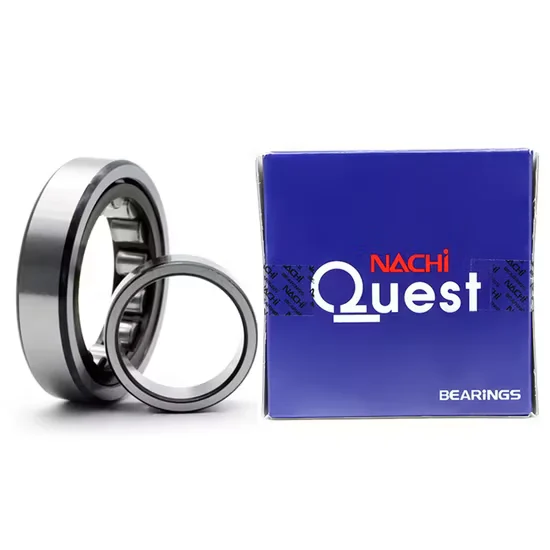
Cylindrical Roller Bearings
NACHI N410e Cylindrical Roller Bearing Genuine Wholesale Supplier
View productModel check
Not sure which NACHI designation fits? We help with substitution, cross-reference and selection.
Send the old bearing number, the worn marking you can still read, or the application and shaft size. nachioem matches it to the correct NACHI model, including clearance, cage and seal options, before you order.
- Substitution for discontinued models
- Cross-reference to NACHI numbers
- Selection for spindles, pumps and reducers
Keep reading
Related NACHI bearing technical articles
More practical guides on NACHI suffixes, replacement and selection for machine tools, automotive, construction machinery, pumps and gear reducers.
Oct 7, 2026 · Procurement & Trade FAQs · 5 min read
Genuine NACHI Bearings Wholesale Supplier & Bulk Export
Stop relying on carrier portals to explain NACHI shipment delays. Mixed-batch customs holds stem from mismatched HS codes and inadequate moisture-proof packaging, not logistics…
Read the article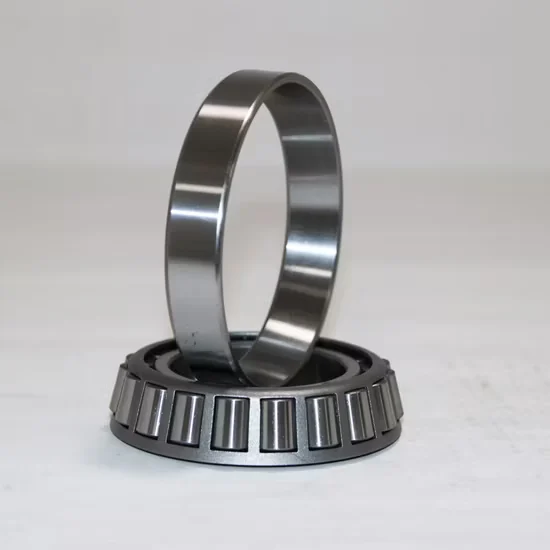
Oct 7, 2026 · Procurement & Trade FAQs · 8 min read
NACHI Bearing Supplier: Genuine Stock, Bulk & MRO for Global Tenders
Sourcing genuine NACHI bearings for tenders demands strict batch traceability to avoid 100% site rejection. Learn to verify mill certificates, manage mixed-container procurement with…
Read the article Oct 7, 2026 · Procurement & Trade FAQs · 6 min read
Genuine NACHI Bearings Wholesale Supplier | Bulk & Single Unit Orders
Master Annual Supply Agreements for NACHI Bearings by securing priority allocation and strict traceability protocols. Learn to consolidate emergency spares in bulk orders while…
Read the article
Request a quote
Send your NACHI model list. We quote fast.
List the NACHI model numbers with full suffixes and the quantity for each. nachioem replies online as quickly as possible with pricing for distributors, repair shops and end users worldwide.
- info@nachioem.com
- WhatsApp +1 (702) 981-5880
- Online replies as quickly as possible
- Global delivery by DHL, FedEx, UPS, air or sea