
NACHI Bearing Technical Guide Brands & Alternatives
NACHI 22200 Series Equivalents: Wholesale Supplier for Bulk Orders
Sourcing NACHI 22200 equivalents requires more than matching dimensions to prevent catastrophic failure in heavy machinery. Verify C3 internal clearance and machined brass cages to avoid thermal seizure in crushers. Ensure bulk order reliability with traceable specs from trusted global suppliers.
- Published
- By author
- nachioem · Specialized NACHI bearing supplier
Matching bore and outer diameter is not enough to prevent catastrophic failure in heavy machinery.
To successfully source NACHI 22200 equivalents, you must verify internal clearance codes (specifically C3 or C4) and cage material composition (brass versus stamped steel) alongside dimensional metrics. Ignoring these internal specifications leads to thermal seizure under heavy loads, regardless of how perfectly the bearing fits the shaft.
I learned this distinction the hard way during my time conducting quality inspections in Linyi, long before I moved into the trade side of the business. We had secured a bulk order to supply domestic equivalents replacing NACHI 22200 spherical roller bearings for a mining client. On paper, the dimensions were perfect. The bore, outer diameter, and width matched the original specs exactly. However, we overlooked the critical requirement for C3 internal clearance and a machined brass cage. The client installed them in their primary crushers, expecting months of reliable operation. Within weeks, the bearings seized. The lack of adequate internal clearance meant there was no room for thermal expansion under the intense heat generated by crushing operations. The client blamed our “cheap alternatives,” and we absorbed the freight and replacement costs for the entire batch. That loss was painful, but it reshaped how I approach sourcing. Now, when I evaluate potential NACHI 22200 equivalents for bulk orders shipping from Qingdao port, I inspect the internal clearances and cage materials before I even consider the price tag. Dimensions get the bearing on the shaft, but the internals keep it running.
This experience underscores a critical reality for MRO operators and distributors: dimensional compatibility is merely the entry ticket. The true determinant of lifespan in high-load applications lies in the unseen specifications. Below, we break down why standard replacements fail, how top brands compare, and what you must verify before committing to a bulk purchase.
Why Dimensional Match Fails in NACHI 22200 Replacements?
Internal clearances and cage materials prevent thermal seizure under heavy loads, yet they are frequently overlooked in cross-referencing.
Most buyers assume that if a bearing slides onto the shaft and fits into the housing, it is a functional match. This assumption is dangerous in heavy industry. The NACHI 22200 series is often used in vibrating screens, crushers, and conveyors where loads are dynamic and temperatures fluctuate wildly. Standard internal clearance (CN) is insufficient for these environments. As the bearing operates, friction generates heat, causing the inner ring and rolling elements to expand. Without extra space provided by a C3 or C4 clearance, this expansion creates excessive preload. The rolling elements bind against the raceways, friction spikes, and the bearing locks up.
Furthermore, the cage material plays a pivotal role in heat dissipation and structural integrity. NACHI typically uses machined brass cages in their 22200 series for heavy-duty applications. Brass offers superior thermal conductivity compared to stamped steel, helping to draw heat away from the rolling elements. It also possesses higher strength and better resistance to vibration-induced fatigue. When sourcing equivalents, substituting a stamped steel cage for a machined brass one might save money upfront, but it significantly increases the risk of cage fracture under high vibration.
| Specification | Standard Replacement Risk | Verified Equivalent Requirement |
|---|---|---|
| Internal Clearance | CN (Normal) – High seizure risk in heat | C3 or C4 – Allows for thermal expansion |
| Cage Material | Stamped Steel – Lower heat dissipation | Machined Brass – Superior strength and cooling |
| Load Capacity | Basic Dynamic Rating | Verified Heavy-Duty Rating for Mining |
| Lubrication | Standard Grease | High-Temperature EP Grease Compatibility |
A European wind farm operator once shared a similar story with me. They had switched to a lower-cost alternative for their main shaft bearings, matching only the dimensions. The bearings failed prematurely due to cage fragmentation caused by unexpected vibration modes. The downtime cost far exceeded the savings from the cheaper units. This highlights why verifying the full specification sheet, not just the boundary dimensions, is non-negotiable.
How Do Top Brands Compare for 22200 Spherical Roller Bearings?
SKF, FAG, and premium Chinese brands offer matched specs with varying cage options, requiring careful selection based on application severity.
When looking for NACHI 22200 equivalents, the market offers a spectrum of options ranging from premium European brands to reliable domestic Chinese manufacturers. Each tier has its place, depending on the criticality of the application and budget constraints. Premium brands like SKF and FAG are known for their consistent metallurgy and precise manufacturing tolerances. They often use advanced steel cleaning processes that reduce inclusion density, leading to longer fatigue life.
However, these premium options come at a significant price premium. For many MRO applications, high-quality Chinese brands such as ZWZ, HRB, and LYC provide a compelling alternative. These manufacturers have invested heavily in modernizing their production facilities, achieving micron-level precision that rivals international counterparts. The key is not to assume all domestic bearings are equal. Some factories maintain strict quality control protocols, including batch-level traceability and rigorous inspection, while others do not.
| Brand Tier | Typical Cage Option | Clearance Availability | Price Point | Best For |
|---|---|---|---|---|
| Premium Global | Machined Brass/Steel | C3, C4, Custom | High | Critical OEM, High-Speed |
| NACHI (Original) | Machined Brass | C3 Standard | Medium-High | Direct Replacement |
| Premium Chinese | Machined Brass/Steel | C3, C4 | Medium | MRO, Heavy Machinery |
| Budget Domestic | Stamped Steel | CN, Limited C3 | Low | Light Duty, Non-Critical |
Sourcing from a supplier who understands these nuances is vital. A reliable partner will not just ship whatever is in stock but will consult on the specific needs of your machinery. For instance, if you are replacing bearings in a high-vibration vibrating screen, insisting on a machined brass cage is crucial, even if a steel cage option is cheaper and available. We have seen clients achieve substantial cost savings by switching to verified premium Chinese equivalents for non-critical applications, while retaining premium brands for the most demanding spots. This mixed-brand strategy optimizes both reliability and expenditure.
What Internal Specs Must You Verify Before Bulk Ordering?
Confirm C3 clearance and brass cage to ensure compatibility with mining and heavy machinery.
Before placing a bulk order for NACHI 22200 equivalents, you must move beyond the part number. The part number tells you the size, but it does not tell you the suitability for your specific operating conditions. The first specification to verify is the internal clearance. For most heavy industrial applications involving heat generation or shaft misalignment, C3 clearance is the minimum requirement. In extreme cases, such as large crushers with significant thermal gradients, C4 clearance may be necessary. Requesting a certificate of conformity that explicitly states the measured internal clearance values is a best practice.
Next, scrutinize the cage type. Ask your supplier specifically whether the equivalent bearing features a machined brass cage or a stamped steel cage. If the original NACHI bearing used brass, the equivalent should too, unless engineering analysis suggests otherwise. Brass cages are more durable under shock loads and better at managing heat. Stamped steel cages are lighter and cheaper but are more prone to deformation and failure in harsh environments.
Additionally, check the lubrication specifications. While many bearings come pre-lubricated, the type of grease matters. Ensure the equivalent bearing is compatible with the lubrication regimen used in your facility. Some equivalents may use standard lithium-based grease, while others might require synthetic or high-temperature variants. Mismatched lubrication can lead to chemical incompatibility, resulting in grease breakdown and accelerated wear.
A Middle East steel mill operator once told me about a batch of bearings that failed because the internal clearance was technically within tolerance but on the lower end of the C3 range. Under their specific high-load conditions, this marginal clearance was insufficient. Since then, they have required suppliers to provide actual measurement reports for a sample from each batch, ensuring the clearance is comfortably within the upper half of the C3 range. This level of diligence prevents unexpected downtime.
Where to Source Reliable NACHI 22200 Equivalents Globally?
Direct from China suppliers with traceability and mixed-brand consolidation.
Finding a supplier who can provide genuine, traceable equivalents is challenging. The market is flooded with counterfeit products and substandard imitations. To mitigate this risk, source from suppliers who offer complete traceability documentation. This includes mill certificates for the steel, inspection reports for dimensional accuracy, and proof of origin. A reputable supplier will not hesitate to provide these documents, as they serve as proof of their commitment to quality.
Consolidation is another key advantage of working with specialized global suppliers. Instead of managing multiple vendors for different brands, a single supplier can provide a mix of NACHI, SKF, FAG, and premium Chinese brands. This simplifies logistics, reduces shipping costs, and ensures consistency in quality control processes. For bulk orders, this approach allows for better negotiation power and more flexible minimum order quantities.
Shipping from major ports like Qingdao offers efficient access to global markets. However, the physical location is less important than the supplier’s expertise and infrastructure. Look for partners who maintain massive spot inventory, allowing for quick fulfillment of urgent maintenance requirements. They should also offer technical support, helping you select the right equivalent based on your application’s specific demands. This includes assistance with cross-referencing part numbers and understanding the implications of different clearance and cage options.
Conclusion
Dimensional match is only the beginning; internal specs define reliability.
Sourcing NACHI 22200 equivalents requires a deep understanding of internal clearances and cage materials. By prioritizing C3 clearance and machined brass cages, you ensure that your replacements can withstand the thermal and mechanical stresses of heavy industrial applications. Partnering with a supplier who offers traceability, technical consultation, and mixed-brand consolidation allows you to optimize both performance and cost. Do not let a simple oversight in specifications lead to costly downtime. Verify the internals, demand documentation, and choose your partner wisely.
Applications covered in this article
Products in this article
NACHI bearings mentioned above
These are the NACHI bearing types discussed in this guide. Open a product page to check its designation and send the exact suffix with your quantity.
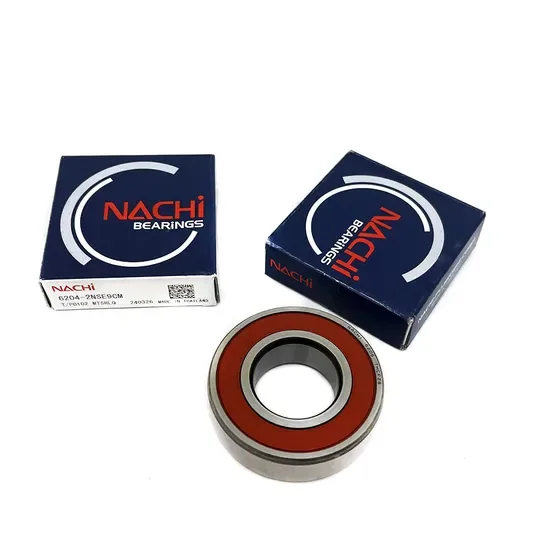
Deep Groove Ball Bearings
Genuine NACHI 608zz 6202 6201 Deep Groove Ball Bearing for Marine Equipment
View product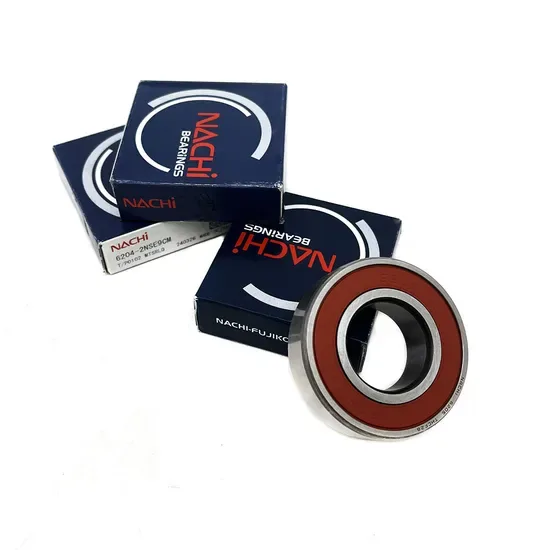
Deep Groove Ball Bearings
NACHI 608zz 16004 6201 Deep Groove Ball Bearing P6 P5 C3
View product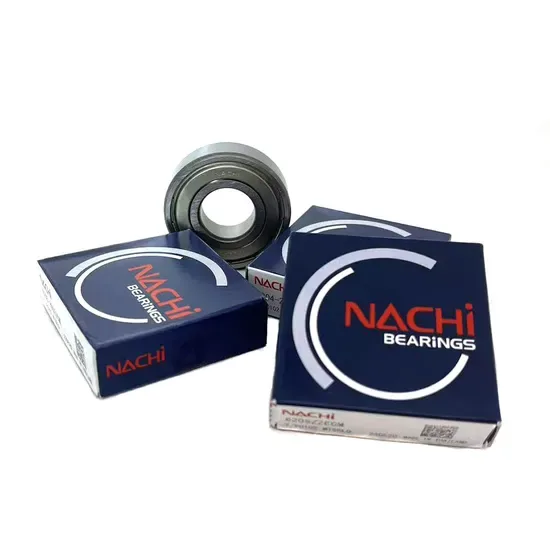
Deep Groove Ball Bearings
NACHI Deep Groove Ball Bearing 62301 608 6202 63008 63007 63006 6204 6301
View product Deep Groove Ball Bearings
Genuine NACHI P6 Deep Groove Ball Bearings 62208 62210 63002 63004 63006
View productModel check
Not sure which NACHI designation fits? We help with substitution, cross-reference and selection.
Send the old bearing number, the worn marking you can still read, or the application and shaft size. nachioem matches it to the correct NACHI model, including clearance, cage and seal options, before you order.
- Substitution for discontinued models
- Cross-reference to NACHI numbers
- Selection for spindles, pumps and reducers
Keep reading
Related NACHI bearing technical articles
More practical guides on NACHI suffixes, replacement and selection for machine tools, automotive, construction machinery, pumps and gear reducers.
Oct 7, 2026 · Brands & Alternatives · 6 min read
NACHI Product Range Overview: Wholesale Supplier for Bulk Orders
NACHI product range overview guides buyers in distinguishing spherical from cylindrical roller bearings to prevent costly installation failures. Learn to select precise domestic alternatives…
Read the article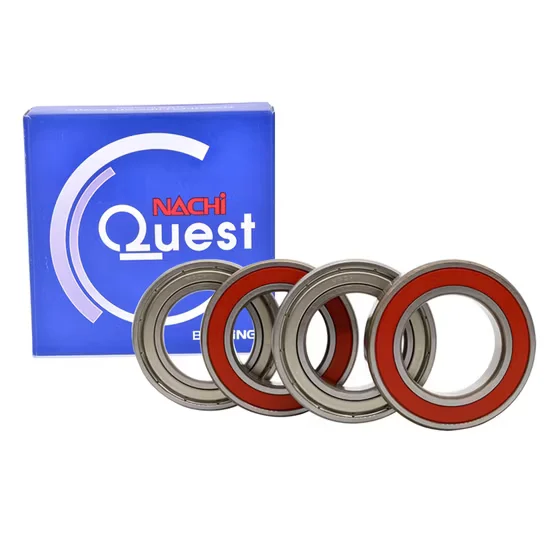
Oct 7, 2026 · Brands & Alternatives · 7 min read
NACHI Brand Tiers Explained: Wholesale Supplier Guide
NACHI brand tiers are defined by ISO tolerance classes and internal clearance codes, not marketing labels. Verify grades through part number suffixes and cage…
Read the article Oct 7, 2026 · Brands & Alternatives · 8 min read
NACHI Auto vs Industrial Bearings: Wholesale Supplier for Bulk Orders
Mastering NACHI auto vs industrial bearings prevents costly misapplications in heavy-duty fleets. Learn how C3/C4 clearance and specialized seals differ from standard CN specs…
Read the article
Request a quote
Send your NACHI model list. We quote fast.
List the NACHI model numbers with full suffixes and the quantity for each. nachioem replies online as quickly as possible with pricing for distributors, repair shops and end users worldwide.
- info@nachioem.com
- WhatsApp +1 (702) 981-5880
- Online replies as quickly as possible
- Global delivery by DHL, FedEx, UPS, air or sea