
NACHI Bearing Technical Guide Brands & Alternatives
NACHI 7200 Series Equivalents: Wholesale Supplier for Bulk Orders
Identical outer dimensions do not guarantee interchangeability for NACHI 7200 Series equivalents. Prevent catastrophic spindle failure by verifying contact angles, internal clearance, and cage material specifications rather than relying solely on dimensional matching. Ensure your bulk orders deliver operational reliability through rigorous technical verification.
- Published
- By author
- nachioem · Specialized NACHI bearing supplier
Identical outer dimensions do not guarantee interchangeability.
Selecting reliable NACHI 7200 series equivalents requires verifying contact angles, internal clearance, and cage material specifications rather than relying solely on dimensional matching to prevent catastrophic spindle failure.
The smell of burnt oil in a machine shop is distinct. It signals more than just a mechanical fault; it represents lost production time and eroded profit margins. Years ago, in a manufacturing facility in Binh Duong, Vietnam, I witnessed this scenario unfold with painful clarity. A critical CNC spindle had seized after a routine replacement of what appeared to be a standard angular contact ball bearing. The part number matched the original NACHI specification, and the physical dimensions were identical upon caliper measurement. Yet, within days, the spindle overheated and locked up again. The root cause was not the brand name but the internal geometry. The replacement had a different contact angle and preload setting than the original design required. This experience reshaped my approach to bearing selection. It taught me that for high-precision applications, the external shell is merely a container for the critical internal engineering. When sourcing replacements, especially for bulk orders, understanding these hidden parameters is essential for operational continuity.
For procurement managers and distributors, the challenge lies in navigating the vast market of alternatives. Many suppliers offer parts that fit physically but fail functionally. As a global supplier dealing with diverse industrial clients, I have seen how mismatched specifications lead to recurring maintenance issues. The key to avoiding these pitfalls is a rigorous verification process that goes beyond the part number. This guide outlines the critical factors to consider when evaluating NACHI 7200 series equivalents, ensuring that your bulk orders deliver reliability rather than risk.
Why Do NACHI 7200 Equivalents Fail in Spindles?
Contact angle mismatch is the primary driver of premature bearing failure in high-speed spindles.
Angular contact ball bearings are designed to handle combined radial and axial loads. The contact angle determines the ratio of these load capacities. A common mistake in cross-referencing is assuming that all bearings with the same bore and outer diameter are interchangeable. In reality, the contact angle significantly influences the bearing’s performance characteristics. For instance, a 15-degree contact angle is optimized for high-speed applications with moderate axial loads, while a 40-degree angle is suited for heavy axial loads at lower speeds.
When a bearing with an incorrect contact angle is installed, the load distribution within the raceway becomes uneven. This leads to localized stress concentrations, increased friction, and rapid heat generation. In a recent case involving a European machine tool manufacturer, a batch of replacement bearings caused widespread chatter and vibration in their milling machines. Upon inspection, it was discovered that the supplied equivalents had a stiffer preload and a different contact angle than the original NACHI components. The result was not just bearing failure but damage to the spindle shaft itself, multiplying the repair costs significantly.
To mitigate this risk, it is crucial to verify the specific suffix codes associated with the bearing series. These codes indicate the contact angle and preload class. Without this verification, even a high-quality bearing from a reputable brand can perform poorly if it does not match the machine’s design intent. Distributors must ensure that their technical teams understand these nuances to provide accurate recommendations to end-users.
How to Cross-Reference 7200C, 7200A, and 7200B?
Suffix letters denote critical internal design differences that must be matched for proper functionality.
The NACHI 7200 series includes various sub-types identified by suffixes such as C, A, and B. These letters are not arbitrary; they specify the contact angle and, in some cases, the preload arrangement. Misinterpreting these suffixes is a frequent source of error in the supply chain. A direct dimensional cross-reference might suggest that a generic 7200 bearing is a suitable substitute, but this ignores the specific engineering requirements of the application.
| Bearing Type | Contact Angle | Typical Application | Load Capacity Profile |
|---|---|---|---|
| 7200C | 15 degrees | High-speed spindles, precision tools | Higher radial, moderate axial |
| 7200A | 30 degrees | General machinery, pumps | Balanced radial and axial |
| 7200B | 40 degrees | Heavy axial load applications | Lower radial, high axial |
Note: Specific preload classes (e.g., L, M, H) further refine these characteristics and must also be verified.
In a project for a Southeast Asian automotive parts manufacturer, we encountered a situation where a local distributor had supplied 7200B bearings instead of the specified 7200C. The machines were designed for high-speed operation, and the steeper contact angle of the 7200B generated excessive heat under rotational speed. The production line faced unplanned downtime until the correct specifications were sourced. This incident highlights the importance of detailed technical verification during the procurement process.
For buyers seeking NACHI 7200 series equivalents, it is essential to request full technical datasheets from suppliers. These documents should clearly state the contact angle, preload class, and internal clearance. Relying solely on part numbers without this supporting data is a gamble that often results in costly failures. A reliable supplier will provide this information transparently, enabling informed decision-making.
What Cage and Clearance Specs Must Match?
Cage material and internal clearance directly impact thermal stability and high-speed performance.
Beyond the contact angle, the cage material and internal clearance are critical factors in bearing longevity. The cage retains the balls and ensures proper spacing during rotation. Different materials offer varying levels of thermal resistance and strength. Phenolic resin cages are common in high-speed applications due to their low weight and good lubrication retention. However, they have temperature limits. Brass cages are more robust and can withstand higher temperatures but may generate more friction at very high speeds.
Internal clearance refers to the space between the rolling elements and the raceways. This clearance changes with temperature and load. If the clearance is too tight, the bearing may seize as it heats up. If it is too loose, vibration and noise increase, leading to premature wear. Matching the original clearance class is vital for maintaining the machine’s precision and reliability.
A mining operation in South America experienced repeated failures in their crusher bearings. The replacements were dimensionally correct but had a standard clearance instead of the specified C3 clearance required for the high-temperature environment. The bearings expanded during operation, eliminating the internal clearance and causing seizure. Switching to equivalents with the correct clearance and a brass cage resolved the issue, extending the service life significantly.
When evaluating alternatives, ask suppliers about the cage material and clearance class. Ensure that these specifications align with the operating conditions of your machinery. For high-speed or high-temperature applications, these details are non-negotiable. Ignoring them can lead to the same failures seen with mismatched contact angles.
How to Verify Equivalent Quality Before Ordering?
Traceability and dimensional audits are essential for validating the quality of bulk bearing orders.
In the global bearing market, counterfeits and substandard products are a persistent risk. Even when specifications are correctly identified, the quality of the manufacturing process can vary. Verifying the authenticity and quality of NACHI 7200 series equivalents requires a proactive approach. This involves checking traceability documentation and conducting dimensional audits on sample batches.
Traceability documents, such as mill certificates and origin proofs, provide assurance that the bearings are genuine and meet international standards. These documents should track the product from the manufacturing facility to the distributor. Without this chain of custody, it is difficult to verify the source and quality of the bearings.
Dimensional audits involve measuring key parameters of sample bearings to ensure they meet the specified tolerances. This includes checking the bore diameter, outer diameter, width, and runout. While these measurements do not reveal internal geometry, they can identify significant manufacturing defects or deviations. For bulk orders, requesting a third-party inspection report can provide additional confidence in the product quality.
A distributor in the Middle East once received a large shipment of bearings that appeared legitimate but failed prematurely. Investigation revealed that the bearings were from an unauthorized source with inconsistent heat treatment. Implementing a strict verification process, including mandatory traceability checks and random sampling, helped prevent future occurrences. This approach ensures that only high-quality equivalents reach the end-user, protecting both reputation and operational efficiency.
Conclusion
Precision in specification prevents expensive operational failures.
Selecting the right NACHI 7200 series equivalents demands attention to detail beyond simple dimensional matching. By verifying contact angles, cage materials, and internal clearances, buyers can ensure reliable performance and avoid costly downtime. Traceability and quality verification further safeguard against substandard products. For those managing bulk orders, prioritizing technical accuracy over price alone delivers long-term value and operational stability.
Applications covered in this article
Products in this article
NACHI bearings mentioned above
These are the NACHI bearing types discussed in this guide. Open a product page to check its designation and send the exact suffix with your quantity.
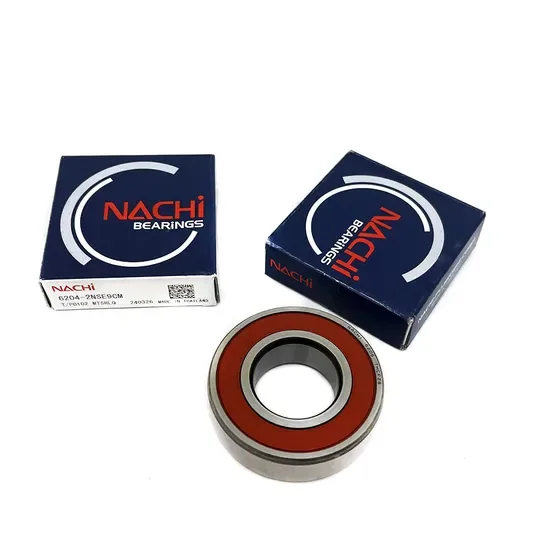
Deep Groove Ball Bearings
Genuine NACHI 608zz 6202 6201 Deep Groove Ball Bearing for Marine Equipment
View product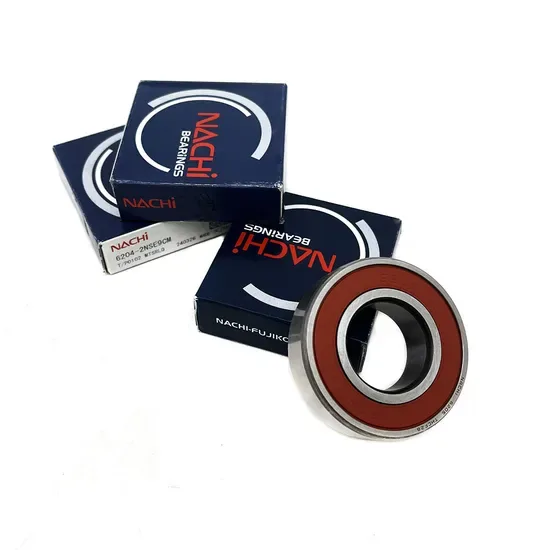
Deep Groove Ball Bearings
NACHI 608zz 16004 6201 Deep Groove Ball Bearing P6 P5 C3
View product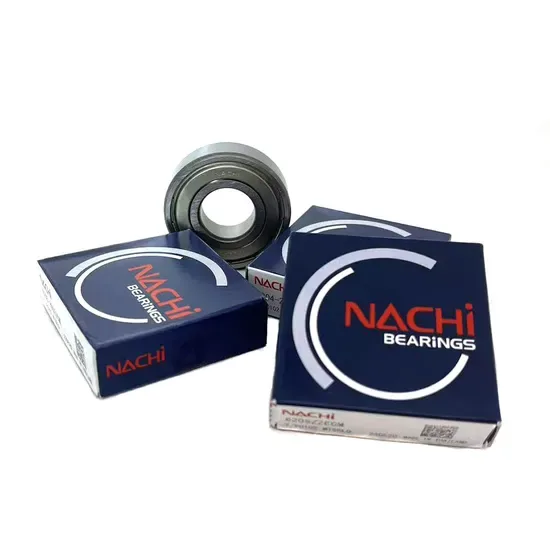
Deep Groove Ball Bearings
NACHI Deep Groove Ball Bearing 62301 608 6202 63008 63007 63006 6204 6301
View product Deep Groove Ball Bearings
Genuine NACHI P6 Deep Groove Ball Bearings 62208 62210 63002 63004 63006
View productModel check
Not sure which NACHI designation fits? We help with substitution, cross-reference and selection.
Send the old bearing number, the worn marking you can still read, or the application and shaft size. nachioem matches it to the correct NACHI model, including clearance, cage and seal options, before you order.
- Substitution for discontinued models
- Cross-reference to NACHI numbers
- Selection for spindles, pumps and reducers
Keep reading
Related NACHI bearing technical articles
More practical guides on NACHI suffixes, replacement and selection for machine tools, automotive, construction machinery, pumps and gear reducers.
Oct 7, 2026 · Brands & Alternatives · 6 min read
NACHI Product Range Overview: Wholesale Supplier for Bulk Orders
NACHI product range overview guides buyers in distinguishing spherical from cylindrical roller bearings to prevent costly installation failures. Learn to select precise domestic alternatives…
Read the article
Oct 7, 2026 · Brands & Alternatives · 7 min read
NACHI Brand Tiers Explained: Wholesale Supplier Guide
NACHI brand tiers are defined by ISO tolerance classes and internal clearance codes, not marketing labels. Verify grades through part number suffixes and cage…
Read the article Oct 7, 2026 · Brands & Alternatives · 8 min read
NACHI Auto vs Industrial Bearings: Wholesale Supplier for Bulk Orders
Mastering NACHI auto vs industrial bearings prevents costly misapplications in heavy-duty fleets. Learn how C3/C4 clearance and specialized seals differ from standard CN specs…
Read the article
Request a quote
Send your NACHI model list. We quote fast.
List the NACHI model numbers with full suffixes and the quantity for each. nachioem replies online as quickly as possible with pricing for distributors, repair shops and end users worldwide.
- info@nachioem.com
- WhatsApp +1 (702) 981-5880
- Online replies as quickly as possible
- Global delivery by DHL, FedEx, UPS, air or sea