
NACHI Bearing Technical Guide Buying Guide
NACHI Alternator & AC Bearings Wholesale Supplier
Sourcing NACHI alternator and AC bearings requires strict verification of suffix codes, internal clearances, and packaging documentation to avoid costly customs delays. Learn how to match C3 clearance for high-temperature environments and validate traceability documents for genuine automotive aftermarket components.
- Published
- By author
- nachioem · Specialized NACHI bearing supplier
The part number on the box is rarely enough to guarantee performance.
Sourcing genuine NACHI alternator and AC bearings requires strict verification of suffix codes, internal clearances, and packaging documentation. A missing C3 clearance indicator or non-compliant wooden pallet can lead to port detention, customs rejection, and immediate field failure in high-temperature automotive applications. Buyers must prioritize traceability documents and exact specification matching over base model numbers alone.
I still recall the humidity hitting my face at Yantian Port in Shenzhen, standing next to a container destined for Jebel Ali. The paperwork looked perfect at a glance, but the devil was in the details. The invoice listed the base bearing number correctly, yet it omitted the critical C3 clearance suffix required for the desert climate. Worse, the wooden pallets lacked fumigation certification. That shipment didn’t just face delays; it faced rejection. The client refused to accept goods that couldn’t clear customs without expensive re-processing. This wasn’t a manufacturing defect; it was a documentation and specification mismatch. In the global aftermarket trade, especially for sensitive components like NACHI alternator and AC bearings, the gap between a successful delivery and a financial loss often lies in these alphanumeric suffixes and logistical formalities.
Understanding these nuances transforms how distributors and MRO buyers approach procurement. It shifts the focus from simple price comparison to comprehensive risk management. When you source NACHI alternator and AC bearings, you are not just buying steel rings and rolling elements; you are buying compatibility with specific operating environments and compliance with international shipping standards.
Why Do Suffix Codes Matter for NACHI AC Bearings?
A single missing letter in the suffix code can dictate whether a bearing survives its first summer or fails within weeks.
Many buyers assume the main part number is sufficient for ordering. This is a dangerous misconception. For automotive applications, particularly air conditioning compressors and alternators, the suffix codes define seal types, grease specifications, and internal clearances. Ignoring them leads to premature warranty claims and reputational damage.
Consider the difference between standard and high-temperature applications. An AC compressor bearing operates under significantly higher thermal stress than a standard wheel bearing. If a buyer orders a standard deep groove ball bearing instead of one specified with high-temperature grease and appropriate clearance, the lubricant will degrade rapidly. The result is increased friction, heat buildup, and eventual seizure.
| Specification Feature | Standard Automotive Bearing | High-Temp AC Compressor Bearing |
|---|---|---|
| Grease Type | General purpose lithium | High-temperature synthetic |
| Seal Material | Standard rubber (NBR) | Heat-resistant elastomer |
| Internal Clearance | Normal (CN) | Expanded (C3 or C4) |
| Operating Environment | Moderate temperature | High thermal load |
| Failure Risk in AC | High (premature wear) | Low (designed for heat) |
A Southeast Asian auto parts dealer once mixed standard and high-temperature NACHI alternator and AC bearings in their inventory due to similar base numbers. The resulting warranty claim rate spiked noticeably. Repair shops reported noise and vibration shortly after installation. The root cause was not counterfeit goods, but incorrect specification selection. The standard bearings could not handle the thermal expansion within the AC compressor housing, leading to preload issues and early fatigue.
To avoid this, always verify the suffix. Codes like 2RS indicate double rubber seals, while ZZ denotes metal shields. For AC applications, look for specific grease codes approved for high-temperature stability. When sourcing NACHI alternator and AC bearings, request the technical datasheet that matches the suffix on your purchase order. This ensures the physical product aligns with the operational demands of the vehicle.
How to Verify Genuine NACHI Alternator Bearings?
Traceability documentation is the only reliable defense against counterfeit risks in the global aftermarket.
The market for popular brands is flooded with imitations. Some are low-quality fakes; others are refurbished units repackaged as new. For distributors supplying repair workshops, the liability of installing a failed bearing is substantial. Verification goes beyond checking the hologram on the box. It requires a chain of custody.
Genuine NACHI alternator and AC bearings come with specific packaging markers and batch numbers that can be traced back to the manufacturer’s production facilities. Requesting a certificate of origin or a mill test report adds a layer of security. While not every small order warrants full laboratory analysis, the availability of these documents signals a supplier’s commitment to authenticity.
A Latin American repair group learned this the hard way. They sourced a large batch of bearings from a trader offering prices significantly below market average. The packaging looked convincing, but the internal grease had a different odor and consistency compared to genuine stock. Field failures occurred across multiple vehicles. The cost of replacing the faulty units and compensating customers far exceeded the initial savings. This incident highlighted that price alone is a poor indicator of value when quality assurance is absent.
When evaluating suppliers, ask about their sourcing channels. Do they buy directly from authorized distributors or through secondary markets? Can they provide proof of purchase from upstream partners? A reputable supplier of NACHI alternator and AC bearings will have transparent records. They should be able to explain the origin of the stock and provide relevant quality certificates. This transparency builds trust and reduces the risk of introducing substandard products into your supply chain.
What Packaging and Customs Docs Prevent Port Detention?
Fumigation certificates and exact suffix matching on invoices are mandatory for smooth international logistics.
Shipping bearings involves more than just placing them in a box. International phytosanitary regulations require that wooden packaging materials be treated to prevent the spread of pests. Failure to comply results in immediate detention at the port of entry. Additionally, customs authorities scrutinize invoices for accuracy. Discrepancies between the physical goods and the declared description can trigger inspections and delays.
The case of the Middle East distributor mentioned earlier illustrates this point. The missing C3 suffix on the customs documents raised questions about the nature of the goods. Was it a standard bearing or a specialized component? The lack of clarity, combined with the absence of a fumigation certificate for the wooden pallets, led to weeks of detention. The client faced storage fees and potential penalties.
| Document/Certification | Purpose | Consequence of Missing/Incorrect |
|---|---|---|
| Commercial Invoice | Declares value and description | Customs delay, valuation disputes |
| Packing List | Details quantity and weight | Inspection triggers, inventory mismatch |
| Fumigation Certificate | Proves wood treatment (ISPM 15) | Port detention, rejection of shipment |
| Certificate of Origin | Verifies manufacturing country | Tariff miscalculation, trade compliance issues |
| Technical Datasheet | Confirms specifications | Client rejection, warranty disputes |
To prevent such issues, ensure that your supplier provides complete and accurate documentation. The invoice should list the full part number, including suffixes. The packing list must match the physical count exactly. If wooden pallets are used, verify that they bear the IPPC mark and that the corresponding fumigation certificate is included in the document set.
For buyers of NACHI alternator and AC bearings, working with a supplier who understands these logistical requirements is crucial. They should proactively check documentation before shipment. This attention to detail saves time and money at the destination port. It ensures that the goods clear customs smoothly and reach your warehouse without unnecessary hurdles.
How to Choose the Right Clearance for Different Climates?
Standard clearance is insufficient for high-temperature environments; C3 or C4 is often required.
Bearing clearance refers to the internal space between the rolling elements and the raceways. As temperature increases, metal expands. If the clearance is too tight, this expansion causes preload, leading to excessive heat generation and premature failure. Conversely, if the clearance is too loose, it can cause vibration and noise. Selecting the correct clearance class is vital for reliability.
In tropical or desert climates, ambient temperatures are higher, and engine compartments run hotter. Standard clearance (CN) bearings may not accommodate the thermal expansion adequately. C3 clearance offers a larger internal gap, allowing for expansion without inducing harmful preload. For extreme conditions, C4 clearance might be necessary.
| Climate Zone | Typical Operating Temp | Recommended Clearance | Reason |
|---|---|---|---|
| Temperate | Moderate | CN (Normal) | Standard expansion limits |
| Tropical | High | C3 | Accommodates higher thermal growth |
| Desert/Arctic | Extreme | C3 or C4 | Prevents preload in heat, maintains fit in cold |
| High-Speed | Variable | C3 | Reduces friction heat generation |
A European wind farm operator once experienced repeated generator bearing failures. Investigation revealed that standard clearance bearings were installed in a location with significant temperature fluctuations. The bearings seized during hot spells due to insufficient clearance. Switching to C3 clearance bearings resolved the issue, extending service life meaningfully. This principle applies equally to automotive applications.
When sourcing NACHI alternator and AC bearings, consider the end-user’s environment. If your customers operate in hot regions, specify C3 clearance as the default. This proactive approach reduces warranty claims and enhances customer satisfaction. It demonstrates technical expertise and a commitment to providing solutions that work in real-world conditions. Always consult the manufacturer’s guidelines for specific application recommendations.
Conclusion
Precision in specification and documentation defines success in bearing procurement.
Sourcing NACHI alternator and AC bearings is not merely a transaction; it is a technical exercise in risk management. By focusing on suffix codes, verifying authenticity through traceability, ensuring compliant packaging, and selecting appropriate clearances, buyers can avoid costly pitfalls. These steps protect both the supply chain integrity and the end-user’s experience. Attention to these details separates professional distributors from casual traders.
Applications covered in this article
Products in this article
NACHI bearings mentioned above
These are the NACHI bearing types discussed in this guide. Open a product page to check its designation and send the exact suffix with your quantity.
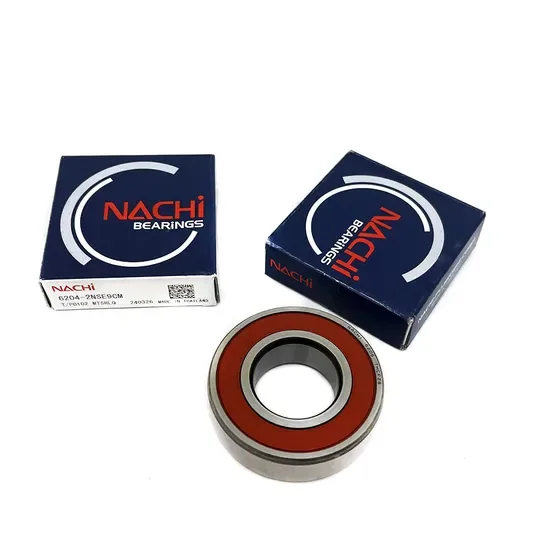
Deep Groove Ball Bearings
X&S 6211 6213 6215 Deep Groove Ball Bearing Wholesale Supplier
View product
Angular Contact Ball Bearings
7320AC 7321AC 7322AC Angular Contact Ball Bearing Wholesale Supplier
View product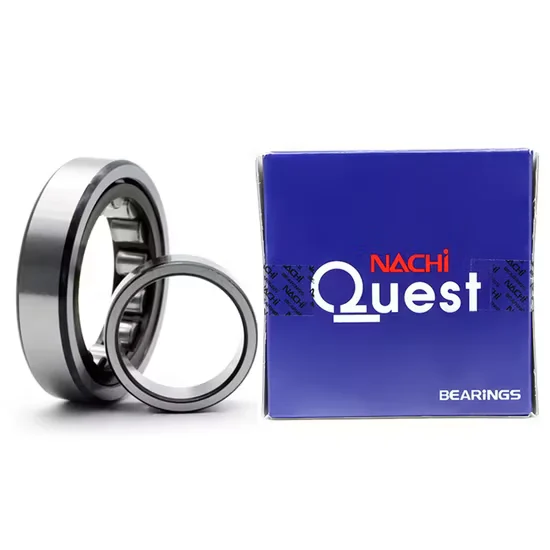
Cylindrical Roller Bearings
NACHI N410e Cylindrical Roller Bearing Genuine Wholesale Supplier
View product
Deep Groove Ball Bearings
BDL/MACHI 6204 Deep Groove Ball Bearing Wholesale Supplier
View productModel check
Not sure which NACHI designation fits? We help with substitution, cross-reference and selection.
Send the old bearing number, the worn marking you can still read, or the application and shaft size. nachioem matches it to the correct NACHI model, including clearance, cage and seal options, before you order.
- Substitution for discontinued models
- Cross-reference to NACHI numbers
- Selection for spindles, pumps and reducers
Keep reading
Related NACHI bearing technical articles
More practical guides on NACHI suffixes, replacement and selection for machine tools, automotive, construction machinery, pumps and gear reducers.
Oct 7, 2026 · Buying Guide · 7 min read
NACHI Bearings Quote: Genuine Wholesale Supplier for Bulk & MRO Orders
Request a NACHI bearings quote with full suffix accuracy to prevent costly customs delays and ensure genuine product traceability. Secure competitive wholesale pricing through…
Read the article Oct 7, 2026 · Buying Guide · 7 min read
Discontinued NACHI Numbers: Replacements from Wholesale Supplier
Replacing discontinued NACHI bearings requires more than matching dimensions to prevent premature field failures. Recalculate internal clearance and verify cage material compatibility to ensure…
Read the article Oct 7, 2026 · Buying Guide · 8 min read
Buy Genuine NACHI Bearings: Wholesale Supplier for Bulk Orders
Secure genuine NACHI bearings by mastering neutral checks and traceability verification to avoid catastrophic equipment failures. Learn to identify counterfeit units through hardness testing,…
Read the article
Request a quote
Send your NACHI model list. We quote fast.
List the NACHI model numbers with full suffixes and the quantity for each. nachioem replies online as quickly as possible with pricing for distributors, repair shops and end users worldwide.
- info@nachioem.com
- WhatsApp +1 (702) 981-5880
- Online replies as quickly as possible
- Global delivery by DHL, FedEx, UPS, air or sea