
NACHI Bearing Technical Guide Technical Resources
NACHI Clearance Code Reference: Wholesale Supplier for Bulk Orders
Master the NACHI Clearance Code Reference to prevent costly thermal expansion failures in heavy industry. Learn why standard CN clearance often fails above 80°C and how to correctly select C3 or C4 suffixes based on interference fits and operating temperatures for reliable bulk procurement.
- Published
- By author
- nachioem · Specialized NACHI bearing supplier
Standard clearance is often the wrong choice for heavy industry.
Selecting the correct internal clearance for NACHI bearings requires matching the suffix code (C2, CN, C3, C4) to the specific thermal expansion and interference fit conditions of the application, rather than defaulting to standard ISO norms. Misinterpreting these codes leads to premature seizure or excessive vibration. This NACHI Clearance Code Reference provides the technical framework for accurate selection and verification in bulk procurement.
The humidity at Qingdao Port can be relentless, especially when a container of cylindrical roller bearings is sitting on the tarmac under the midday sun. I remember standing next to a shipment destined for a South African mining operation, watching the stevedores move crates with a casual efficiency that masked the precision required inside. The paperwork listed standard deep-groove ball bearings, but the application was a high-speed crusher subject to significant thermal loads. A quick check of the box markings revealed the suffix CN, indicating normal internal clearance. For that specific environment, where temperatures routinely exceeded operational baselines, CN was a recipe for failure. The correct specification should have been C3 or even C4 to accommodate the thermal expansion of the shaft and housing. That incident, which required an emergency interception and repacking before the vessel departed, underscored a critical reality in industrial supply: the difference between a successful installation and a catastrophic seizure often comes down to a single letter in the bearing code. Understanding the NACHI Clearance Code Reference is not just about reading a catalog; it is about preventing costly downtime for global industrial operators.
What Do NACHI Clearance Codes Actually Mean?
Clearance codes define the radial space between rolling elements and raceways before installation.
Internal clearance is the total distance through which one bearing ring can be moved relative to the other in a radial direction. NACHI, like other major manufacturers, adheres to ISO 5753 standards for defining these values. The suffixes appended to the bearing part number indicate the deviation from the standard baseline.
The most common codes encountered in global trade are:
- C2: Clearance smaller than normal. Used for applications requiring high precision and minimal axial displacement, typically where thermal expansion is negligible.
- CN: Normal clearance. This is the standard offering for general-purpose applications with moderate loads and speeds. It is the default if no suffix is specified.
- C3: Clearance greater than normal. Designed for applications with higher operating temperatures or where the inner ring is mounted with a tight interference fit on the shaft.
- C4: Clearance greater than C3. Used for severe thermal conditions or very heavy interference fits.
- C5: Clearance greater than C4. Reserved for extreme operating conditions.
A frequent misconception among buyers is that “more clearance is always better.” This is incorrect. Excessive clearance can lead to increased vibration, noise, and reduced fatigue life due to improper load distribution among the rolling elements. Conversely, insufficient clearance causes the bearing to run hot, leading to lubricant breakdown and eventual seizure.
For wholesalers managing mixed-brand inventories, it is crucial to note that while ISO standards provide a baseline, each manufacturer may have slight variations in their tolerance bands. When sourcing as a NACHI Clearance Code Reference, verifying the specific technical data sheet for the exact series is essential. A C3 clearance in one brand may not be identical to a C3 in another, although they are generally interchangeable in broad applications. However, for precision machinery, this assumption can be dangerous.
How to Calculate Operating Clearance Under Load?
Installed clearance is significantly less than initial catalog clearance due to fit and temperature.
The clearance value listed in a catalog is the “initial” clearance, measured before the bearing is mounted. Once installed, two primary factors reduce this clearance: interference fit and thermal expansion. Ignoring these factors is a common cause of premature bearing failure in heavy equipment.
When a bearing is pressed onto a shaft or into a housing, the rings expand or contract, reducing the internal radial clearance. The amount of reduction depends on the magnitude of the interference fit and the geometry of the bearing.
Additionally, during operation, the inner ring typically runs hotter than the outer ring. This temperature differential causes the inner ring to expand more than the outer ring, further reducing the internal clearance. If the initial clearance is not sufficient to compensate for this loss, the bearing will operate with zero or negative clearance, leading to high friction and heat generation.
To select the correct code, one must estimate the operating clearance required. This involves:
- Determining the reduction in clearance due to the interference fit.
- Estimating the temperature difference between the inner and outer rings.
- Calculating the thermal expansion loss.
- Adding a safety margin to ensure positive operating clearance.
For example, in a gearbox application where the shaft is heated by friction and external sources, a standard CN clearance might become negative once the unit reaches peak load. In such cases, a C3 or C4 clearance is necessary to maintain a small positive operating clearance.
This calculation is particularly relevant for MRO buyers who are replacing failed bearings. Simply ordering the same part number without investigating why the previous bearing failed can lead to repeat issues. If the original bearing seized due to thermal expansion, replacing it with another CN unit will likely result in the same outcome. Using a NACHI Clearance Code Reference helps identify whether a step up in clearance class is required for the specific operating environment.
Step-by-Step Guide to Selecting the Right NACHI Clearance
Selection requires a systematic assessment of load, speed, and thermal conditions.
Choosing the correct clearance is not a guesswork exercise. It follows a logical progression based on application parameters. This methodology ensures that the selected bearing can withstand the operational stresses without compromising performance.
- Identify the Application Type: Determine if the application involves high speeds, heavy loads, or significant temperature variations. Mining crushers, steel mill rollers, and high-speed spindles have distinct requirements.
- Assess Fit Conditions: Evaluate whether the bearing will be mounted with a loose, normal, or tight interference fit. Tighter fits require larger initial clearances.
- Estimate Operating Temperature: Consider the ambient temperature and the heat generated by the machine itself. If the operating temperature exceeds 80°C, standard clearance is often insufficient.
- Consult the NACHI Technical Catalog: Use the manufacturer’s guidelines to map the application conditions to the appropriate clearance class.
- Verify Availability: Ensure that the selected clearance code is available for the specific bearing size and type. Some specialized clearances may have longer lead times.
A common error occurs when buyers assume that “heavy load” automatically means “C3 clearance.” While C3 is common for heavy loads, the deciding factor is often the combination of load and temperature. A heavily loaded bearing running at low temperature might perform well with CN clearance, whereas a moderately loaded bearing at high temperature might require C4.
For distributors consolidating containers for multiple clients, verifying these parameters against the order details is a critical quality control step. A mismatch in clearance codes can result in entire batches being rejected upon arrival. By applying this step-by-step approach, buyers can minimize the risk of such errors. As a NACHI Clearance Code Reference, this process serves as a safeguard against specification mismatches in complex supply chains.
Common Mistakes in Reading NACHI Suffixes
Misreading suffixes leads to costly logistical and operational errors.
Even experienced procurement professionals can stumble over the nuances of bearing nomenclature. The suffixes are small, easily overlooked, and sometimes confused with other codes indicating seals, cages, or lubrication.
One frequent mistake is confusing the clearance code with the seal type. For instance, a bearing marked with “2RS” has rubber seals on both sides, which is unrelated to internal clearance. A buyer might see “C3” and “2RS” and assume they are related, leading to confusion when searching for equivalents.
Another error is assuming that all bearings in a particular series have the same clearance. In reality, the same part number can be manufactured with different clearances depending on the customer’s specification. Ordering a “6205” without specifying the clearance suffix will typically result in CN clearance, which may not be suitable for the intended application.
In a recent case involving a mixed-container shipment to a Latin American distributor, a batch of spherical roller bearings was ordered with C3 clearance. Due to a clerical error in the packing list, the suffix was omitted, and the warehouse team defaulted to CN. The discrepancy was only caught during a pre-shipment inspection, causing a two-day delay in port consolidation. This incident highlights the importance of rigorous verification processes.
To avoid such pitfalls, buyers should always request a detailed packing list that includes full part numbers with all suffixes. Additionally, physical inspection of the bearing markings or box labels before shipping can prevent costly returns. For wholesalers acting as a NACHI Clearance Code Reference, implementing a double-check system for suffix accuracy is a best practice that protects both the supplier and the end-user.
Conclusion
Precision in clearance selection prevents failure.
Understanding the nuances of NACHI clearance codes is essential for ensuring the reliability of industrial machinery. By moving beyond default assumptions and applying a systematic approach to selection, buyers can avoid common pitfalls associated with thermal expansion and interference fits. Whether sourcing for a single replacement or a full container load, accurate interpretation of these codes is the foundation of successful bearing application. This NACHI Clearance Code Reference serves as a guide for making informed decisions in a complex technical landscape.
Applications covered in this article
Products in this article
NACHI bearings mentioned above
These are the NACHI bearing types discussed in this guide. Open a product page to check its designation and send the exact suffix with your quantity.
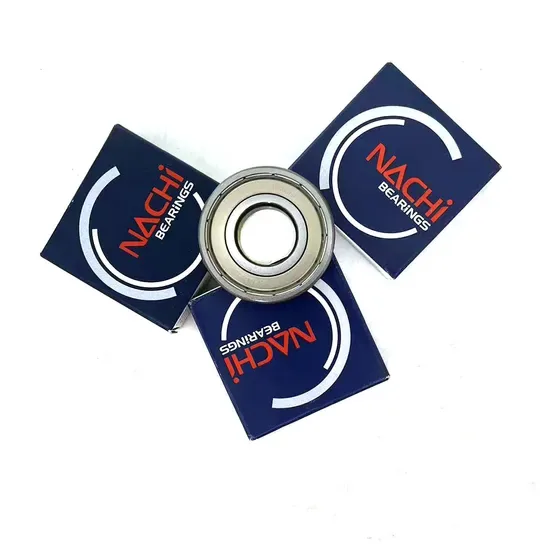
Deep Groove Ball Bearings
NACHI Non-Magnetic Deep Groove Ball Bearing 608 6204 6205 6206 6207 6208 6317 6318 6319 6320
View product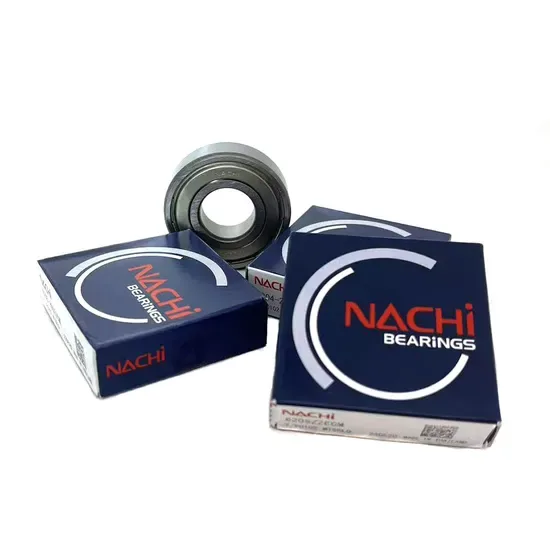
Deep Groove Ball Bearings
NACHI Deep Groove Ball Bearing 681 682 6202 683 684 685 686 6203 687 688 6205
View product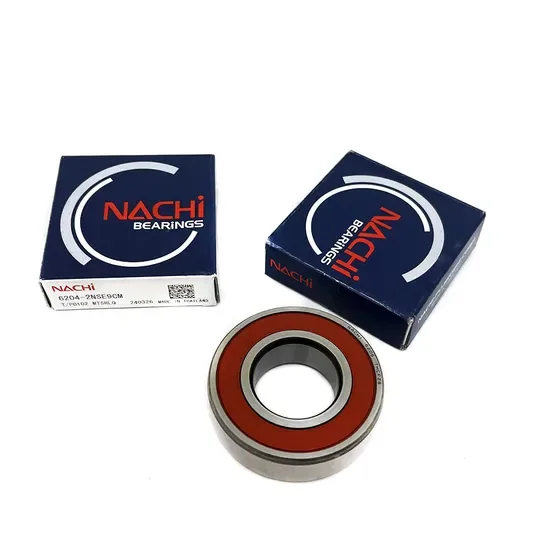
Deep Groove Ball Bearings
NACHI Deep Groove Ball Bearing 6004 6204 6002 6205 6203 6011 6300 6310 6305 6913 6912 6911 6910 6909 6908
View product Deep Groove Ball Bearings
X&S NACHI Electric-Insulated Deep Groove Ball Bearing 6313 6205CE for Dental Turbine
View productModel check
Not sure which NACHI designation fits? We help with substitution, cross-reference and selection.
Send the old bearing number, the worn marking you can still read, or the application and shaft size. nachioem matches it to the correct NACHI model, including clearance, cage and seal options, before you order.
- Substitution for discontinued models
- Cross-reference to NACHI numbers
- Selection for spindles, pumps and reducers
Keep reading
Related NACHI bearing technical articles
More practical guides on NACHI suffixes, replacement and selection for machine tools, automotive, construction machinery, pumps and gear reducers.
Oct 8, 2026 · Technical Resources · 9 min read
NACHI Bearing Glossary: Wholesale Supplier for Bulk Orders
Master the NACHI Bearing Glossary to prevent costly spindle failures caused by misinterpreting suffix codes. Distinguish between standard DB pairing and custom Flush Ground…
Read the article Oct 8, 2026 · Technical Resources · 7 min read
NACHI to Other Brands Interchange Table: Cross-Reference Supplier for Sale
Master the NACHI interchange table by verifying internal clearance and cage materials, not just dimensions. Matching C3 clearance and brass cages prevents thermal seizure…
Read the article
Oct 8, 2026 · Technical Resources · 7 min read
NACHI Precision Bearing Wholesale Supplier & Bulk Stock
Prevent premature failure by matching NACHI precision bearing internal clearance and cage materials to heavy-load conditions. Learn to calculate thermal expansion effects, select vibration-resistant…
Read the article
Request a quote
Send your NACHI model list. We quote fast.
List the NACHI model numbers with full suffixes and the quantity for each. nachioem replies online as quickly as possible with pricing for distributors, repair shops and end users worldwide.
- info@nachioem.com
- WhatsApp +1 (702) 981-5880
- Online replies as quickly as possible
- Global delivery by DHL, FedEx, UPS, air or sea