
NACHI Bearing Technical Guide Brands & Alternatives
NACHI Clearance Codes vs Other Brands: Wholesale Supplier
NACHI clearance codes do not align one-to-one with SKF or FAG specifications, making direct substitution risky for heavy-duty applications. Accurate cross-brand replacement requires precise tolerance mapping rather than simple code matching to prevent premature equipment failure and costly operational downtime.
- Published
- By author
- nachioem · Specialized NACHI bearing supplier
A C3 code is not a universal constant.
NACHI clearance codes do not align one-to-one with SKF or FAG specifications. Substituting bearings across brands based solely on the clearance code, such as C3, without verifying the specific internal tolerance bands, leads to premature equipment failure in heavy-duty applications. Accurate cross-brand substitution requires precise tolerance mapping rather than simple code matching.
The humidity in the Nigerian cement plant was thick enough to taste. I stood next to a massive rotary kiln drive that had seized up after only a few months of operation. The maintenance team was furious. They had followed the original equipment manufacturer’s specification to the letter, replacing the failed units with what they believed were equivalent NACHI bearings marked with the same C3 clearance code as the previous brand. On paper, it was a perfect match. In reality, the thermal expansion under the intense local heat and heavy load had pushed the internal clearance beyond its functional limit, causing metal-to-metal contact and eventual burnout. This incident was not an anomaly but a common pitfall for those who assume that clearance codes are standardized across all manufacturers. As a NACHI clearance codes supplier, I have seen this assumption cost operations dearly.
Understanding these nuances is critical for MRO buyers and distributors who manage multi-brand inventories. The difference lies in the microscopic details of manufacturing tolerances, which vary significantly between Japanese, European, and American bearing makers. Ignoring these differences turns a routine replacement into a costly operational risk.
Why Do “C3” Codes Differ Across NACHI, SKF, and FAG?
The alphanumeric code is merely a label, not a guarantee of identical physical dimensions.
While ISO 5753 provides a general framework for rolling bearing internal clearance, each manufacturer interprets and applies these standards within their own production capabilities and design philosophies. For a wholesaler or engineer, assuming that a C3 clearance from NACHI is identical to a C3 from SKF or FAG is a dangerous oversimplification. The actual range of microns defining the “normal” or “greater than normal” clearance varies.
NACHI, known for its precision steel and rigorous quality control, often maintains tighter tolerance bands within the specified clearance group compared to some other manufacturers. This means a NACHI C3 bearing might sit at the lower end of the C3 spectrum, while a competitor’s C3 might lean toward the upper end. When you substitute one for the other without checking the specific dimensional limits, you alter the fit between the shaft and the housing.
| Clearance Code | NACHI Tolerance Band Characteristic | SKF/FAG Tolerance Band Characteristic | Risk of Direct Substitution |
|---|---|---|---|
| C2 | Tighter lower limit | Standard lower limit | Potential binding if shaft is oversized |
| C3 | Precise mid-range focus | Broader upper range allowance | Excessive play if replacing NACHI with broader brand |
| C4 | Optimized for high temp | Standard high clearance | Misalignment under thermal load |
In a mining crusher application, an OEM switched from SKF to NACHI bearings. The procurement team ordered the same part number and C3 clearance. However, because the NACHI bearings had a slightly different tolerance distribution, the existing shaft fits, which were designed for the broader SKF tolerance, resulted in a looser fit than intended. This led to micro-movements and fretting corrosion on the shaft surface. The solution was not to change the bearing brand back, but to adjust the machining tolerances of the shaft to match the specific NACHI clearance profile. This highlights why a NACHI clearance codes supplier must provide more than just the part number; they must offer technical data on tolerance bands.
For distributors stocking multiple brands, this means maintaining separate technical datasheets for each brand’s clearance definitions. It is not enough to know that C3 means “greater than normal.” You must know exactly how much greater, and how that compares to the other brands in your inventory.
How to Map NACHI Clearances to Other Brands Accurately?
Accurate mapping requires consulting specific tolerance tables, not just catalog codes.
To avoid the pitfalls of direct code substitution, buyers must engage in a step-by-step cross-reference process. This involves moving beyond the front-page catalog summary and diving into the technical appendices where the actual micron values are listed.
First, identify the exact internal clearance range for the NACHI bearing in question. This is typically found in the manufacturer’s technical manual under the section for internal clearance. Note the minimum and maximum values in microns. Next, retrieve the corresponding data for the target brand, such as SKF or FAG, for the same clearance code. Compare the two ranges. If the NACHI range falls entirely within the target brand’s range, the substitution may be safe, provided the shaft and housing fits are also compatible. If the ranges overlap only partially or not at all, further engineering analysis is required.
- Retrieve Technical Data: Obtain the detailed internal clearance tables for both the source and target brands. Do not rely on summary charts.
- Compare Micron Values: Align the minimum and maximum clearance values for the specific bearing size and clearance group.
- Assess Fit Compatibility: Evaluate whether the existing shaft and housing tolerances are suitable for the new bearing’s specific clearance range.
- Consult Engineering Support: If the ranges differ significantly, seek advice from a technical specialist who understands the interaction between clearance, fit, and load.
A European wind farm operator faced this challenge when trying to source emergency replacements for a gearbox. The original bearings were from a German brand, but due to supply chain delays, they considered NACHI alternatives. By using a detailed cross-reference matrix, their engineering team identified that while the C3 codes matched, the NACHI bearings had a slightly narrower tolerance band. They adjusted the heating procedure for installation to ensure proper expansion and fit, avoiding the risk of false brinelling.
This process is time-consuming but essential. For MRO buyers, having access to a supplier who can perform this mapping quickly is invaluable. A reliable NACHI clearance codes supplier will have these comparisons readily available, reducing the burden on the buyer’s engineering team.
What Happens When You Ignore Tolerance Differences?
Ignoring tolerance differences invites catastrophic failure under load.
The consequences of mismatched clearances are not always immediate. In many cases, the equipment will run for a period, giving a false sense of security. However, under heavy loads, high speeds, or extreme temperatures, the subtle differences in internal clearance become magnified.
Consider the case of a steel mill in Southeast Asia. The maintenance team mixed brands in a continuous caster roll neck application. They used NACHI bearings in some positions and another brand in others, assuming the C3 clearance was interchangeable. The differing clearance values led to uneven load distribution across the roll. The bearings with the larger effective clearance took less load, while those with tighter clearance bore the brunt of the stress. This imbalance caused premature fatigue in the tighter bearings and excessive vibration in the looser ones. The result was unplanned downtime and significant repair costs.
Another common issue is thermal instability. In high-temperature environments, bearings expand. If the initial internal clearance is too small due to a mismatch in tolerance bands, the expansion can eliminate the clearance entirely, leading to seizure. Conversely, if the clearance is too large, the rolling elements may skid rather than roll, causing wear and heat generation.
| Failure Mode | Cause | Symptom |
|---|---|---|
| Seizure | Clearance too tight after thermal expansion | Sudden stop, high temperature |
| Fretting Corrosion | Clearance too loose, causing micro-movement | Rust-colored powder, shaft damage |
| Premature Fatigue | Uneven load distribution due to mixed clearances | Spalling, noise, vibration |
These failures are often misdiagnosed as material defects or lubrication issues. However, the root cause is frequently the incorrect assumption that clearance codes are universal. For a NACHI clearance codes supplier, educating customers on these risks is part of the value proposition. It prevents costly mistakes and builds long-term trust.
How to Source Mixed-Brand Clearances for MRO?
Strategic sourcing involves technical verification, not just price comparison.
For MRO operators and distributors, managing a mixed-brand inventory is a reality. The key to success is not to avoid mixing brands, but to do so with precise knowledge. When sourcing NACHI bearings to replace other brands, or vice versa, the focus must be on technical compatibility.
Start by establishing a relationship with a supplier who understands the nuances of internal clearance. A professional NACHI clearance codes supplier will not just sell you a box; they will help you verify that the clearance profile matches your application’s needs. This is particularly important for emergency replacements, where there is no time for extensive engineering analysis. Having a supplier who can quickly provide tolerance data and cross-reference information is crucial.
Additionally, consider consolidating orders to ensure batch consistency. Mixing batches from different production runs, even within the same brand, can introduce variations. By sourcing from a supplier with robust inventory management and traceability, you can minimize these risks.
For large projects, such as a new mining installation, it is advisable to standardize on a single brand for critical applications. However, for maintenance and repair, flexibility is key. A supplier who offers cross-brand equivalent consultation can help you navigate the complexities of mixed inventories. They can provide the technical datasheets and support needed to make informed decisions.
In the African cement plant incident mentioned earlier, the solution was not just to replace the bearings, but to rethink the sourcing strategy. The plant began working with a supplier who provided detailed tolerance maps for all the brands they stocked. This allowed them to make informed substitutions and avoid future failures. The cost of this technical support was negligible compared to the cost of another shutdown.
Conclusion
Clearance codes are brand-specific, not universal.
Substituting bearings across brands requires more than matching alphanumeric codes. It demands a deep understanding of internal tolerance bands and their impact on fit and performance. By prioritizing technical verification over simple code matching, buyers can avoid costly failures and ensure reliable equipment operation. A knowledgeable NACHI clearance codes supplier is an essential partner in this process, providing the expertise and data needed to navigate the complexities of multi-brand sourcing.
Applications covered in this article
Products in this article
NACHI bearings mentioned above
These are the NACHI bearing types discussed in this guide. Open a product page to check its designation and send the exact suffix with your quantity.
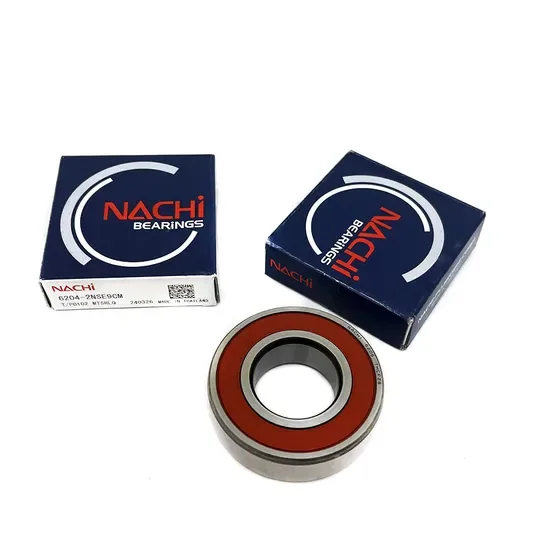
Deep Groove Ball Bearings
Genuine NACHI 608zz 6202 6201 Deep Groove Ball Bearing for Marine Equipment
View product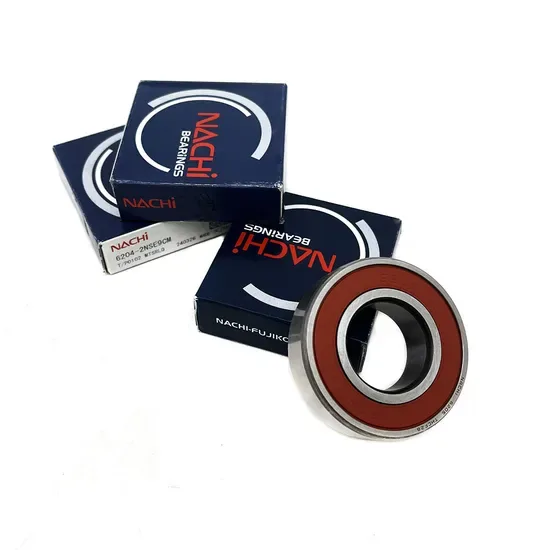
Deep Groove Ball Bearings
NACHI 608zz 16004 6201 Deep Groove Ball Bearing P6 P5 C3
View product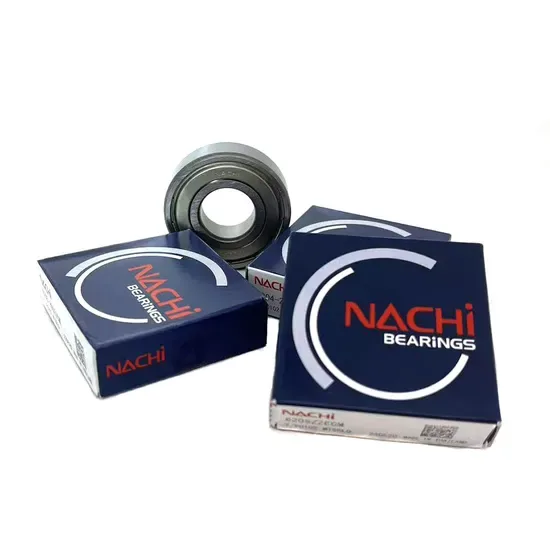
Deep Groove Ball Bearings
NACHI Deep Groove Ball Bearing 62301 608 6202 63008 63007 63006 6204 6301
View product Deep Groove Ball Bearings
Genuine NACHI P6 Deep Groove Ball Bearings 62208 62210 63002 63004 63006
View productModel check
Not sure which NACHI designation fits? We help with substitution, cross-reference and selection.
Send the old bearing number, the worn marking you can still read, or the application and shaft size. nachioem matches it to the correct NACHI model, including clearance, cage and seal options, before you order.
- Substitution for discontinued models
- Cross-reference to NACHI numbers
- Selection for spindles, pumps and reducers
Keep reading
Related NACHI bearing technical articles
More practical guides on NACHI suffixes, replacement and selection for machine tools, automotive, construction machinery, pumps and gear reducers.
Oct 7, 2026 · Brands & Alternatives · 6 min read
NACHI Product Range Overview: Wholesale Supplier for Bulk Orders
NACHI product range overview guides buyers in distinguishing spherical from cylindrical roller bearings to prevent costly installation failures. Learn to select precise domestic alternatives…
Read the article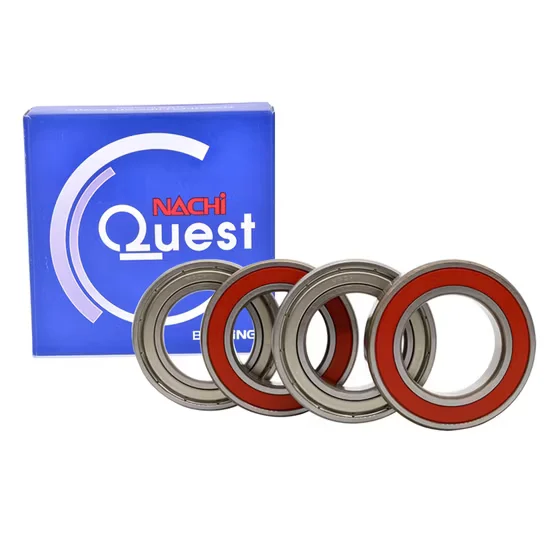
Oct 7, 2026 · Brands & Alternatives · 7 min read
NACHI Brand Tiers Explained: Wholesale Supplier Guide
NACHI brand tiers are defined by ISO tolerance classes and internal clearance codes, not marketing labels. Verify grades through part number suffixes and cage…
Read the article Oct 7, 2026 · Brands & Alternatives · 8 min read
NACHI Auto vs Industrial Bearings: Wholesale Supplier for Bulk Orders
Mastering NACHI auto vs industrial bearings prevents costly misapplications in heavy-duty fleets. Learn how C3/C4 clearance and specialized seals differ from standard CN specs…
Read the article
Request a quote
Send your NACHI model list. We quote fast.
List the NACHI model numbers with full suffixes and the quantity for each. nachioem replies online as quickly as possible with pricing for distributors, repair shops and end users worldwide.
- info@nachioem.com
- WhatsApp +1 (702) 981-5880
- Online replies as quickly as possible
- Global delivery by DHL, FedEx, UPS, air or sea