
NACHI Bearing Technical Guide Buying Guide
NACHI Cylindrical Roller Bearings Wholesale Supplier
Selecting the right NACHI cylindrical roller bearings requires matching cage materials and internal clearance to operating conditions, not just dimensions. Learn why machined brass cages are mandatory above 120°C and how thermal expansion impacts heavy load performance to prevent costly equipment failures.
- Published
- By author
- nachioem · Specialized NACHI bearing supplier
Bigger internal clearance is not always better for heavy loads.
Selecting the correct NACHI cylindrical roller bearings requires matching cage materials and internal clearance to specific operating temperatures and loads, rather than relying solely on basic dimensional fit. Premature failure in heavy-duty equipment often stems from thermal expansion reducing effective clearance or cage material degradation under high heat, not from insufficient load capacity.
I still recall the humidity in that Brazilian mining facility. The air was thick with dust and heat, and the noise from the primary crusher was deafening. I had shipped what I thought was a standard replacement order. The specifications looked correct on paper: same dimensions, same brand. But I had overlooked the cage material and the internal clearance class. The original equipment used machined brass cages designed for high-temperature stability, but my shipment contained standard pressed steel cages. Within weeks, the intense heat of the crushing operation caused the steel cages to deform. The rollers jammed, the shaft seized, and the entire processing line halted. The cost of that downtime far exceeded the price difference between the two cage types. That incident changed how I approach every inquiry for NACHI cylindrical roller bearings. It is not just about moving boxes; it is about understanding the physics of failure.
How to Match NACHI Cage Materials to Operating Temperatures?
Pressed steel cages fail rapidly above 120°C, making machined brass mandatory for hot zones.
The cage, or retainer, is often the weakest link in a cylindrical roller bearing assembly under thermal stress. While the rollers and rings are made from hardened bearing steel capable of withstanding significant stress, the cage material dictates the thermal limit of the entire unit.
In many general industrial applications, pressed steel cages are sufficient. They are lightweight, cost-effective, and perform well at moderate speeds and temperatures. However, in environments like steel mills, cement kilns, or mining crushers, ambient and operational temperatures frequently exceed the safe operating range of steel. When steel cages heat up, they lose tensile strength and can deform under centrifugal force or vibration. This deformation leads to increased friction, which generates more heat, creating a runaway thermal failure cycle.
Machined brass cages, typically made from high-strength copper alloys, offer superior thermal stability. Brass maintains its structural integrity at higher temperatures and has better emergency running properties if lubrication is temporarily lost. For any application where the operating temperature consistently exceeds 120°C, specifying a bearing with a machined brass cage is not an upgrade; it is a necessity.
| Operating Condition | Recommended Cage Material | Thermal Stability | Vibration Resistance |
|---|---|---|---|
| Standard Industrial (Ambient < 100°C) | Pressed Steel | Basic | Standard |
| High Temperature (> 120°C) | Machined Brass | Robust | High |
| High Speed + Moderate Temp | Polyamide (Nylon) | Controlled | Noticeably reduced |
| Heavy Shock Load | Machined Brass | Robust | High |
A European wind farm operator once reported premature failures in their gearbox generator bearings. The investigation revealed that while the load ratings were adequate, the high-speed rotation generated enough internal heat to soften the standard steel cages. Switching to NACHI cylindrical roller bearings with machined brass cages resolved the issue, extending service life meaningfully.
Why Internal Clearance is Critical for Heavy Loads?
Thermal expansion reduces effective clearance, turning a loose fit into a preload condition.
Internal clearance is the space between the rolling elements and the raceways when the bearing is unloaded. Many buyers assume that selecting a larger clearance class, such as C3 or C4, is a safe bet for heavy loads. This is a dangerous misconception. Excessive clearance can cause vibration and noise at high speeds, while insufficient clearance leads to overheating and seizure.
When a bearing operates under load, two things happen: the components deform elastically, and they generate heat. This heat causes the inner ring, outer ring, and rollers to expand. If the bearing is mounted with an interference fit on the shaft, the inner ring expands further, reducing the internal clearance. If the initial clearance is too small, this thermal expansion can eliminate the clearance entirely, creating a preload. The rollers then press against the raceways with excessive force, generating extreme heat and rapid fatigue.
For heavy-load applications like mining crushers or vibrating screens, the standard clearance (C2 or Normal) is often insufficient. A C3 or C4 clearance is typically required to compensate for thermal expansion and mounting effects. However, the exact choice depends on the temperature differential between the inner and outer rings and the severity of the interference fit.
Consider a gearbox retrofit project in Southeast Asia. The engineer specified P6 precision class bearings for high-speed performance but neglected to adjust the internal clearance for the tight interference fit required by the new shaft design. The resulting lack of clearance caused the bearings to overheat within hours of operation. By recalculating the required clearance based on the fit and expected operating temperature, we selected the appropriate C3 clearance NACHI cylindrical roller bearings, ensuring stable operation.
Single Row vs. Full Complement: Which Suits Your Shock Loads?
Full complement designs offer significantly higher load capacity but are limited in speed.
When dealing with shock loads, such as those found in vibrating screens or rock crushers, the number of rollers in the bearing becomes a critical factor. Standard cylindrical roller bearings have a cage that spaces the rollers evenly. Full complement bearings, identified by the absence of a cage or a minimal retaining ring, pack the maximum possible number of rollers into the available space.
This design increases the radial load capacity substantially because the load is distributed across more contact points. However, without a cage to guide them, the rollers can rub against each other at high speeds, generating excessive heat and wear. Therefore, full complement bearings are suitable for low to moderate speeds but are ideal for applications dominated by heavy radial loads and shock.
| Bearing Type | Load Capacity | Speed Limit | Misalignment Tolerance | Application Suitability |
|---|---|---|---|---|
| Single Row (Caged) | Standard | High | Low | Gearboxes, Motors |
| Full Complement | Noticeably extended | Low | Low | Vibrating Screens, Crushers |
| Double Row (Caged) | High | Moderate | Very Low | Large Industrial Fans |
A Middle East steel mill experienced frequent failures in their continuous caster rolls. The heavy slabs created immense shock loads that exceeded the capacity of standard caged bearings. Switching to full complement NACHI cylindrical roller bearings allowed the equipment to handle the shock loads without premature fatigue, despite the lower operating speed of the caster rolls.
How to Verify Genuine NACHI Bearings Upon Delivery?
Traceability documentation is the only reliable proof of authenticity in global sourcing.
The market for industrial bearings is flooded with counterfeits. A visually identical bearing can have inferior steel quality, poor heat treatment, or incorrect dimensions, leading to catastrophic failure. For distributors and MRO operators, verifying the authenticity of NACHI cylindrical roller bearings upon delivery is crucial to protecting their reputation and their clients’ operations.
Genuine bearings come with specific packaging features, including holographic labels, precise printing, and batch numbers that can be traced back to the manufacturer’s production facilities. More importantly, reputable suppliers provide complete traceability documents, including material certificates and inspection reports. These documents link the physical product to its manufacturing origin, ensuring that the bearing meets the specified standards.
When sourcing from a global partner, look for suppliers who offer flexible MOQs for mixed-brand orders and provide technical support for verification. A reliable supplier will not hesitate to provide these documents and will have a system in place to track every unit from the factory floor to the customer’s warehouse. This level of transparency is essential for maintaining trust in long-term business relationships.
Conclusion
Correct specification prevents costly downtime.
Selecting the right NACHI cylindrical roller bearings involves more than matching part numbers. It requires a deep understanding of cage materials, internal clearance, and load types. By focusing on these technical details and verifying authenticity through traceability, buyers can ensure reliable performance in even the harshest industrial environments.
Applications covered in this article
Products in this article
NACHI bearings mentioned above
These are the NACHI bearing types discussed in this guide. Open a product page to check its designation and send the exact suffix with your quantity.

Cylindrical Roller Bearings
NACHI NU205ETN1 Cylindrical Roller Bearing for Vibrating Screen
View product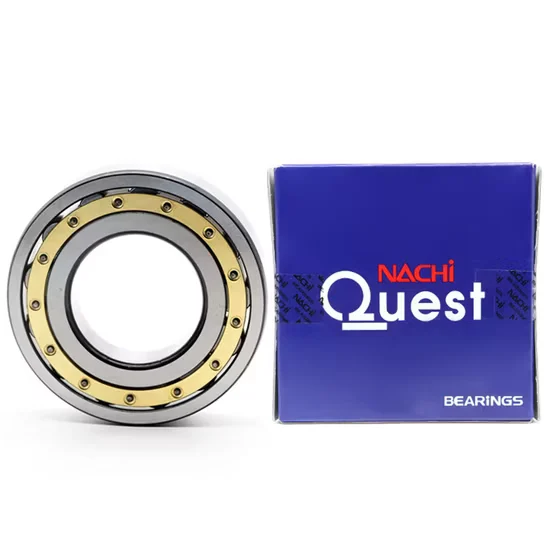
Cylindrical Roller Bearings
Genuine NACHI NU312EM NU313EM NU314EM Cylindrical Roller Bearing Wholesale
View product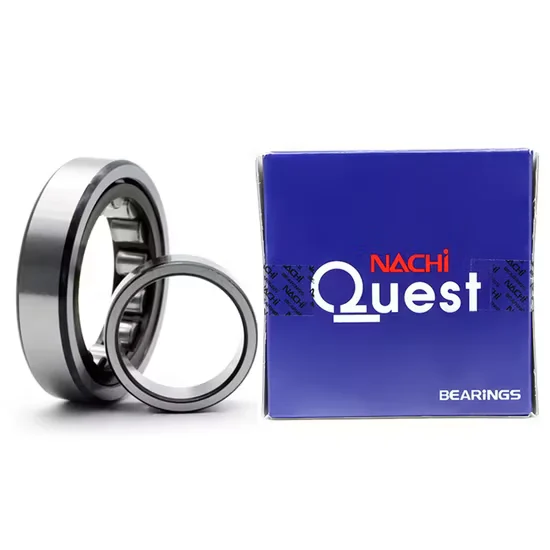
Cylindrical Roller Bearings
NACHI N410e Cylindrical Roller Bearing Genuine Wholesale Supplier
View product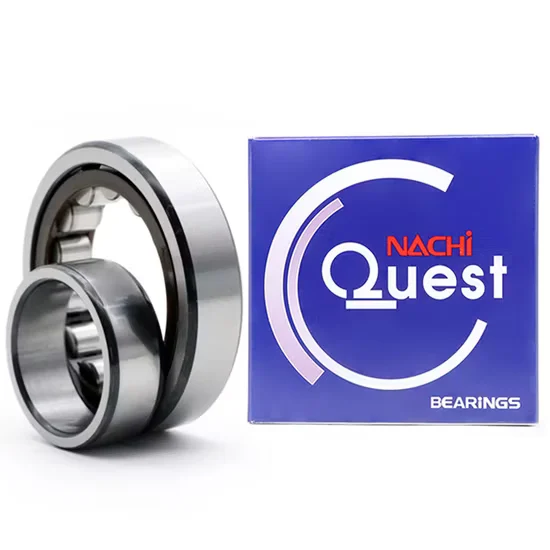
Cylindrical Roller Bearings
NACHI NUP205 Cylindrical Roller Bearing for Lifting and Hauling Machinery
View productModel check
Not sure which NACHI designation fits? We help with substitution, cross-reference and selection.
Send the old bearing number, the worn marking you can still read, or the application and shaft size. nachioem matches it to the correct NACHI model, including clearance, cage and seal options, before you order.
- Substitution for discontinued models
- Cross-reference to NACHI numbers
- Selection for spindles, pumps and reducers
Keep reading
Related NACHI bearing technical articles
More practical guides on NACHI suffixes, replacement and selection for machine tools, automotive, construction machinery, pumps and gear reducers.
Oct 7, 2026 · Buying Guide · 7 min read
NACHI Bearings Quote: Genuine Wholesale Supplier for Bulk & MRO Orders
Request a NACHI bearings quote with full suffix accuracy to prevent costly customs delays and ensure genuine product traceability. Secure competitive wholesale pricing through…
Read the article
Oct 7, 2026 · Buying Guide · 7 min read
Discontinued NACHI Numbers: Replacements from Wholesale Supplier
Replacing discontinued NACHI bearings requires more than matching dimensions to prevent premature field failures. Recalculate internal clearance and verify cage material compatibility to ensure…
Read the article Oct 7, 2026 · Buying Guide · 8 min read
Buy Genuine NACHI Bearings: Wholesale Supplier for Bulk Orders
Secure genuine NACHI bearings by mastering neutral checks and traceability verification to avoid catastrophic equipment failures. Learn to identify counterfeit units through hardness testing,…
Read the article
Request a quote
Send your NACHI model list. We quote fast.
List the NACHI model numbers with full suffixes and the quantity for each. nachioem replies online as quickly as possible with pricing for distributors, repair shops and end users worldwide.
- info@nachioem.com
- WhatsApp +1 (702) 981-5880
- Online replies as quickly as possible
- Global delivery by DHL, FedEx, UPS, air or sea