
NACHI Bearing Technical Guide Brands & Alternatives
NACHI Japan-Made vs Other Plants: Genuine Bearing Supplier
Distinguish genuine Japan-made NACHI bearings from blended assemblies to prevent premature spindle failure and hidden maintenance costs. Demand full traceability documents matching batch numbers to origin, ensuring material consistency and avoiding the risks of mixed-component sourcing for critical heavy machinery applications.
- Published
- By author
- nachioem · Specialized NACHI bearing supplier
A NACHI bearing is not a single product; it is a supply chain outcome.
The critical distinction between Japan-made NACHI bearings and those assembled in other plants lies in material consistency and component traceability. Buyers must demand full documentation matching the batch number to the country of origin, as mixed-origin assemblies often combine Japanese outer rings with Southeast Asian rollers, significantly compromising lifespan under heavy loads.
When I first started procuring heavy equipment components in Qingdao, I assumed the brand name guaranteed uniform quality regardless of the factory code. A recent shipment of spindle bearings arrived in packaging covered in Japanese text, which I took as proof of origin. However, within six months, the main spindles on our crushing line began overheating and seizing. Third-party metallurgical analysis revealed a disturbing reality: while the outer rings were manufactured in Japan, the internal rollers were sourced from a different assembly plant in Southeast Asia. The mismatch in thermal expansion coefficients and tolerance stacks caused premature fatigue. This incident shifted my entire approach to sourcing. I no longer look at the box; I look at the paper trail.
Understanding this difference is not just about technical purity; it is about protecting your operational budget from hidden maintenance costs.
What is the real difference between Japan-made and other NACHI plants?
Japan-based production facilities maintain strict control over steel purity and heat treatment processes, whereas other plants may mix components from various regional suppliers.
The core value of a NACHI bearing is not just its design, but the consistency of its raw materials. In Japan, the manufacturing process typically involves integrated control from steel forging to final assembly. This vertical integration ensures that the microstructure of the bearing steel remains uniform throughout the component. In contrast, assembly plants in other regions often source rings, rollers, and cages from different local suppliers to optimize logistics costs. While these components may meet basic dimensional standards, the subtle variations in material hardness and residual stress can lead to inconsistent performance.
Consider the case of a mining operator in Central Asia who purchased what they believed were standard NACHI spherical roller bearings. The price was competitive, and the lead time was short. However, after a few months of operation, the bearings showed signs of early spalling. Upon inspection, it was clear that the cage material did not match the specifications typically used in Japan-made units. The lack of uniformity in the heat treatment process across different component sources resulted in uneven load distribution. For buyers, this means that “NACHI” on the label does not automatically guarantee the same metallurgical integrity unless the entire unit is traced back to a single, verified origin.
This discrepancy is why verifying the origin is not a bureaucratic hurdle but a technical necessity for critical applications.
How do blended parts fail in heavy machinery?
Inconsistent tolerances between mixed-origin components cause micro-misalignments, leading to rapid spindle overheating and roller fatigue.
When components from different manufacturing lines are assembled into a single bearing, the cumulative effect of minor tolerance deviations can be severe. In high-speed or heavy-load applications, such as wind turbine gearboxes or mining crushers, these micro-misalignments create localized stress concentrations. Over time, this leads to premature wear and unexpected failures. The failure mode is often not immediate catastrophic breakage but a gradual decline in performance that is difficult to diagnose until significant damage has occurred.
A European wind farm operator experienced this firsthand when a batch of generators began showing unusual vibration patterns. The bearings had been sourced from a distributor who claimed they were genuine NACHI products. However, the failure analysis revealed that the rollers had a slightly different profile than the raceways, indicating they were produced in different facilities with differing tooling standards. This mismatch caused increased friction and heat generation, forcing the operator to replace the entire drivetrain module much earlier than planned. The cost of the downtime far exceeded the savings from the lower-priced bearings.
| Failure Mode | Japan-Made Consistency | Blended Assembly Risk |
|---|---|---|
| Material Hardness | Uniform across all components | Variable between rings and rollers |
| Thermal Expansion | Matched coefficients | Mismatched leading to internal stress |
| Surface Finish | Consistent micron-level precision | Potential variation causing micro-pitting |
| Load Distribution | Even across rolling elements | Concentrated stress points |
This table highlights why relying on brand reputation alone is insufficient when the supply chain involves multiple assembly points.
Preventing these failures requires a proactive approach to verification before the bearings ever reach the installation site.
Which traceability documents prove 100% Japan origin?
Buyers must demand a matched set of certificates of origin, customs declarations, and batch-specific traceability tables to verify genuine Japan manufacture.
Verifying the origin of a bearing goes beyond checking the packaging. Authentic Japan-made NACHI bearings come with a comprehensive documentation package that links the physical product to its manufacturing history. The most critical document is the Certificate of Origin, which must explicitly state Japan as the country of manufacture. However, this alone is not enough. Savvy buyers also request the commercial invoice and packing list to ensure the batch numbers match across all documents. Additionally, a traceability table provided by the supplier can map each bearing serial number to its specific production run and factory location.
A regional distributor in the Middle East once faced weeks of customs delays because their supplier could not provide the original mill certificates for a large shipment of NACHI bearings. The customs authorities suspected the goods were transshipped from a third country to avoid tariffs. Because the supplier lacked the proper traceability documents, the shipment was held for inspection, causing significant project delays for their end clients. This experience underscores the importance of working with suppliers who maintain transparent and complete documentation practices. Without these papers, even genuine products can become logistical liabilities.
Risk checklist for document verification:
- Ensure the Certificate of Origin lists Japan specifically, not just “Asia.”
- Cross-reference batch numbers on the bearing box with the commercial invoice.
- Request material test certificates if available for critical applications.
- Verify that the supplier can provide a traceability link to the factory code.
Having these documents ready not only smooths customs clearance but also provides peace of mind regarding product authenticity.
How to source genuine NACHI bearings without overpaying?
Use consolidated global suppliers who offer transparent origin verification and complete documentation sets as part of their standard service.
Sourcing genuine bearings does not require paying premium prices to official brand channels if you work with the right partners. Professional global suppliers who specialize in multi-brand consolidation can offer competitive pricing while maintaining strict quality controls. These suppliers often have direct relationships with manufacturers and maintain large spot inventories, allowing them to fulfill urgent orders without compromising on authenticity. By consolidating orders from multiple brands, buyers can reduce shipping costs and simplify logistics.
For example, an MRO operator at a steel plant in South America needed a mix of SKF, FAG, and NACHI bearings for a scheduled shutdown. Instead of contacting each brand separately, they worked with a consolidated supplier who provided all the required parts in a single shipment. The supplier included full traceability documentation for each brand, ensuring that all bearings met the plant’s strict quality standards. This approach not only saved time but also reduced the administrative burden of managing multiple vendors. The key is to choose a supplier who views documentation as a core part of the product, not an afterthought.
When evaluating potential suppliers, look for those who:
- Provide complete sets of origin proofs for every shipment.
- Offer flexible MOQs to accommodate both emergency spares and bulk projects.
- Have a proven track record of serving industrial clients in your region.
- Can provide technical support for model selection and failure analysis.
This strategy allows you to secure genuine products while optimizing your total cost of ownership.
Conclusion
Origin consistency is the true measure of bearing value.
Avoiding the hidden costs of blended parts requires diligent verification of documentation and a partnership with transparent suppliers. By prioritizing traceability and demanding complete proof of origin, buyers can ensure their equipment operates reliably and efficiently.
Applications covered in this article
Products in this article
NACHI bearings mentioned above
These are the NACHI bearing types discussed in this guide. Open a product page to check its designation and send the exact suffix with your quantity.
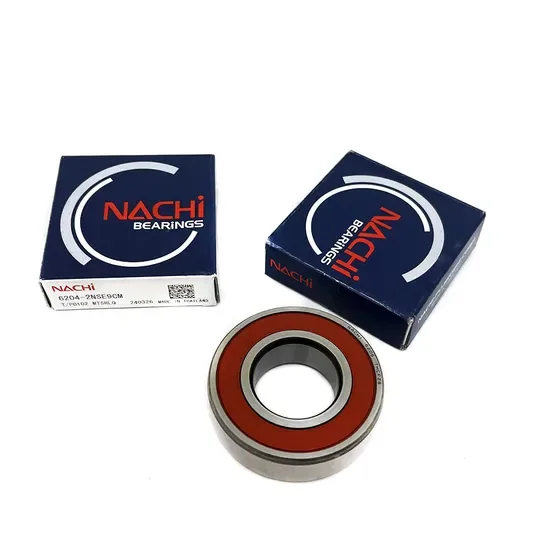
Deep Groove Ball Bearings
Genuine NACHI 608zz 6202 6201 Deep Groove Ball Bearing for Marine Equipment
View product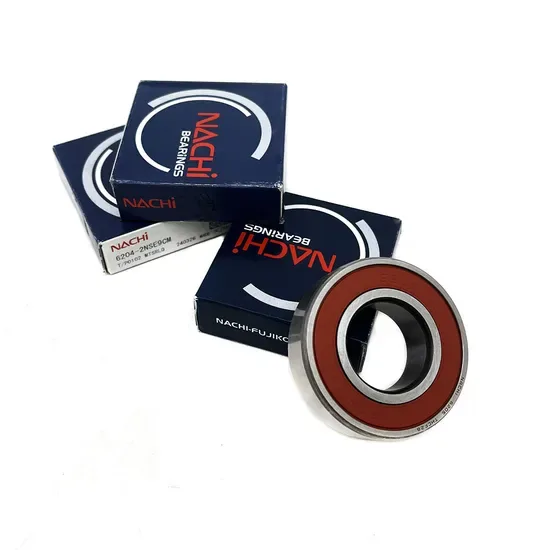
Deep Groove Ball Bearings
NACHI 608zz 16004 6201 Deep Groove Ball Bearing P6 P5 C3
View product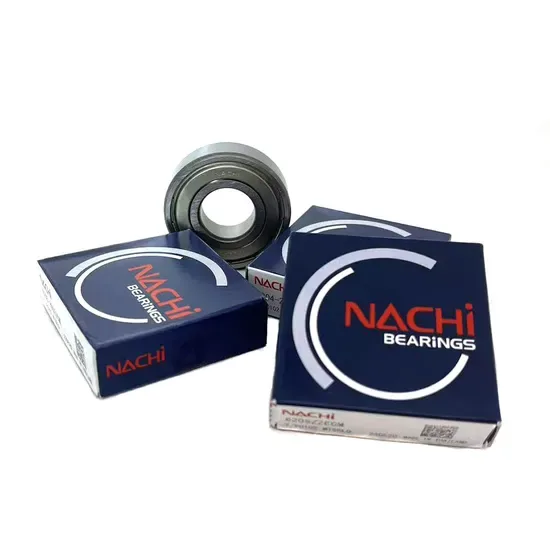
Deep Groove Ball Bearings
NACHI Deep Groove Ball Bearing 62301 608 6202 63008 63007 63006 6204 6301
View product Deep Groove Ball Bearings
Genuine NACHI P6 Deep Groove Ball Bearings 62208 62210 63002 63004 63006
View productModel check
Not sure which NACHI designation fits? We help with substitution, cross-reference and selection.
Send the old bearing number, the worn marking you can still read, or the application and shaft size. nachioem matches it to the correct NACHI model, including clearance, cage and seal options, before you order.
- Substitution for discontinued models
- Cross-reference to NACHI numbers
- Selection for spindles, pumps and reducers
Keep reading
Related NACHI bearing technical articles
More practical guides on NACHI suffixes, replacement and selection for machine tools, automotive, construction machinery, pumps and gear reducers.
Oct 7, 2026 · Brands & Alternatives · 6 min read
NACHI Product Range Overview: Wholesale Supplier for Bulk Orders
NACHI product range overview guides buyers in distinguishing spherical from cylindrical roller bearings to prevent costly installation failures. Learn to select precise domestic alternatives…
Read the article
Oct 7, 2026 · Brands & Alternatives · 7 min read
NACHI Brand Tiers Explained: Wholesale Supplier Guide
NACHI brand tiers are defined by ISO tolerance classes and internal clearance codes, not marketing labels. Verify grades through part number suffixes and cage…
Read the article Oct 7, 2026 · Brands & Alternatives · 8 min read
NACHI Auto vs Industrial Bearings: Wholesale Supplier for Bulk Orders
Mastering NACHI auto vs industrial bearings prevents costly misapplications in heavy-duty fleets. Learn how C3/C4 clearance and specialized seals differ from standard CN specs…
Read the article
Request a quote
Send your NACHI model list. We quote fast.
List the NACHI model numbers with full suffixes and the quantity for each. nachioem replies online as quickly as possible with pricing for distributors, repair shops and end users worldwide.
- info@nachioem.com
- WhatsApp +1 (702) 981-5880
- Online replies as quickly as possible
- Global delivery by DHL, FedEx, UPS, air or sea