
NACHI Bearing Technical Guide Brands & Alternatives
NACHI UC Insert Equivalents: Wholesale Supplier for Bulk Orders
Identical dimensions do not guarantee identical performance when sourcing NACHI UC insert equivalents for harsh environments. True alternatives must match sealing lip material and inner ring hardness to prevent premature failure. Verify authenticity through traceability documentation and consider mixed-brand consolidation to optimize logistics costs.
- Published
- By author
- nachioem · Specialized NACHI bearing supplier
Identical dimensions do not guarantee identical performance.
A true NACHI UC insert equivalent must match the original’s dimensional tolerances, sealing lip material composition, and inner ring hardness specifications, rather than just sharing the same basic size code. Sourcing based solely on part number cross-reference without verifying these critical engineering parameters leads to premature seal failure and costly downtime in harsh operating environments.
I still recall the humidity and dust of a mid-summer day in Riyadh. A client running a large-scale agricultural operation had switched to a budget-friendly alternative for their irrigation pump bearings. The specs on paper looked perfect. The outer diameter matched. The bore size was correct. Yet, within months, the units began seizing. The ambient temperature hovered well above fifty degrees Celsius, and the fine desert sand found its way past the inadequate seals. The inner rings, lacking the necessary surface hardness, suffered from micro-friction wear that quickly escalated into catastrophic lock-ups. That incident shifted my entire approach to sourcing. It taught me that finding reliable NACHI UC insert equivalents requires looking beyond the catalog number to the metallurgy and sealing technology inside.
When distributors or MRO buyers search for alternatives, they are often driven by lead time pressures or cost optimization goals. However, the market is flooded with lookalikes that mimic the external geometry but compromise on internal quality. To navigate this, one must understand what defines a genuine functional equivalent. This guide breaks down the technical criteria for selecting high-performance alternatives, compares major global brands, and outlines strategies for verifying authenticity in bulk orders.
What Defines a True NACHI UC Equivalent?
Sealing performance and material hardness matter more than basic dimensions.
Many buyers assume that if a bearing fits the housing, it will perform like the original. This is a dangerous misconception. NACHI bearings are renowned for their specific heat treatment processes and seal designs that withstand contamination and high loads. A viable alternative must replicate these internal characteristics.
The first critical factor is the seal lip material. In agricultural and heavy machinery applications, bearings are exposed to dust, moisture, and chemical agents. Standard nitrile rubber (NBR) may suffice for general use, but harsher environments require fluorocarbon rubber (FKM) or specialized high-temperature compounds. Cheap alternatives often use recycled or low-grade rubber that hardens and cracks under thermal stress, allowing contaminants to enter the raceway.
Secondly, the hardness of the inner ring is vital. The inner ring of an insert bearing typically rotates with the shaft. If the surface hardness is insufficient, microscopic asperities on the shaft can cause fretting corrosion or wear, leading to loosening and vibration. Genuine NACHI units undergo rigorous hardening processes to achieve a specific HRC range. Alternatives must meet similar hardness standards to ensure longevity.
Finally, dimensional tolerances go beyond the basic bore and outer diameter. The sphericity of the outer ring and the precision of the locking mechanism are crucial for proper alignment and load distribution. Deviations here can cause uneven load sharing, accelerating fatigue failure. When evaluating NACHI UC insert equivalents, request detailed inspection reports that verify these geometric tolerances, not just the basic size checks.
NACHI UC vs. SKF/FAG/NSK Alternatives: Matrix Comparison
Brand reputation varies by region and application, but technical specs provide the objective baseline.
Choosing between global brands like SKF, FAG, and NSK as alternatives to NACHI depends on specific operational needs. Each brand has its strengths in terms of sealing technology, load capacity, and availability. Below is a qualitative comparison to help buyers make informed decisions.
| Feature | NACHI Original | SKF Alternative | FAG Alternative | NSK Alternative |
|---|---|---|---|---|
| Sealing Technology | Robust standard NBR/FKM options | Advanced Contaminant Exclusion (ContiSeal) | High-performance Taconic seals | Triple-lip seal designs available |
| Inner Ring Hardness | Consistent high HRC rating | Standardized high-hardness treatment | Precision hardened surfaces | Uniform hardness across batches |
| Load Rating | High dynamic load capacity | Optimized for heavy loads | Strong radial load handling | Balanced radial/thrust capacity |
| Availability | Strong in Asia/Middle East | Global widespread stock | Strong in Europe/Industrial sectors | Wide global distribution |
| Price Point | Competitive mid-range | Premium pricing | Premium pricing | Competitive mid-to-high range |
Note: Load ratings and hardness are qualitative assessments based on general industry positioning. Specific values vary by series.
In a recent project for a mining OEM in Latin America, batch-to-batch consistency was a major concern. They had previously experienced dimension variance with lower-tier alternatives, leading to assembly line delays. Switching to a mix of NACHI and NSK units, where both brands maintained strict tolerance controls, resolved the issue. The key was not just the brand name, but the verified consistency of the manufacturing process.
For distributors, offering a mix of these brands allows for flexibility. If NACHI stock is tight, SKF or FAG can serve as robust NACHI UC insert equivalents, provided the specific series matches the application’s load and speed requirements. Technical support teams should be consulted to ensure the alternative’s internal clearance (C2, C3, etc.) aligns with the operating temperature range.
How to Verify Authenticity & Avoid “Lookalikes”
Traceability documentation is the only reliable defense against counterfeit parts.
The bearing market is rife with counterfeits that look identical to genuine products but fail prematurely. These “lookalikes” often reuse packaging or mimic logos, making visual inspection alone insufficient. To ensure you are getting true NACHI UC insert equivalents or genuine alternatives, a rigorous verification process is essential.
First, always demand full traceability documentation. Genuine bearings come with certificates of origin and material test reports that link the batch to the manufacturer’s production records. If a supplier cannot provide these documents, consider it a red flag. Counterfeiters rarely invest in creating fake paperwork that stands up to scrutiny.
Second, inspect the packaging carefully. Genuine NACHI boxes have specific printing quality, holographic labels, and batch codes that can be verified with the manufacturer. Look for signs of tampering, such as resealed tape or mismatched batch numbers on the box and the bearing itself.
Third, perform a physical inspection of the bearing. Check the finish of the metal surfaces. Genuine bearings have a smooth, uniform finish without tool marks or discoloration. The sealing lips should be flexible and free of defects. Use a hardness tester if possible to verify the inner ring hardness, ensuring it meets the expected HRC range.
A European distributor once shared how they caught a batch of counterfeit bearings by noticing slight variations in the laser-etched part numbers. The font depth and spacing were inconsistent with genuine NACHI markings. This attention to detail saved them from distributing faulty units to their industrial clients.
Sourcing Strategy: Mixed-Brand Consolidation for Distributors
Consolidating shipments reduces logistics costs and simplifies inventory management.
For regional distributors, managing stock from multiple brands can be logistically challenging and expensive. Sourcing NACHI UC insert equivalents alongside other major brands through a single supplier offers significant advantages. This strategy, known as mixed-brand consolidation, streamlines the supply chain and reduces lead times.
By consolidating orders, buyers can achieve better freight rates and reduce the administrative burden of dealing with multiple vendors. It also allows for more flexible minimum order quantities (MOQs), enabling distributors to maintain a broader product range without tying up excessive capital in slow-moving stock.
Moreover, a single point of contact for technical support simplifies problem-solving. If an issue arises with a specific application, the supplier can provide cross-brand expertise, recommending the best alternative from their portfolio. This holistic approach ensures that the right bearing is selected for the right job, minimizing the risk of failure.
In Southeast Asia, many MRO providers have adopted this model. By consolidating their bearing purchases, they have reduced their average lead time significantly and improved their ability to respond to urgent maintenance requests.
When seeking a partner for this strategy, look for suppliers who offer genuine products with complete traceability, flexible MOQs, and technical selection support. They should be able to provide mixed-container loads that include NACHI, SKF, FAG, NSK, and other premium brands, tailored to your specific market needs.
Conclusion
True equivalence lies in engineering integrity, not just part numbers.
Selecting the right NACHI UC insert equivalents requires a deep understanding of sealing technologies, material hardness, and dimensional precision. By prioritizing traceability, verifying technical specifications, and leveraging mixed-brand consolidation strategies, buyers can secure reliable, cost-effective solutions for their industrial needs. Avoid the trap of cheap lookalikes and invest in quality that ensures operational continuity.
Applications covered in this article
Products in this article
NACHI bearings mentioned above
These are the NACHI bearing types discussed in this guide. Open a product page to check its designation and send the exact suffix with your quantity.
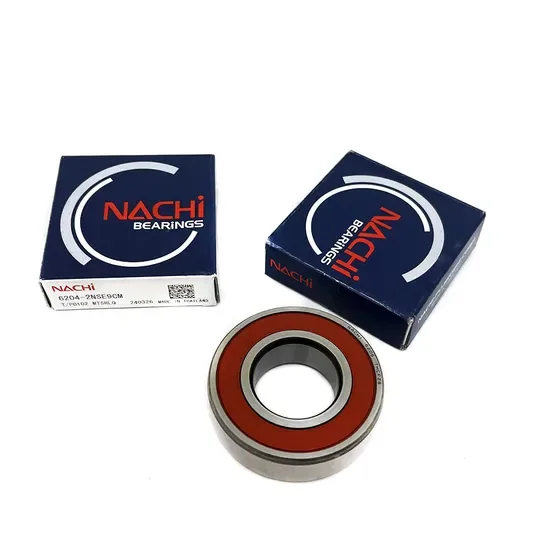
Deep Groove Ball Bearings
Genuine NACHI 608zz 6202 6201 Deep Groove Ball Bearing for Marine Equipment
View product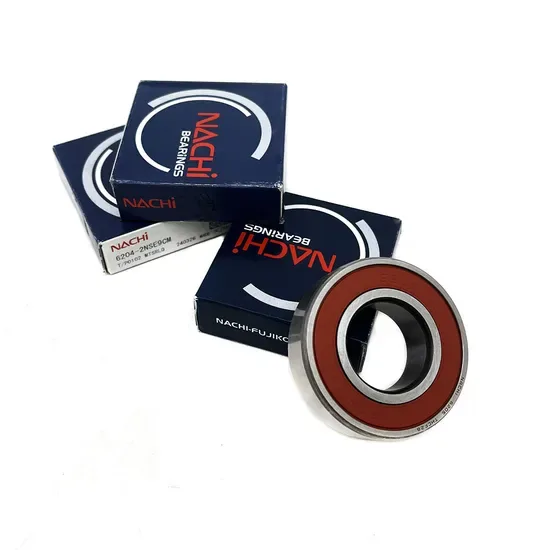
Deep Groove Ball Bearings
NACHI 608zz 16004 6201 Deep Groove Ball Bearing P6 P5 C3
View product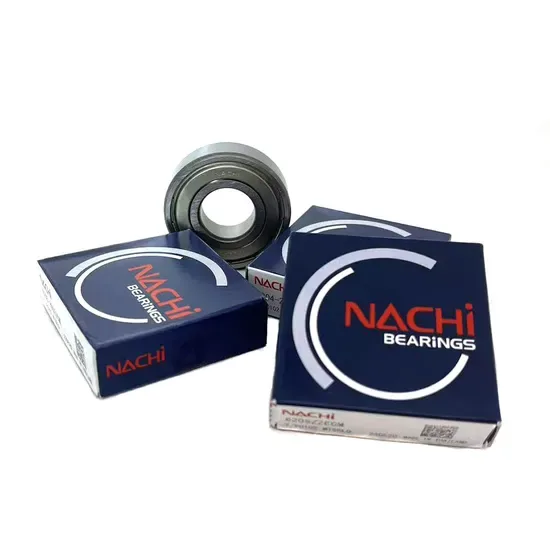
Deep Groove Ball Bearings
NACHI Deep Groove Ball Bearing 62301 608 6202 63008 63007 63006 6204 6301
View product Deep Groove Ball Bearings
Genuine NACHI P6 Deep Groove Ball Bearings 62208 62210 63002 63004 63006
View productModel check
Not sure which NACHI designation fits? We help with substitution, cross-reference and selection.
Send the old bearing number, the worn marking you can still read, or the application and shaft size. nachioem matches it to the correct NACHI model, including clearance, cage and seal options, before you order.
- Substitution for discontinued models
- Cross-reference to NACHI numbers
- Selection for spindles, pumps and reducers
Keep reading
Related NACHI bearing technical articles
More practical guides on NACHI suffixes, replacement and selection for machine tools, automotive, construction machinery, pumps and gear reducers.
Oct 7, 2026 · Brands & Alternatives · 6 min read
NACHI Product Range Overview: Wholesale Supplier for Bulk Orders
NACHI product range overview guides buyers in distinguishing spherical from cylindrical roller bearings to prevent costly installation failures. Learn to select precise domestic alternatives…
Read the article
Oct 7, 2026 · Brands & Alternatives · 7 min read
NACHI Brand Tiers Explained: Wholesale Supplier Guide
NACHI brand tiers are defined by ISO tolerance classes and internal clearance codes, not marketing labels. Verify grades through part number suffixes and cage…
Read the article Oct 7, 2026 · Brands & Alternatives · 8 min read
NACHI Auto vs Industrial Bearings: Wholesale Supplier for Bulk Orders
Mastering NACHI auto vs industrial bearings prevents costly misapplications in heavy-duty fleets. Learn how C3/C4 clearance and specialized seals differ from standard CN specs…
Read the article
Request a quote
Send your NACHI model list. We quote fast.
List the NACHI model numbers with full suffixes and the quantity for each. nachioem replies online as quickly as possible with pricing for distributors, repair shops and end users worldwide.
- info@nachioem.com
- WhatsApp +1 (702) 981-5880
- Online replies as quickly as possible
- Global delivery by DHL, FedEx, UPS, air or sea