
NACHI Bearing Technical Guide Product & Series Guides
NACHI UC208 Insert Bearing Wholesale Supplier for Sale
Verify NACHI UC208 specs beyond basic 40mm bore and 80mm outer diameter to prevent costly downtime. Focus on set screw hardness and seal groove depth to stop inner ring slippage and contaminant ingress in harsh environments. Ensure batch consistency for reliable MRO performance.
- Published
- By author
- nachioem · Specialized NACHI bearing supplier
Most distributors fail to realize that inner diameter and outer diameter compliance is merely the entry ticket, not the guarantee of performance.
When sourcing a NACHI UC208 specs package for industrial resale or MRO stocking, the critical verification points are not just the 40mm bore and 80mm outer diameter. The true differentiators lie in the set screw hardness rating and the seal groove depth, which directly prevent inner ring slippage and contaminant ingress in harsh operating environments. A genuine unit maintains strict batch consistency in these hidden mechanical properties, whereas counterfeit or substandard alternatives often compromise on material tempering to cut costs, leading to premature field failure.
Having spent years inspecting bearing batches in Southeast Asian manufacturing hubs, I have seen how a single compromised component can halt an entire production line. The difference between a reliable supply chain and a costly downtime event often comes down to understanding what lies beneath the surface of standard dimensional checks. This guide dissects the technical realities of the NACHI UC208 specs to help buyers make informed decisions that protect their operational continuity.
What Are the Core Dimensions and Load Ratings of NACHI UC208?
The physical envelope of the UC208 is defined by international standards, but its load capacity relies on internal metallurgical quality.
For any procurement specialist or distributor, the first step in validating a NACHI UC208 specs sheet is confirming the basic boundary dimensions. These are standardized under ISO norms, ensuring interchangeability across brands for housing compatibility. However, knowing the numbers is only half the battle; understanding how these dimensions interact with dynamic loads is where technical expertise becomes vital.
The core dimensions for this insert bearing are consistent with global standards:
- Bore Diameter (d): 40 mm
- Outer Diameter (D): 80 mm
- Total Width (B): 49.2 mm
- Inner Ring Width: Typically narrower than the total width to accommodate the locking mechanism and seals.
Beyond geometry, the load ratings define the operational limits. The dynamic radial load rating (Cr) and static radial load rating (Cor) are critical for calculating service life under varying conditions. For the UC208 series, these values are substantial, allowing it to handle moderate to heavy radial loads common in conveyor systems and agricultural machinery.
| Parameter | Value / Description | Verification Method |
|---|---|---|
| Bore Diameter | 40 mm | Caliper measurement |
| Outer Diameter | 80 mm | Caliper measurement |
| Dynamic Load Rating (Cr) | High capacity for class | Check manufacturer datasheet |
| Static Load Rating (Cor) | High capacity for class | Check manufacturer datasheet |
| Locking Screw Size | M8 x 1 | Thread gauge check |
When evaluating a NACHI UC208 specs document from a supplier, ensure these values align with official brand publications. Discrepancies in reported load ratings often indicate outdated data or non-genuine products. As a global full-range bearing supplier, we maintain direct access to updated technical sheets to ensure every batch meets these precise engineering thresholds.
Why Do Basic Specs Fail in Harsh Environments?
Standard dimensional compliance does not protect against axial slippage or particulate intrusion, which are the primary causes of premature failure.
In environments like wood processing plants or mining operations, bearings face challenges that go beyond simple radial loading. Two specific features of the NACHI UC208 specs often get overlooked during routine procurement but are decisive in harsh conditions: the set screw hardness and the seal design.
I recall a case in a Vietnamese timber facility where a batch of non-genuine UC208 bearings was installed on main conveyor drives. Within weeks, multiple units failed due to inner ring slippage. The root cause was not the load capacity but the set screws. The screws lacked sufficient hardness, causing them to deform under vibration rather than biting into the shaft. This allowed the inner ring to rotate independently of the shaft, generating heat and eventual seizure.
Conversely, genuine NACHI units utilize high-hardness set screws that maintain their integrity under high-torque tightening and continuous vibration. This ensures a secure lock without damaging the shaft surface excessively.
Similarly, the seal design plays a pivotal role. In dusty environments, standard rubber seals may not suffice if the groove depth is insufficient. Deeper seal grooves allow for more robust lip designs that can withstand higher pressure differentials and keep out fine particulates like sawdust or coal dust. A superficial inspection might miss the difference in seal groove depth between a premium brand and a generic alternative, but the operational impact is profound.
When reviewing NACHI UC208 specs, pay attention to the seal type designation. Contact seals offer better protection against contaminants but may have higher friction, while non-contact seals are suitable for cleaner, higher-speed applications. Understanding this trade-off is essential for correct application selection.
How to Verify Genuine NACHI UC208 from Field Failures?
Reverse engineering failed components provides the most reliable method for authenticating batch quality and identifying counterfeit risks.
When a customer reports a failure, the damaged bearing holds the truth. By analyzing failed units, we can verify whether the product met the expected NACHI UC208 specs or if it was a substandard substitute. This process involves checking material hardness, surface finish, and internal clearance.
One effective method is testing the hardness of the set screws and the inner ring raceway. Genuine NACHI bearings use specific steel alloys and heat treatment processes that result in consistent hardness levels. Counterfeit parts often exhibit softer materials that deform easily under load. Using a portable hardness tester on the set screw can quickly reveal discrepancies. If the screw indents too easily, it fails to provide the necessary clamping force, leading to the slippage issues mentioned earlier.
Another critical check is the internal radial clearance. Over time, improper clearance can lead to overheating and premature fatigue. Measuring the clearance of a new unit from the same batch as a failed one can indicate if the entire lot is compromised. Consistent clearance values across a batch are a hallmark of quality manufacturing.
We once intercepted a mixed batch intended for a Middle Eastern distributor. Random sampling revealed significant variations in set screw hardness and surface roughness on the outer diameter. These units would have likely failed within months in high-vibration applications. By catching this early, we prevented a potential reputational crisis for our client and ensured only compliant NACHI UC208 specs products reached the end user.
This level of scrutiny is part of our commitment to providing genuine, traceable products. We do not just ship boxes; we validate the mechanical integrity of every batch against the brand’s rigorous standards.
What Makes NACHI UC208 the Reliable Choice for MRO?
Reliability in MRO contexts is defined by reduced unplanned downtime and consistent performance across diverse operating conditions.
For Maintenance, Repair, and Operations (MRO) managers, the cost of a bearing is negligible compared to the cost of unplanned downtime. Choosing a NACHI UC208 specs compliant unit means investing in predictability. NACHI’s manufacturing processes ensure that each bearing performs consistently, reducing the variability that often plagues multi-brand sourcing strategies.
The robust construction of the UC208 series makes it suitable for a wide range of applications, from agricultural equipment to industrial fans. Its ability to accommodate initial misalignment through its spherical outer surface is a key feature that simplifies installation and reduces stress on the housing. This self-aligning capability is particularly valuable in structures where perfect alignment is difficult to achieve, such as in older machinery or flexible mounting setups.
Furthermore, the availability of genuine spare parts is crucial for MRO efficiency. Stocking verified NACHI UC208 specs units ensures that replacements are ready when needed, minimizing wait times. Our global logistics network supports this by maintaining substantial inventory levels of standard sizes like the UC208, allowing for rapid dispatch to over 80 countries.
By focusing on the technical details that matter—set screw integrity, seal effectiveness, and material consistency—we help our clients build maintenance strategies that prioritize uptime. The NACHI UC208 specs represent more than just a part number; they represent a standard of reliability that keeps industries moving.
Conclusion
True bearing reliability is found in the details that standard dimension checks often miss.
Selecting the right NACHI UC208 specs unit requires looking beyond basic measurements to evaluate locking mechanisms and sealing capabilities. By prioritizing genuine components with verified material properties, distributors and MRO operators can significantly reduce the risk of premature failure and costly downtime. Trust in technical validation and consistent supply chain integrity to keep your operations running smoothly.
Applications covered in this article
Products in this article
NACHI bearings mentioned above
These are the NACHI bearing types discussed in this guide. Open a product page to check its designation and send the exact suffix with your quantity.
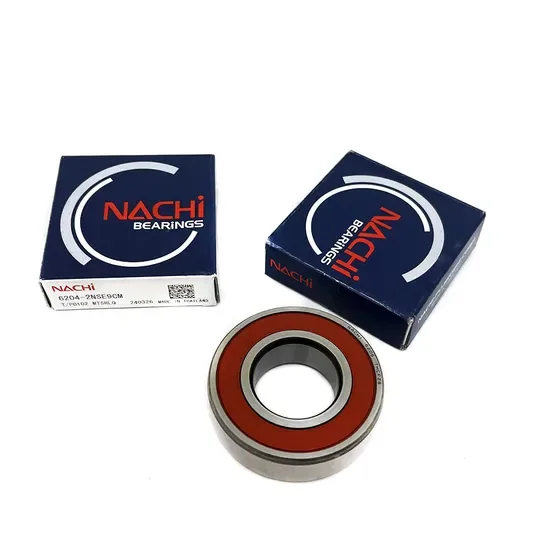
Deep Groove Ball Bearings
X&S 6211 6213 6215 Deep Groove Ball Bearing Wholesale Supplier
View product
Angular Contact Ball Bearings
7320AC 7321AC 7322AC Angular Contact Ball Bearing Wholesale Supplier
View product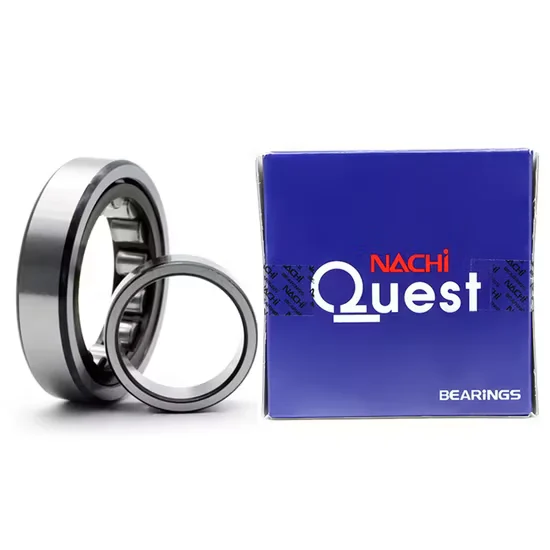
Cylindrical Roller Bearings
NACHI N410e Cylindrical Roller Bearing Genuine Wholesale Supplier
View product
Deep Groove Ball Bearings
BDL/MACHI 6204 Deep Groove Ball Bearing Wholesale Supplier
View productModel check
Not sure which NACHI designation fits? We help with substitution, cross-reference and selection.
Send the old bearing number, the worn marking you can still read, or the application and shaft size. nachioem matches it to the correct NACHI model, including clearance, cage and seal options, before you order.
- Substitution for discontinued models
- Cross-reference to NACHI numbers
- Selection for spindles, pumps and reducers
Keep reading
Related NACHI bearing technical articles
More practical guides on NACHI suffixes, replacement and selection for machine tools, automotive, construction machinery, pumps and gear reducers.
Oct 8, 2026 · Product & Series Guides · 6 min read
NACHI 25TAB06 Dimensions Preload Wholesale Supplier
Master NACHI 25TAB06 dimensions preload specifications to prevent spindle seizure caused by mismatched shaft tolerances. Learn how DB and DF pairing configurations impact axial…
Read the article Oct 8, 2026 · Product & Series Guides · 8 min read
NACHI 7008CYDU/GLP4 Angular Contact Ball Bearing Wholesale Supplier
Master NACHI 7008CYDU/GLP4 specs to prevent spindle thermal seizure and ensure P4 precision. Learn how correct DU pairing configurations and preload selection directly impact…
Read the article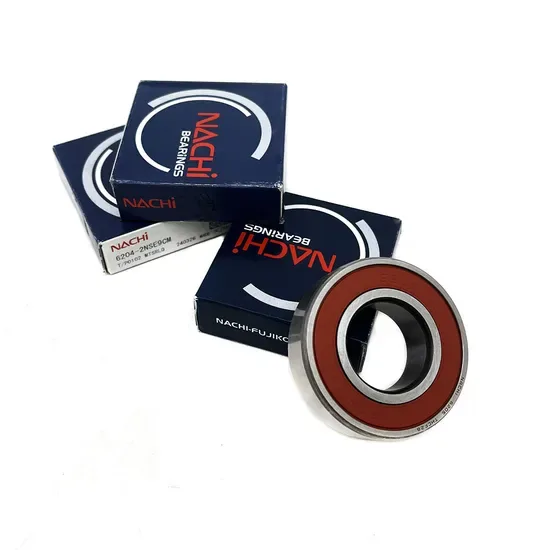
Oct 8, 2026 · Product & Series Guides · 7 min read
NACHI 6007ZZE Bearing Wholesale Supplier for Bulk Orders
Master NACHI 6007ZZE specs to prevent installation damage and premature failure in dusty environments. Verify genuine 35x62x14mm dimensions, load ratings, and grease speed limits…
Read the article
Request a quote
Send your NACHI model list. We quote fast.
List the NACHI model numbers with full suffixes and the quantity for each. nachioem replies online as quickly as possible with pricing for distributors, repair shops and end users worldwide.
- info@nachioem.com
- WhatsApp +1 (702) 981-5880
- Online replies as quickly as possible
- Global delivery by DHL, FedEx, UPS, air or sea