
NACHI Bearing Technical Guide Brands & Alternatives
NACHI vs SKF Ball Bearings: Genuine Wholesale Supplier for Bulk Orders
Choosing between NACHI vs SKF ball bearings requires matching specific load and speed conditions rather than brand prestige alone. SKF leads in extreme precision while NACHI offers superior cost ratios for heavy loads. Verify full traceability documentation to prevent counterfeit-induced downtime and optimize total ownership costs.
- Published
- By author
- nachioem · Specialized NACHI bearing supplier
Cheaper unit prices often inflate total ownership costs.
When comparing NACHI vs SKF ball bearings, the optimal choice depends entirely on matching specific load and speed conditions rather than brand prestige alone. SKF generally leads in extreme precision applications requiring micron-level tolerances, while NACHI delivers robust durability and a superior performance-to-cost ratio for heavy-load industrial machinery. Successful bulk sourcing requires verifying full traceability documentation to prevent counterfeit-induced downtime, ensuring that cross-brand substitutions are technically validated against actual operating工况.
I still recall the humid summer in Qingdao when I managed procurement for a heavy machinery plant. Eager to improve margins, I swapped out specified SKF deep-groove ball bearings for a cheaper, unverified alternative. The savings looked impressive on paper. Within months, the main gearboxes began overheating. The resulting unplanned downtime wiped out our entire year’s profit. That painful lesson reshaped my approach to sourcing. Now, when clients ask me to evaluate NACHI vs SKF ball bearings for large orders, I do not just quote unit prices. I examine their actual working conditions. Genuine traceability and precise technical matching are not mere buzzwords; they are the only things keeping production lines running.
How Do NACHI and SKF Ball Bearings Compare in Core Performance?
SKF excels in extreme precision, while NACHI offers reliable durability for heavy loads.
Understanding the core performance differences requires looking beyond marketing claims to fundamental engineering design. SKF has long been associated with high-precision manufacturing processes, often utilizing advanced steel purification techniques to minimize inclusion density. This results in bearings that perform exceptionally well in high-speed, low-vibration environments such as precision machine tools or wind turbine generators.
NACHI, on the other hand, has built its reputation on robustness. Their manufacturing focus often leans towards enhancing fatigue life under heavy radial and axial loads. For industries like mining, construction, and steel production, where shock loads are common, NACHI bearings provide substantial resilience. The difference is not necessarily about one being “better” than the other, but about which engineering philosophy aligns with your application.
| Performance Factor | SKF Characteristics | NACHI Characteristics | Best Application Context |
|---|---|---|---|
| Precision Grade | Reaches P5/P4 levels consistently | Standard P0/P6, optional higher grades | High-speed spindles vs. General industrial use |
| Load Capacity | Optimized for balanced load distribution | Enhanced for heavy shock loads | Precision equipment vs. Heavy machinery |
| Steel Quality | Controlled inclusion density | Robust carburizing technology | Clean environments vs. Harsh conditions |
| Noise & Vibration | Noticeably reduced in high-speed ops | Standard operational noise levels | Quiet facilities vs. Noisy industrial sites |
A European wind farm operator once faced a dilemma when replacing main shaft bearings. The original specifications called for premium precision bearings. By switching to a standard grade without verifying the dynamic load ratings, they experienced premature wear. After consulting with technical experts, they realized that while SKF offered the highest precision, a properly selected NACHI bearing could meet the load requirements at a more sustainable cost, provided the installation tolerances were strictly maintained.
When evaluating NACHI vs SKF ball bearings, it is crucial to request detailed technical datasheets. Do not rely on generic catalog numbers. Verify the limiting speed and dynamic load rating against your specific motor RPM and weight loads. This technical diligence prevents over-engineering, which wastes budget, or under-engineering, which risks catastrophic failure.
Which Brand Offers Better Value for Specific Working Conditions?
Match bearing type to actual工况 to avoid over-engineering or premature failure.
Value is not defined by the lowest purchase price. It is defined by the total cost of ownership (TCO), which includes installation labor, maintenance frequency, and the cost of unplanned downtime. A common mistake among distributors is assuming that a premium brand is always the safer choice. In many heavy-industry scenarios, this leads to paying for precision features that the application never utilizes.
Consider a mining site in South America. The maintenance team was using high-precision bearings for conveyor belt rollers. These rollers operate at relatively low speeds but carry immense weight. The premium bearings offered no tangible benefit over robust, standard-grade alternatives. By switching to NACHI spherical roller bearings for these specific points, they consolidated their inventory and reduced procurement costs significantly, without any increase in failure rates.
Conversely, for a high-speed packaging line in Southeast Asia, the same mining company found that standard bearings caused excessive vibration, leading to product defects. Here, switching to SKF angular contact ball bearings resolved the issue immediately. The higher unit cost was justified by the elimination of waste and the extension of maintenance intervals.
| Working Condition | Recommended Approach | Risk of Mismatch |
|---|---|---|
| High Speed, Low Load | Prioritize precision and low friction | Overheating and premature cage failure |
| Heavy Load, Low Speed | Prioritize load capacity and robustness | Fatigue spalling and raceway deformation |
| Harsh Environment | Focus on sealing and material resistance | Contamination ingress and corrosion |
| Critical Uptime | Choose established premium brands | Unplanned stoppages and high emergency costs |
This is where cross-brand technical consultation becomes vital. As a global supplier, we often help clients map their existing bill of materials against equivalent models from different manufacturers. This process ensures that every NACHI vs SKF ball bearings decision is backed by data, not just habit. We verify dimensional tolerances, internal clearance codes (such as C3 or C4), and lubrication compatibility before recommending any substitution.
Remember that improper alternatives cause overheating and can wipe out annual profit margins. Always validate the operating temperature range. If a bearing runs hotter than expected, check the fit and lubrication before blaming the brand. Often, the issue lies in the application, not the component.
How to Verify Authenticity and Traceability in Bulk Orders?
Demand full traceability docs to prevent counterfeit-induced production halts.
The global bearing market is flooded with counterfeits. High-demand brands like SKF and NACHI are primary targets. A counterfeit bearing may look identical to the genuine article, but it often uses inferior steel and lacks proper heat treatment. These failures are not gradual; they are sudden and catastrophic.
Verifying authenticity requires more than checking a hologram on the box. You need a complete chain of custody. When sourcing NACHI vs SKF ball bearings in bulk, insist on original mill certificates and batch-specific traceability documents. These documents link the physical bearing to the manufacturer’s production records, confirming the steel grade, heat treatment batch, and final inspection data.
A distributor in the Middle East once received a container of bearings that appeared genuine. However, upon closer inspection, the laser etching on the inner ring was slightly irregular. Testing revealed that the hardness was below the standard HRC58-62 range. These bearings had been sourced from an unauthorized channel. Had they been installed, they would have failed within weeks. By demanding full documentation, the distributor avoided a major liability claim from their end-users.
| Verification Step | Action Required | Purpose |
|---|---|---|
| Packaging Inspection | Check for tamper-evident seals and print quality | Identify obvious repackaging attempts |
| Marking Verification | Compare laser etching font and depth with official samples | Detect superficial copying |
| Document Request | Ask for original test certificates and batch numbers | Confirm manufacturing origin |
| Supplier Audit | Verify authorized distributor status | Ensure supply chain integrity |
We maintain strict controls over our inventory. Every batch of NACHI vs SKF ball bearings we supply comes with verifiable paperwork. This is not just about compliance; it is about protecting your reputation. Your clients trust you to provide genuine parts. Breaking that trust with a single fake bearing can destroy years of business relationships.
Do not accept vague assurances. If a supplier cannot provide immediate traceability for a specific batch, walk away. The risk is simply too high. Genuine traceability is the foundation of reliable industrial sourcing.
What Are the Hidden Costs of Poor Cross-Brand Substitution?
Improper alternatives cause overheating and wipe out annual profit margins.
Cross-brand substitution is a powerful tool for cost optimization, but it is dangerous if done incorrectly. Many failures attributed to “poor quality” are actually the result of ignoring specific operational parameters. Simply matching the outer diameter, inner diameter, and width is not enough. You must also match the internal geometry, cage design, and clearance class.
For instance, substituting a standard clearance bearing for a C3 clearance bearing in a high-temperature environment will lead to rapid seizure. The thermal expansion of the inner ring reduces the internal clearance, causing the rolling elements to bind. This generates excessive heat, which degrades the lubricant and leads to metal-to-metal contact. The resulting damage can extend to the shaft and housing, multiplying the repair cost.
A regional distributor in Latin America learned this the hard way. They replaced a specific SKF model with a visually similar NACHI bearing to save on lead time. They ignored the difference in cage material. The original used a polymer cage for high-speed stability, while the substitute used a steel cage. At operating speed, the steel cage generated more friction and vibration, leading to early failure. The return rate for that product line spiked, eroding their margin completely.
| Substitution Error | Consequence | Financial Impact |
|---|---|---|
| Ignoring Clearance Class | Seizure due to thermal expansion | High repair costs and downtime |
| Mismatched Cage Material | Increased vibration and friction | Premature failure and returns |
| Incorrect Lubrication Type | Grease incompatibility and washout | Frequent relubrication and wear |
| Wrong Precision Grade | Excessive runout and noise | Product quality issues and rejects |
When we assist clients with NACHI vs SKF ball bearings selection, we perform a detailed cross-reference check. We look at the dynamic load rating, static load rating, and limiting speed. We also consider the application environment. Is there contamination? Is there misalignment? These factors dictate whether a direct substitution is safe or if a different bearing type is required.
Hidden costs are silent killers. They do not appear on the purchase order. They appear in the maintenance log, in the overtime pay for emergency repairs, and in the lost revenue from stopped production lines. Proper technical matching eliminates these hidden costs.
Conclusion
Match specs, not just prices.
Choosing between NACHI vs SKF ball bearings is not about picking a winner. It is about picking the right tool for the job. SKF offers unparalleled precision for critical, high-speed applications. NACHI provides robust, cost-effective reliability for heavy-load industrial work. Success lies in verifying authenticity through full traceability and ensuring technical compatibility through rigorous cross-brand consultation. By focusing on total cost of ownership rather than unit price, you protect your operations and your profit margins.
Applications covered in this article
Products in this article
NACHI bearings mentioned above
These are the NACHI bearing types discussed in this guide. Open a product page to check its designation and send the exact suffix with your quantity.
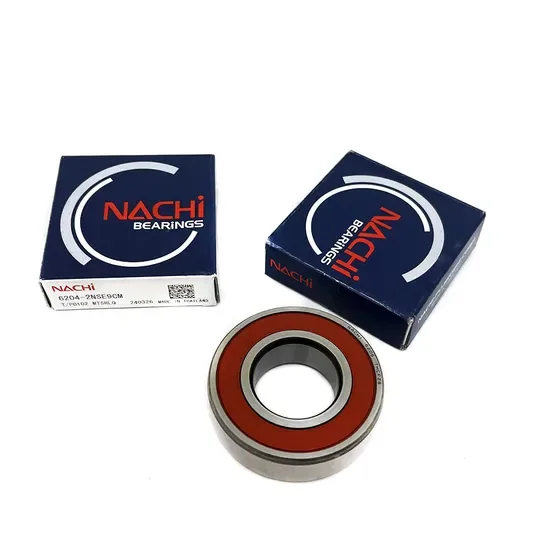
Deep Groove Ball Bearings
Genuine NACHI 608zz 6202 6201 Deep Groove Ball Bearing for Marine Equipment
View product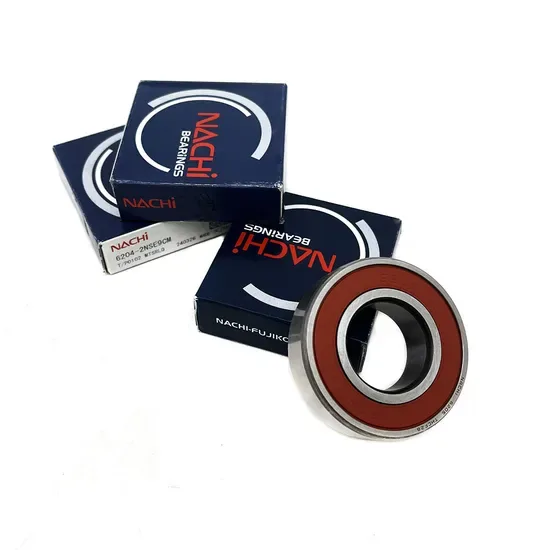
Deep Groove Ball Bearings
NACHI 608zz 16004 6201 Deep Groove Ball Bearing P6 P5 C3
View product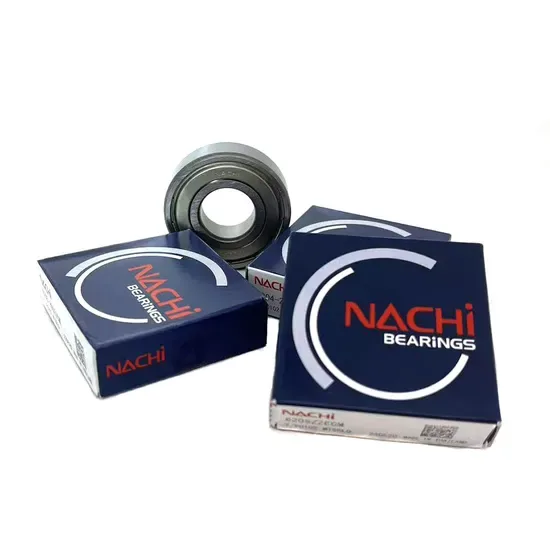
Deep Groove Ball Bearings
NACHI Deep Groove Ball Bearing 62301 608 6202 63008 63007 63006 6204 6301
View product Deep Groove Ball Bearings
Genuine NACHI P6 Deep Groove Ball Bearings 62208 62210 63002 63004 63006
View productModel check
Not sure which NACHI designation fits? We help with substitution, cross-reference and selection.
Send the old bearing number, the worn marking you can still read, or the application and shaft size. nachioem matches it to the correct NACHI model, including clearance, cage and seal options, before you order.
- Substitution for discontinued models
- Cross-reference to NACHI numbers
- Selection for spindles, pumps and reducers
Keep reading
Related NACHI bearing technical articles
More practical guides on NACHI suffixes, replacement and selection for machine tools, automotive, construction machinery, pumps and gear reducers.
Oct 7, 2026 · Brands & Alternatives · 6 min read
NACHI Product Range Overview: Wholesale Supplier for Bulk Orders
NACHI product range overview guides buyers in distinguishing spherical from cylindrical roller bearings to prevent costly installation failures. Learn to select precise domestic alternatives…
Read the article
Oct 7, 2026 · Brands & Alternatives · 7 min read
NACHI Brand Tiers Explained: Wholesale Supplier Guide
NACHI brand tiers are defined by ISO tolerance classes and internal clearance codes, not marketing labels. Verify grades through part number suffixes and cage…
Read the article Oct 7, 2026 · Brands & Alternatives · 8 min read
NACHI Auto vs Industrial Bearings: Wholesale Supplier for Bulk Orders
Mastering NACHI auto vs industrial bearings prevents costly misapplications in heavy-duty fleets. Learn how C3/C4 clearance and specialized seals differ from standard CN specs…
Read the article
Request a quote
Send your NACHI model list. We quote fast.
List the NACHI model numbers with full suffixes and the quantity for each. nachioem replies online as quickly as possible with pricing for distributors, repair shops and end users worldwide.
- info@nachioem.com
- WhatsApp +1 (702) 981-5880
- Online replies as quickly as possible
- Global delivery by DHL, FedEx, UPS, air or sea